Astaxanthin Benefits for Skin: What Does the Science Actually Say?
Quick Answer
Astaxanthin is a naturally occurring carotenoid antioxidant, most commonly sourced for supplements and skincare from the microalga Haematococcus pluvialis.
Human research suggests that oral astaxanthin may support certain aspects of skin health, particularly moisture and elasticity. There is also preliminary evidence relating to the skin's response to UV-induced stress.
However, the evidence is still developing. Studies tend to be relatively small, results aren't consistent across every skin outcome, and the clinical evidence for topical astaxanthin is considerably less extensive than the evidence for oral supplementation.
Astaxanthin is therefore best thought of as an interesting and promising skin-health ingredient, not a miracle treatment, wrinkle eraser or replacement for appropriate sun protection.
And for Nibu, this particular ingredient has another significance. Astaxanthin skincare is where our story began.
What You'll Learn
In this guide, we'll explore: what astaxanthin actually is; why antioxidants matter to skin; what human research tells us about astaxanthin and skin moisture; whether astaxanthin may support skin elasticity; what the evidence says about wrinkles; astaxanthin and UV-related oxidative stress; the difference between oral and topical astaxanthin; whether using both has been adequately studied; why the famous "6,000 times stronger than vitamin C" claim needs context; and how astaxanthin fits into a wider healthy-skin routine.
What Is Astaxanthin?
Astaxanthin is a naturally occurring pigment belonging to a family of compounds known as carotenoids. Carotenoids are responsible for many of the reds, oranges and yellows we see throughout nature. Astaxanthin is produced naturally by certain microorganisms, including the freshwater microalga Haematococcus pluvialis. It is also responsible for some of the characteristic reddish-pink colouring found in animals such as salmon that obtain astaxanthin through their food chain.
Astaxanthin has attracted scientific interest because of its antioxidant properties. And that brings us to skin.
Continue reading: Icelandic Astaxanthin for Skin: Why the Source Matters
Why Do Antioxidants Matter for Skin?
Every day, our skin encounters sources of oxidative stress. These include ultraviolet radiation, pollution and normal cellular metabolism. Oxidative stress occurs when the production of reactive molecules exceeds the body's ability to manage them effectively.
Think of antioxidants as part of the body's maintenance team. They don't stop life happening, and they don't make us immune to ageing. Instead, antioxidant systems help manage reactive molecules before excessive oxidative damage accumulates.
This matters because oxidative stress is one of several biological processes involved in skin ageing. But antioxidants are only one piece of the picture. Genetics, hormones, UV exposure, smoking, nutrition, sleep, environmental exposure and the natural passage of time all influence how skin changes. That is why we don't believe one antioxidant can be the answer to skin ageing.
Continue reading: Oxidative Stress Explained: Why It Matters for Healthy Ageing
What Does the Research Say About Astaxanthin and Skin?
Astaxanthin has been studied both orally and topically, although the amount and quality of research aren't equal between the two. A systematic review of clinical studies identified several randomised placebo-controlled trials investigating astaxanthin and skin outcomes. Results suggested potential improvements in measures including skin moisture, texture and elasticity, but researchers also highlighted important limitations including generally small studies and potential commercial conflicts of interest.
A subsequent systematic review and meta-analysis found that oral astaxanthin supplementation produced statistically significant improvements in skin moisture and elasticity compared with placebo. However, it did not produce a statistically significant reduction in wrinkle depth compared with placebo. The evidence is promising — but "promising" isn't the same thing as "proven to reverse skin ageing".
1. Astaxanthin and Skin Moisture
The 2021 meta-analysis found a statistically significant improvement in skin moisture content following oral astaxanthin compared with placebo. As skin becomes drier it can feel rougher, tighter and less comfortable — dryness can also become increasingly noticeable during perimenopause and menopause as hormonal changes affect skin physiology. However, astaxanthin shouldn't be considered a replacement for good skincare. Gentle cleansing, an appropriate moisturiser and sensible wider skin care remain important.
Continue reading: Menopause and Skin: Why Your Skin Changes and How to Support It
2. Astaxanthin and Skin Elasticity
Elasticity describes the skin's ability to stretch and return towards its original position. The same meta-analysis found a statistically significant improvement in measures of skin elasticity following oral supplementation compared with placebo. That doesn't mean astaxanthin "rebuilds youthful skin" — it means there is evidence suggesting it may positively influence one measurable characteristic of skin health.
3. What About Fine Lines and Wrinkles?
This is where skincare marketing often gets ahead of science. Some individual astaxanthin studies have reported improvements in wrinkles or visible skin appearance. But when randomised controlled trials were combined in a meta-analysis, wrinkle depth was not significantly reduced compared with placebo. Skin ageing is complex. No antioxidant should be expected to erase that complexity.
4. Astaxanthin and UV-Related Skin Stress
A small randomised, double-blind, placebo-controlled trial investigated 4 mg of oral astaxanthin daily for ten weeks in 23 healthy Japanese participants. Researchers found an increase in minimal erythema dose alongside less UV-associated moisture loss in the astaxanthin group compared with placebo. That's scientifically interesting — but astaxanthin is not an "internal sunscreen", does not provide an SPF rating, and should not be used instead of appropriate sun protection.
5. Does Astaxanthin Support Collagen?
Laboratory and mechanistic research provides plausible reasons to investigate astaxanthin's effects on pathways involved in collagen degradation. One study using astaxanthin combined with collagen hydrolysate reported improvements in elasticity and markers relating to extracellular matrix metabolism — however, because astaxanthin wasn't the only intervention, we can't attribute every result to astaxanthin alone. We'd describe the relationship as biologically interesting and still being investigated, not a proven collagen-restoring treatment.
Oral vs Topical Astaxanthin
Nibu began with topical astaxanthin skincare, long before our astaxanthin supplement became part of the range. But the scientific evidence isn't identical for the two routes.
| Oral Astaxanthin | Topical Astaxanthin | |
|---|---|---|
| Human research | Several clinical studies and RCTs | Much more limited |
| Moisture evidence | Encouraging | Preliminary |
| Elasticity evidence | Encouraging | Preliminary |
| Wrinkle evidence | Mixed | Limited |
| UV-related research | Some human evidence | Mechanistically interesting, limited clinical evidence |
| Evidence maturity | Developing | Earlier stage |
Is Using Astaxanthin Inside and Out Better?
One often-cited human study investigated a combination of 6 mg oral astaxanthin alongside topical astaxanthin in 30 women over eight weeks and reported improvements across several skin measures. However, this part of the research was open-label and did not include a control group — it cannot establish that combining oral and topical astaxanthin is definitively superior to either approach alone. More high-quality controlled research is needed, and we're comfortable saying that.
Is Astaxanthin Really 6,000 Times Stronger Than Vitamin C?
Comparisons describing astaxanthin as hundreds or thousands of times "stronger" than another antioxidant generally relate to specific laboratory antioxidant assays under particular experimental conditions. They do not mean that applying or consuming astaxanthin gives you thousands of times the skin benefit of vitamin C. At Nibu, we'd rather say: astaxanthin is a potent antioxidant with interesting biological properties. We don't need the 6,000-times headline.
Why Astaxanthin Became the Heart of Nibu
Long before Nibu talked about creatine, omega-3 or healthy ageing, there was astaxanthin and skin. Our founder Nici became fascinated by astaxanthin's antioxidant properties, and that interest eventually became the foundation of Nibu's skincare. Astaxanthin remains our hero ingredient — and part of the story that made Nibu, Nibu.
Where Nibu Astaxanthin Skincare Fits
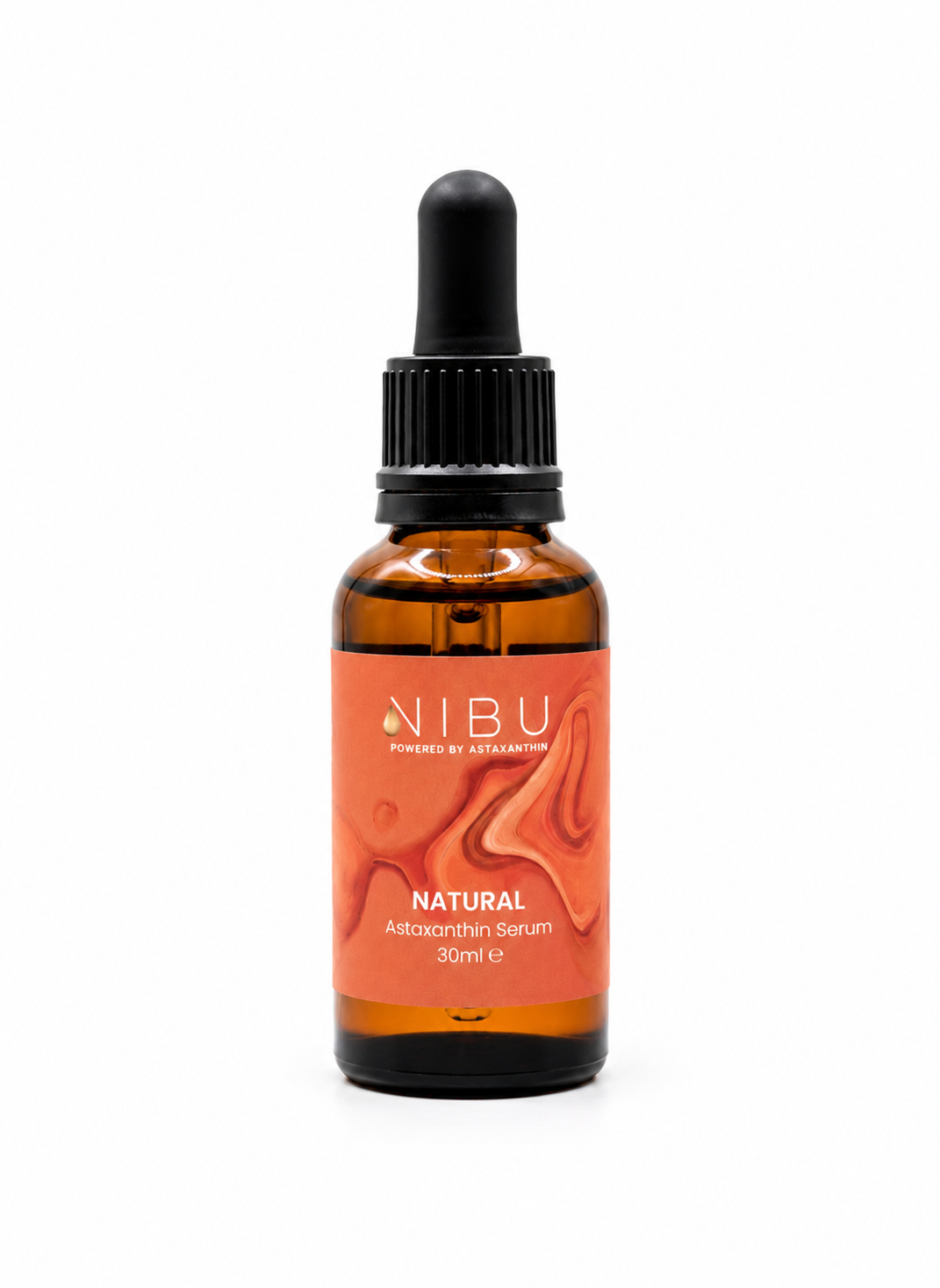
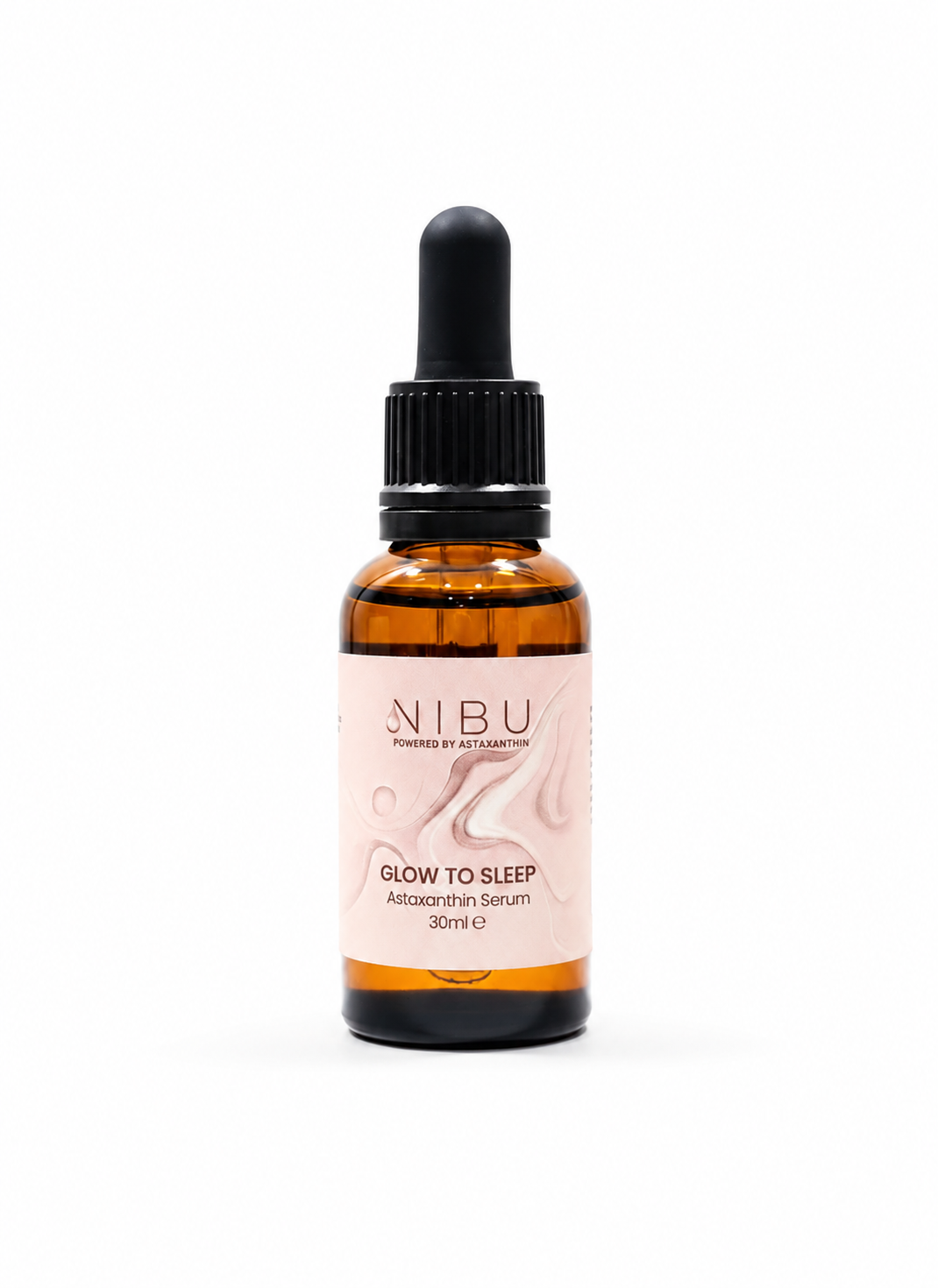
Our Glow serums combine topical astaxanthin with the warm, radiant finish that became part of Nibu's identity. But we don't believe skincare should promise to stop ageing. Our philosophy is healthy skin ageing: supporting the skin barrier, treating skin gently, considering lifestyle and nutrition, and using well-formulated skincare consistently. Astaxanthin is part of that approach. Not the whole of it.
Continue reading: How to Choose & Apply Your Astaxanthin Serum
What About Astaxanthin Supplements?
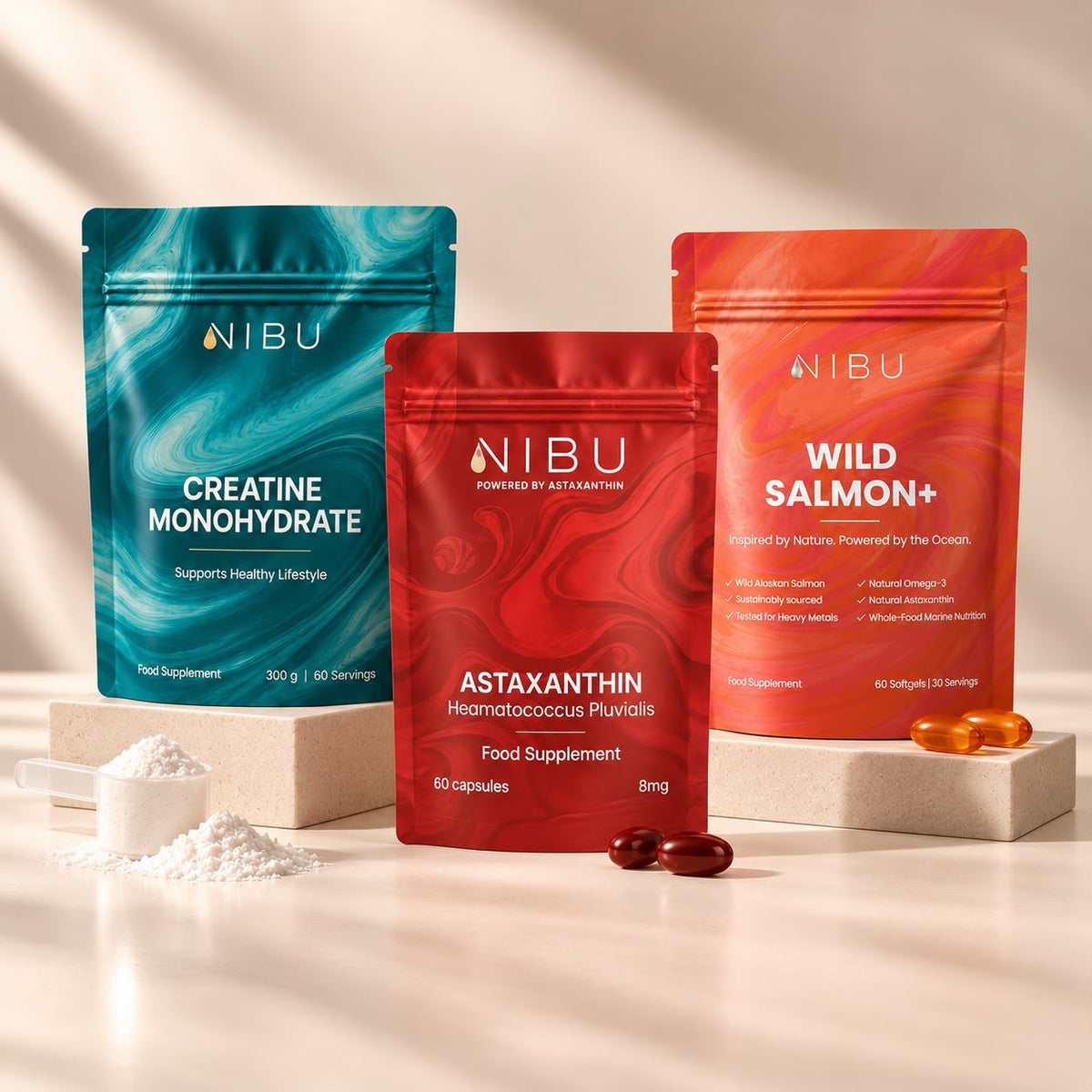
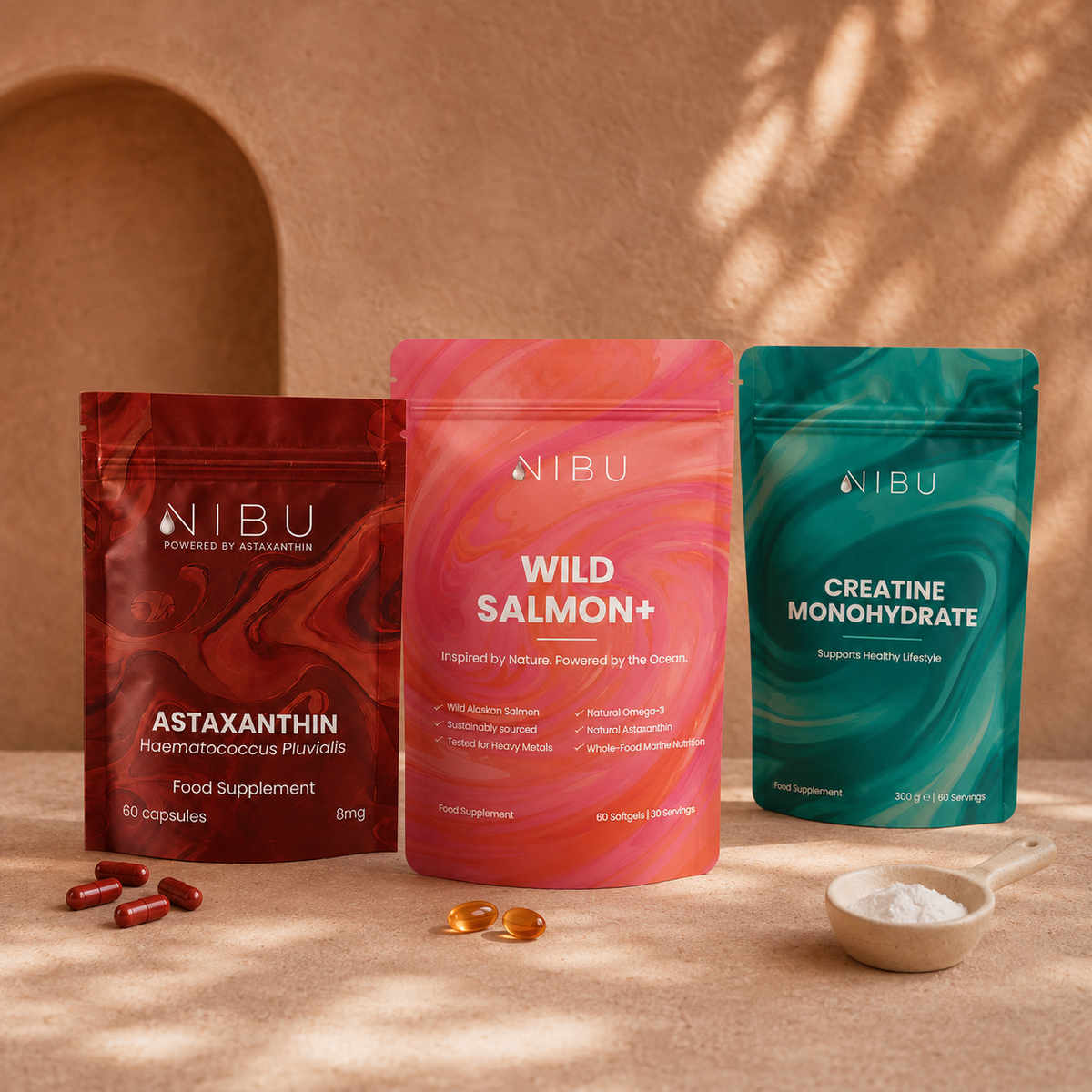
Astaxanthin is fat-soluble, so taking it alongside a meal containing dietary fat is a practical way of supporting absorption. Nibu Astaxanthin provides 8 mg per daily capsule, sourced from Haematococcus pluvialis. However, 8 mg shouldn't be described as the clinically proven skin dose — human studies have investigated a range of doses and durations. And supplementation remains supplementary: it doesn't replace nutritious food, sleep, movement, appropriate skincare or other healthy-ageing fundamentals.
Myth vs Fact
Myth: Astaxanthin is 6,000 times better for your skin than vitamin C.
Fact: Laboratory antioxidant comparisons don't translate directly into thousands of times greater benefits in human skin.
Myth: Astaxanthin is a natural sunscreen.
Fact: Research into UV-related skin responses is interesting, but astaxanthin doesn't replace appropriate sun protection.
Myth: Astaxanthin has been proven to remove wrinkles.
Fact: Some individual studies are encouraging, but a meta-analysis did not find a statistically significant reduction in wrinkle depth compared with placebo.
Myth: Combining topical and oral astaxanthin has been proven superior.
Fact: Combined use has been investigated, but the evidence isn't strong enough to establish a proven synergistic effect.
Myth: More antioxidants are always better.
Fact: Nutrition and skin health are considerably more complex than simply maximising antioxidant intake.
Frequently Asked Questions
What is astaxanthin?
A naturally occurring carotenoid pigment with antioxidant properties, commonly derived from the microalga Haematococcus pluvialis.
Is astaxanthin good for skin?
Human research suggests oral astaxanthin may support certain measures of skin health, particularly moisture and elasticity, although evidence remains limited and further high-quality research is needed.
Can astaxanthin reduce wrinkles?
Evidence is mixed. Pooled randomised evidence hasn't demonstrated a statistically significant reduction in wrinkle depth compared with placebo.
Can I apply astaxanthin to my skin?
Yes. Astaxanthin can be incorporated into topical skincare formulations, although clinical evidence is currently less extensive than for oral supplementation.
Can astaxanthin replace sunscreen?
No. Astaxanthin isn't sunscreen and shouldn't be treated as a replacement for appropriate sun protection.
How quickly does astaxanthin work for skin?
Clinical studies have investigated outcomes over several weeks or months. Individual responses vary.
Is astaxanthin anti-ageing?
We prefer "healthy ageing" to "anti-ageing". Astaxanthin is being researched for several processes relevant to skin ageing, but no ingredient can stop or reverse ageing.
Key Takeaways
- Astaxanthin is a naturally occurring carotenoid antioxidant.
- Oral astaxanthin shows encouraging evidence around skin moisture and elasticity, although not every outcome has improved.
- Evidence around wrinkles is mixed.
- Astaxanthin is not sunscreen.
- Topical astaxanthin is scientifically interesting, although human clinical evidence remains more limited.
- Using oral and topical astaxanthin together has not yet been proven superior.
- Astaxanthin should sit within a much broader approach to healthy skin ageing.
The Nibu Longevity Take
Skin tells part of the story of how we age, but never the whole story. Its appearance reflects genetics, hormones, environmental exposure, nutrition, sleep, lifestyle and time itself. Astaxanthin fascinates us because it sits at the intersection of several things Nibu cares deeply about: antioxidant science, oxidative stress, skin health and healthy ageing. We don't believe women need to fight ageing — we believe they deserve the knowledge and tools to age well.
Conclusion
There is encouraging human evidence around skin moisture and elasticity, alongside early research into UV-related skin responses. But studies remain relatively small, topical research is less developed, and some popular claims go considerably beyond what clinical evidence can support. That doesn't make astaxanthin less interesting — it makes understanding the evidence properly more important.
Continue Reading
- The Complete Guide to Astaxanthin: Benefits, Dosage, Safety and How It Works
- Astaxanthin Benefits: The Complete Evidence-Based Guide
- Icelandic Astaxanthin for Skin: Why the Source Matters
- Oxidative Stress Explained: Why It Matters for Healthy Ageing
- Menopause and Skin: Why Your Skin Changes and How to Support It
- How to Choose & Apply Your Astaxanthin Serum
References
- Ng QX, et al. Effects of Astaxanthin Supplementation on Skin Health: A Systematic Review of Clinical Studies. Journal of Dietary Supplements. 2021;18(2):169–182.
- Zhou X, et al. Systematic Review and Meta-Analysis on the Effects of Astaxanthin on Human Skin Ageing. Nutrients. 2021;13(9):2917.
- Ito N, Seki S, Ueda F. The Protective Role of Astaxanthin for UV-Induced Skin Deterioration in Healthy People. Nutrients. 2018;10(7):817.
- Tominaga K, et al. Cosmetic Benefits of Astaxanthin on Humans Subjects. Acta Biochimica Polonica. 2012;59(1):43–47.
- Davinelli S, Nielsen ME, Scapagnini G. Astaxanthin in Skin Health, Repair, and Disease: A Comprehensive Review. Nutrients. 2018;10(4):522.
- Lima SGM, et al. Astaxanthin Delivery Systems for Skin Application: A Review. Marine Drugs. 2021;19(9):511.
- Yoon HS, et al. Supplementating with dietary astaxanthin combined with collagen hydrolysate improves facial elasticity. Journal of Medicinal Food. 2014.
- Ma B, et al. Astaxanthin supplementation mildly reduced oxidative stress and inflammation biomarkers. Nutrition Research. 2022;99:40–50.
About The Nibu Journal
The Nibu Journal is the educational home of Nibu Naturals, created to help women make informed decisions about healthy ageing through clear, evidence-led information. Nibu began with astaxanthin skincare. Today our approach encompasses skin health, nutrition, supplements, women's health and lifestyle, while astaxanthin remains at the heart of our story.
Educate first. Support second. Sell naturally.
Medical Disclaimer
This article is for general educational purposes only and isn't intended to diagnose, treat, cure or prevent any medical condition. Supplements and skincare products aren't substitutes for appropriate medical care. If you're pregnant, breastfeeding, taking medication or managing a health condition, speak to an appropriately qualified healthcare professional before starting a new supplement.

Read more
Why Strength Matters More Than Weight as You Age
For decades, women have been encouraged to focus on weighing less. But as we age, another measurement becomes increasingly important: strength. Discover why protecting muscle and physical capabilit...
Read more
Sleep and Healthy Ageing: What Happens to Your Body When You Don't Get Enough?
Sleep is not simply time when your body switches off. While you sleep, your brain, metabolism, cardiovascular system and other tissues continue important restorative and regulatory processes. Disco...
Read moreShop
Best Sellers