Astaxanthin vs Other Antioxidants: How Does It Compare with Vitamin C, Vitamin E and CoQ10?
Quick Answer
Astaxanthin, vitamin C, vitamin E and CoQ10 can all participate in antioxidant defence, but they are very different compounds with different roles in the body.
Astaxanthin is particularly interesting because of its distinctive molecular structure. This naturally red-orange carotenoid can interact with lipid environments such as cell membranes in ways that differ from water-soluble antioxidants such as vitamin C.
Laboratory research has demonstrated impressive antioxidant activity for Astaxanthin, while a growing body of human research has investigated its potential effects on oxidative stress, skin health and other areas of health.
Vitamin C and vitamin E remain essential nutrients with important functions that Astaxanthin cannot replace. CoQ10 is different again, playing an important role in mitochondrial energy production as well as having antioxidant properties.
So we don’t think the most useful question is:
Which antioxidant wins?
A better question is:
What makes Astaxanthin different, where is the human evidence most encouraging, and how does it fit alongside other important antioxidants?
For Nibu, that distinction matters. Astaxanthin is the ingredient our brand was built around. And the more we learn about it, the more interesting it becomes.
What You’ll Learn
In this guide, we’ll explore:
- what an antioxidant actually is
- what makes Astaxanthin distinctive
- Astaxanthin vs vitamin C
- Astaxanthin vs vitamin E
- Astaxanthin vs CoQ10
- whether Astaxanthin really is “6,000 times stronger than vitamin C”
- why laboratory antioxidant tests don’t tell us everything
- what human trials tell us about Astaxanthin
- why the skin research is particularly interesting
- oral vs topical Astaxanthin
- whether you can combine different antioxidants
- where food, skincare and supplements fit
- why Nibu chose Astaxanthin as its hero ingredient
First, What Exactly Is an Antioxidant?
To understand why Astaxanthin has attracted so much attention, we first need to understand what antioxidants actually do.
Your body constantly produces reactive molecules as a normal consequence of:
- breathing
- producing energy
- exercise
- immune activity
- everyday metabolism
These include molecules commonly grouped under terms such as reactive oxygen species, or ROS.
But ROS are not automatically bad. They are involved in normal cell signalling, immune function and other physiological processes.
The problem arises when the balance between reactive molecules and the body’s ability to manage them becomes disrupted. This is known as oxidative stress.
Over time, excessive oxidative stress can contribute to damage involving:
- lipids
- proteins
- DNA
- cellular structures
Fortunately, the human body has its own sophisticated antioxidant defence system.
Antioxidants Don’t Work Alone
The body doesn’t rely on one “super antioxidant”. Instead, antioxidant defence involves an interconnected network of:
- antioxidant enzymes
- vitamins
- minerals
- carotenoids
- proteins
- endogenous compounds
- compounds obtained through food
Different antioxidants can operate in different environments and perform different biological functions. This is why simply ranking them from “weakest” to “strongest” doesn’t tell us very much about what happens inside the human body. And it’s also why Astaxanthin doesn’t need to replace vitamin C or vitamin E to be fascinating in its own right.
What Is Astaxanthin?
Astaxanthin is a naturally occurring xanthophyll carotenoid. It is responsible for much of the characteristic pink-red colouring found in animals such as:
- salmon
- trout
- krill
- shrimp
- flamingos
But those animals don’t generally manufacture Astaxanthin themselves. The story begins much lower down the food chain. One particularly rich natural source is the microalga Haematococcus pluvialis.
Under stressful environmental conditions, this microalga accumulates Astaxanthin as part of its protective response. Marine organisms consume the algae, and Astaxanthin subsequently moves through the food chain, helping create the distinctive pink-red colours we associate with species such as salmon.
It is an extraordinary journey for one tiny red pigment. And its colour isn’t the only thing that makes Astaxanthin interesting.
What Makes Astaxanthin Different?
This is where Astaxanthin starts to stand apart from many familiar antioxidants. Its molecular structure contains both polar end groups and a non-polar central region.
Research suggests this structure allows Astaxanthin to interact with lipid environments such as biological membranes in a distinctive way. Rather than simply existing in one environment, different parts of the molecule can interact with different regions of a lipid membrane.
This structural characteristic is one reason Astaxanthin has attracted so much scientific attention. It has demonstrated substantial antioxidant activity in laboratory research, and researchers continue to investigate how its chemistry might translate into effects in the human body.
But this distinction is important:
Interesting chemistry gives us a reason to investigate Astaxanthin. Human studies tell us whether those properties translate into meaningful outcomes.
Fortunately, we now have both laboratory research and a growing human evidence base to explore.
Astaxanthin vs Vitamin C
This is probably the antioxidant comparison people search for most often. And the first thing to understand is that Astaxanthin and vitamin C are fundamentally different.
Vitamin C
Vitamin C, or ascorbic acid, is a water-soluble essential vitamin. Humans need to obtain vitamin C through the diet. It contributes to several important physiological functions, including:
- normal collagen formation
- normal immune function
- protection of cells from oxidative stress
- normal energy-yielding metabolism
It also participates in antioxidant networks, including helping regenerate vitamin E following antioxidant reactions. Good dietary sources include peppers, citrus fruits, berries, broccoli, kiwi and potatoes.
Vitamin C is therefore much more than an “antioxidant supplement”. It is an essential nutrient.
How Is Astaxanthin Different?
Astaxanthin is lipid-soluble rather than water-soluble. Its structure allows it to interact with lipid-rich environments and cell membranes differently from vitamin C. Laboratory research has demonstrated substantial antioxidant activity, while human studies have investigated Astaxanthin in relation to oxidative stress, skin health and other areas.
But Astaxanthin and vitamin C shouldn’t be thought of as competitors. Taking Astaxanthin doesn’t mean “I don’t need vitamin C anymore.” Vitamin C performs essential nutritional functions that Astaxanthin cannot replace. Instead, Astaxanthin adds another distinctive carotenoid to the much wider antioxidant system.
Is Astaxanthin Really 6,000 Times Stronger Than Vitamin C?
If you’ve researched Astaxanthin before, there’s a good chance you’ve encountered this statement: “Astaxanthin is 6,000 times stronger than vitamin C.”
It’s an extraordinary number. And it’s one reason Astaxanthin has gained so much attention. But it needs context.
Large comparative numbers like these come from laboratory antioxidant assays, where researchers measure how different compounds behave against particular reactive species or under particular experimental conditions. Astaxanthin can perform extremely well in some of these laboratory comparisons. That tells us something genuinely interesting about its chemistry.
What it doesn’t mean is:
- 1 mg Astaxanthin = 6,000 mg vitamin C
- Astaxanthin gives your skin 6,000 times the benefit
- taking Astaxanthin produces 6,000 times the healthy-ageing benefit of consuming vitamin C
The human body is considerably more complicated than a laboratory assay. In people, absorption matters. Distribution matters. Dose matters. Metabolism matters. The tissue being studied matters. And ultimately, clinical outcomes matter.
So at Nibu, we don’t need to describe Astaxanthin as giving you “6,000 times” the human health benefit of vitamin C. We find the real story considerably more interesting. Astaxanthin has unusual chemistry, impressive laboratory antioxidant activity and a growing body of human research exploring what those properties might mean in practice. That’s worth investigating without turning a laboratory number into a promise it was never designed to make.
Astaxanthin vs Vitamin E
Vitamin E provides another interesting comparison because, like Astaxanthin, it is associated with lipid environments. The term vitamin E actually describes a family of compounds, with alpha-tocopherol being the main biologically active form in humans.
Vitamin E is a fat-soluble essential vitamin. It contributes to the protection of cells from oxidative stress and is particularly relevant to antioxidant defence within lipid environments. Astaxanthin is also lipid-soluble, creating some interesting similarities.
But there is an important difference. Vitamin E is an essential nutrient. Astaxanthin is a carotenoid for which no essential dietary requirement has been established.
Laboratory experiments have found high antioxidant activity for Astaxanthin compared with alpha-tocopherol under particular experimental conditions. Again, that’s an interesting feature of Astaxanthin’s chemistry. It doesn’t mean we should replace vitamin E with Astaxanthin. The two compounds belong to a much larger antioxidant network.
Astaxanthin vs CoQ10
Coenzyme Q10, usually shortened to CoQ10, is different again. CoQ10 is produced naturally within the body. One of its most important functions occurs inside mitochondria, where it participates in the processes involved in cellular energy production. It also has antioxidant properties.
Astaxanthin has also attracted research interest around oxidative stress and mitochondrial health, but its biological role is different. A simple way to think about them:
- CoQ10: closely involved in mitochondrial energy production and also has antioxidant properties.
- Astaxanthin: a distinctive carotenoid studied for its antioxidant properties and a growing range of potential biological effects.
Neither description makes one universally “better”. They are different molecules doing different things.
Astaxanthin, Vitamin C, Vitamin E and CoQ10 at a Glance
| Astaxanthin | Vitamin C | Vitamin E | CoQ10 | |
|---|---|---|---|---|
| Type | Carotenoid | Vitamin | Vitamin | Endogenous compound |
| Solubility | Fat-soluble | Water-soluble | Fat-soluble | Fat-soluble |
| Essential nutrient? | No established requirement | Yes | Yes | Produced by the body |
| Antioxidant activity? | Yes | Yes | Yes | Yes |
| Major additional interest | Oxidative stress, skin and other emerging research | Collagen formation and numerous essential functions | Essential antioxidant nutrient | Mitochondrial energy production |
| Found in food? | Yes | Yes | Yes | Yes |
| Skin research? | Growing human evidence | Extensive biological relevance | Established biological relevance | Some research |
| Should one replace another? | No | No | No | No |
The important point isn’t which column “wins”. It’s how different these compounds are.
What Does Human Research Actually Show for Astaxanthin?
This is where the Astaxanthin story becomes particularly interesting. Laboratory findings can help us understand mechanisms. But for Nibu, human evidence matters more when we’re talking about human health.
A meta-analysis of 12 randomised controlled trials involving 380 participants found that Astaxanthin supplementation significantly reduced malondialdehyde, a marker associated with lipid peroxidation. Effects were not consistent across every biomarker, however. Significant overall effects were not demonstrated for some inflammatory markers, including CRP and TNF-alpha.
Earlier reviews have also highlighted limitations in the evidence, including relatively small studies and differences between study designs. More recent research continues to investigate Astaxanthin across oxidative stress and inflammatory measures, while also highlighting variation in dose, formulation, duration, study population and outcomes measured.
The more accurate conclusion is: Astaxanthin has a growing and genuinely interesting human evidence base, but the effects are more nuanced than dramatic antioxidant rankings might suggest. That’s exactly why we continue following the research so closely.
What About Astaxanthin and Skin?
This is where Astaxanthin becomes particularly important to the Nibu story. Nibu began with Astaxanthin skincare before supplements, before creatine, before Wild Salmon+. Our fascination started with this distinctive red carotenoid and the developing research around oxidative stress and skin.
A systematic review identified 11 human clinical studies examining Astaxanthin and skin health, including six randomised double-blind placebo-controlled trials. The review found encouraging evidence, particularly in relation to photoaged skin, while also highlighting limitations including small sample sizes, the predominance of healthy Japanese women and commercial funding in many studies.
A separate 2021 systematic review and meta-analysis found that oral Astaxanthin supplementation significantly improved skin moisture and elasticity compared with placebo. The included studies were relatively small, however, and there was considerable variation between studies, particularly for elasticity. Importantly, the pooled analysis did not find a statistically significant reduction in wrinkle depth compared with placebo.
That distinction matters. It would be very easy to reduce all of this to “Astaxanthin gets rid of wrinkles.” That’s not what the evidence tells us. What we can say is considerably more interesting: human research suggests Astaxanthin may support certain aspects of skin health, with encouraging evidence around moisture and elasticity, while research continues to build a clearer picture of where its benefits may lie.
For a deeper look at the evidence, read Astaxanthin Benefits for Skin: What Does the Science Actually Say?
Oral Astaxanthin vs Topical Astaxanthin
There is another important distinction. Taking Astaxanthin and applying Astaxanthin to the skin are not the same thing.
Much of the stronger human research examining skin outcomes has investigated oral Astaxanthin supplementation. Topical Astaxanthin research exists, but the evidence base is smaller. A 2021 skin review identified nine randomised controlled studies of oral Astaxanthin, compared with only two open-label prospective studies investigating topical or combined oral-topical use.
That means we shouldn’t simply take a result from an oral supplementation study and assume exactly the same result applies when Astaxanthin is included in skincare. But that doesn’t make topical Astaxanthin uninteresting. Its distinctive colour, lipid-soluble nature and antioxidant properties are part of what first made Astaxanthin such a fascinating ingredient for Nibu.
The important thing is to distinguish between what we know, what is promising, and what still needs better research.
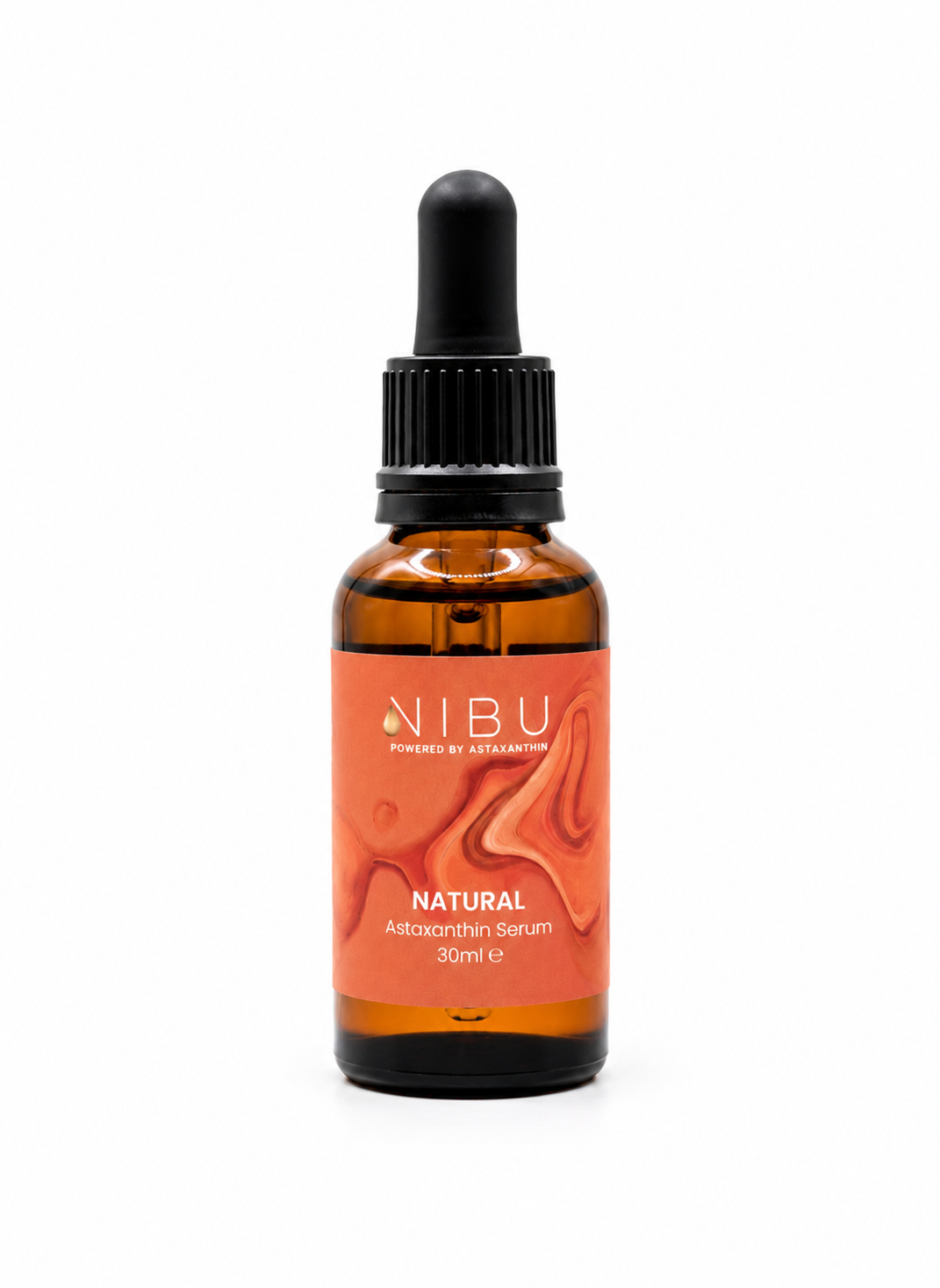
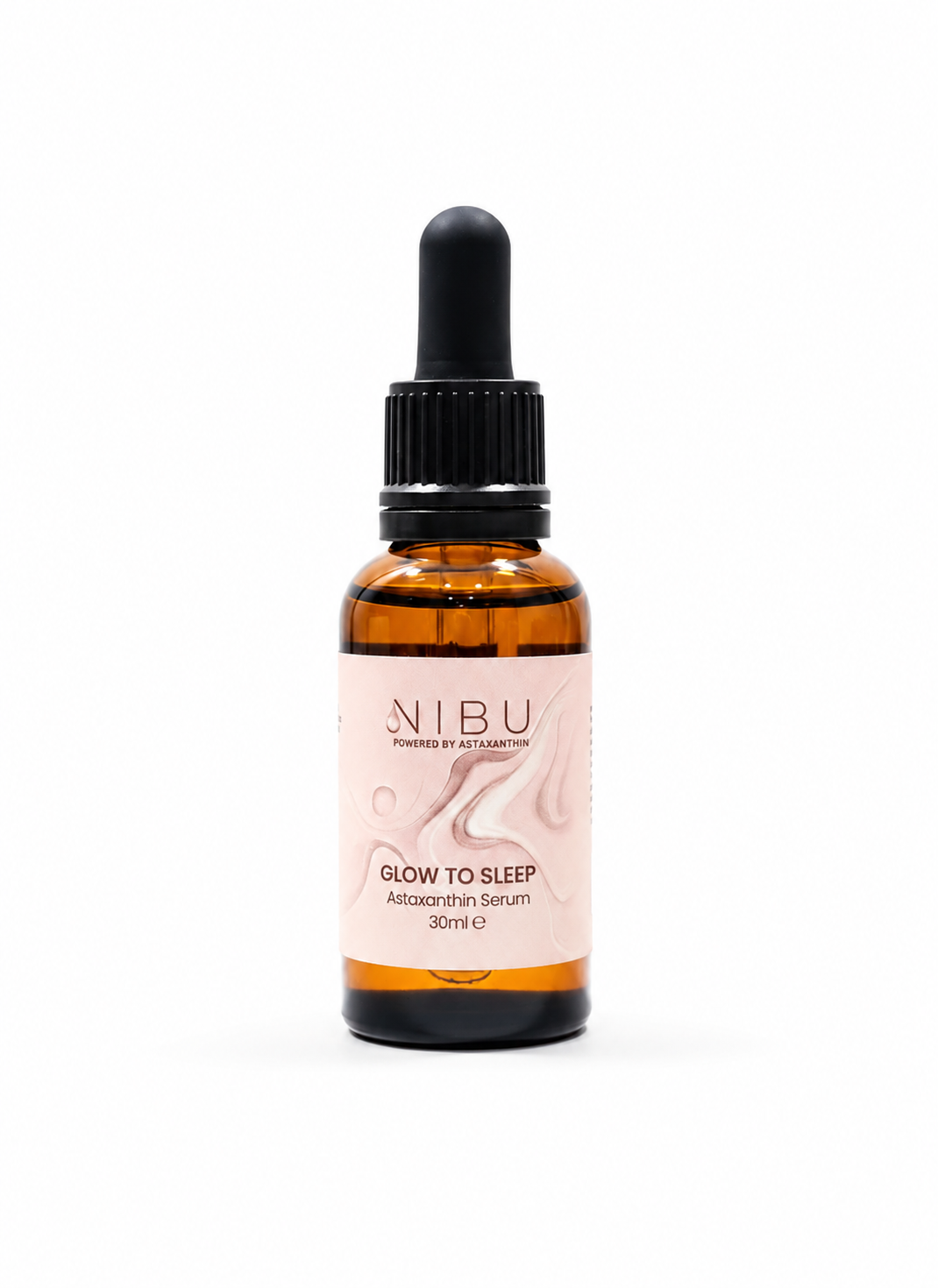
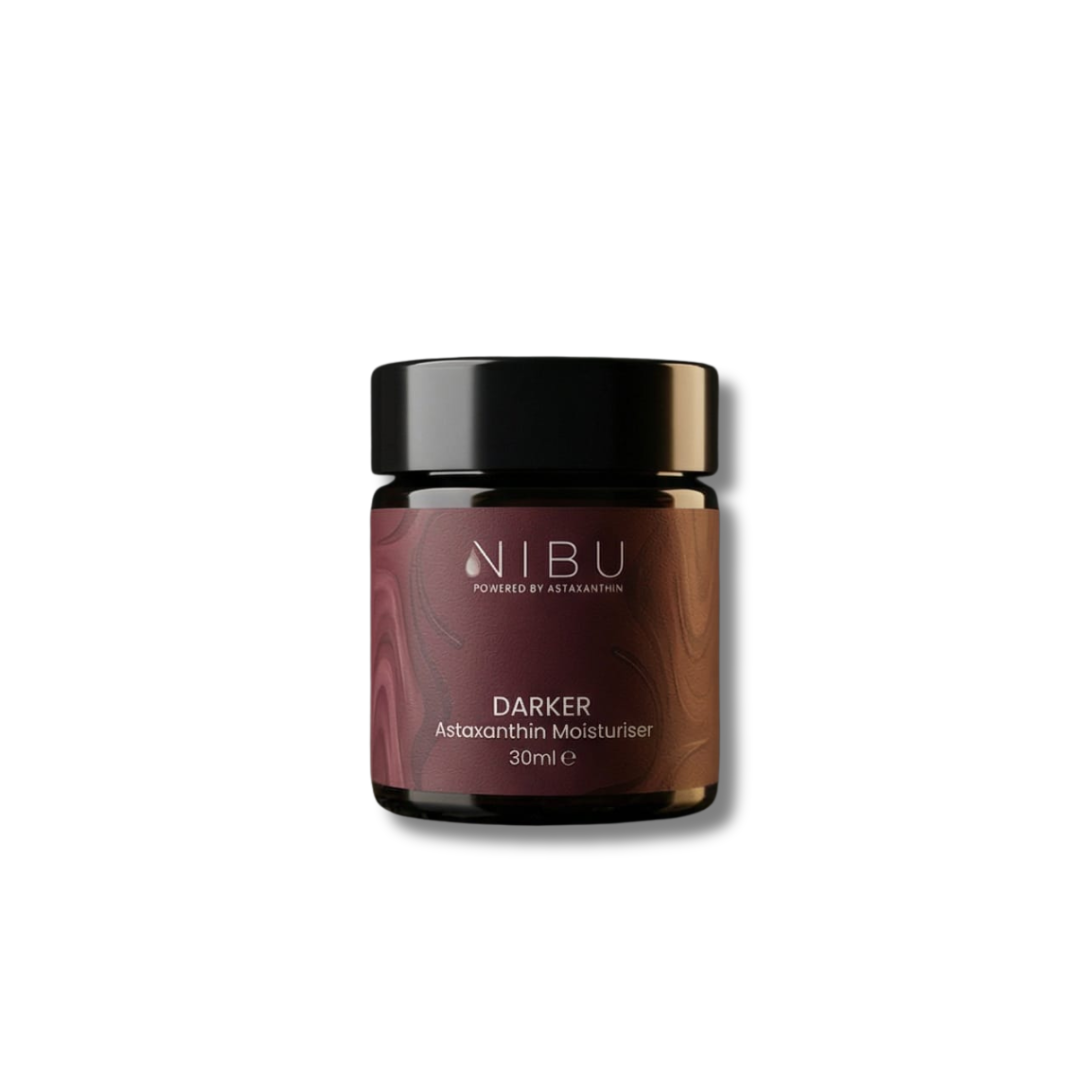
Astaxanthin was first introduced to Nibu through skincare, and it remains at the heart of our approach to supporting healthy-looking skin. Explore our Astaxanthin skincare collection, or read our deeper guide to what the human research actually tells us about Astaxanthin and skin.
Explore Astaxanthin Skincare Read: Astaxanthin Benefits for Skin
Why Did Nibu Choose Astaxanthin?
Long before Nibu became a wider healthy-ageing brand, Astaxanthin was already at its heart. And interestingly, we started from the outside with skincare. We became fascinated by the distinctive red carotenoid, its unusual chemistry and the developing science surrounding oxidative stress and skin. That fascination eventually became Nibu Astaxanthin skincare. Only later did our philosophy expand further into nutrition, supplementation and whole-body healthy ageing.
Today, Astaxanthin connects those two worlds beautifully. Skin health on the outside. Nutrition and antioxidant research on the inside. And the more we’ve learnt about Astaxanthin, the less we’ve felt it needs exaggerated claims to make it exciting.
What continues to make Astaxanthin so interesting to us is the combination of its distinctive molecular structure, impressive laboratory antioxidant activity and growing body of human research. Its ability to interact with lipid environments such as cell membranes makes it biologically unusual. Human research is beginning to build a more meaningful picture of where those properties may translate into benefits, with skin health and oxidative stress among the areas attracting particular interest.
There are still unanswered questions. There are still limitations in the research. That’s science. But there is more than enough here to explain why one extraordinary red carotenoid captured our attention in the first place. Astaxanthin doesn’t need to be everything to remain the ingredient at the heart of Nibu.
Is There a “Best” Antioxidant for Skin?
Probably not. And that’s actually useful to understand. Skin has its own complex antioxidant defence network. Vitamin C is particularly important because it is required for normal collagen formation. Vitamin E participates in lipid-phase antioxidant defence. Your body produces its own antioxidant enzymes. Carotenoids obtained through the diet contribute to the wider nutritional environment. And Astaxanthin is a particularly interesting carotenoid within that bigger picture.
Healthy skin also depends on things no antioxidant can replace: adequate nutrition, protein, essential fatty acids, sleep, hydration, not smoking, appropriate skincare and sensible UV protection. We don’t see Astaxanthin as competing with everything else your skin needs. We see it as one distinctive ingredient within a much larger approach to healthy skin ageing.
Can You Combine Astaxanthin and Vitamin C?
Yes, these aren’t mutually exclusive compounds. Human diets naturally contain mixtures of vitamin C, vitamin E, carotenoids, polyphenols, minerals and thousands of other compounds. There is no biological reason healthy ageing should require choosing one antioxidant and abandoning all the others.
The same principle broadly applies to skincare, although formulation, concentration, stability and individual skin tolerance matter. Astaxanthin and vitamin C are different. They don’t need to compete.
Do You Need an Antioxidant Supplement?
A varied, balanced diet should always provide the nutritional foundation. Foods including vegetables, fruit, nuts, seeds, whole grains, pulses and oily fish provide a huge variety of nutrients and bioactive compounds.
But supplements can also have a role. They allow someone choosing to supplement to consume a specific compound at a defined and consistent daily amount, rather than trying to recreate an entire healthy diet in capsule form. Food provides the foundation. Supplements can provide targeted nutritional support where appropriate.
Astaxanthin isn’t an essential nutrient and not everybody needs to supplement with it. But for people specifically interested in Astaxanthin, supplementation provides a practical way of consuming a defined daily amount. Healthy ageing isn’t about collecting as many antioxidants as possible. It’s about building strong foundations and then using specific nutritional tools thoughtfully.
What Should You Look for in an Astaxanthin Supplement?
If you decide to supplement with Astaxanthin, don’t choose solely on the biggest number on the front of a packet. Ask a few better questions.
Where Does the Astaxanthin Come From?
Natural Astaxanthin is commonly derived from the microalga Haematococcus pluvialis. Look for transparency about the source.
How Much Astaxanthin Does the Daily Serving Provide?
Check the amount of actual Astaxanthin provided rather than relying solely on the total weight of an ingredient blend.
What Else Is in the Formulation?
Read the complete ingredient list. A transparent brand should make it easy to understand what you’re taking.
Is the Manufacturer Transparent About Sourcing and Quality?
Traceability and quality matter.
What Claims Is the Company Making?
Be cautious about supplements promising to reverse ageing, prevent disease, replace sunscreen, eliminate wrinkles or produce miraculous results. Sometimes the quality of the claims tells you quite a lot about the approach of the company making them.
These are the same principles we apply to Astaxanthin at Nibu: clear sourcing, transparent formulation and evidence-led communication rather than asking the science to promise more than it can.
Myth vs Fact
Myth: Astaxanthin is 6,000 times better for you than vitamin C.
Fact: Very high comparative figures originate from particular laboratory antioxidant assays. Astaxanthin’s performance in these tests is scientifically interesting, but the numbers cannot be translated directly into equivalent human health benefits.
Myth: Astaxanthin replaces vitamin C.
Fact: No. Vitamin C is an essential nutrient with important biological functions that Astaxanthin cannot replace.
Myth: Astaxanthin isn’t special unless it is the “strongest antioxidant”.
Fact: Astaxanthin’s unusual molecular structure, interaction with lipid environments and growing human research base make it interesting without needing to declare it universally better than every other antioxidant.
Myth: Astaxanthin eliminates wrinkles.
Fact: Human research is encouraging for certain skin outcomes, particularly moisture and elasticity. However, a meta-analysis did not find a statistically significant reduction in wrinkle depth compared with placebo.
Myth: More antioxidants are always better.
Fact: Reactive oxygen species also participate in normal physiological processes. Antioxidant biology is about balance, not eliminating oxidation completely.
Myth: Astaxanthin replaces sun protection.
Fact: No. Astaxanthin isn’t a sunscreen and should never be used as a substitute for appropriate sun protection.
Frequently Asked Questions
Is Astaxanthin the strongest antioxidant?
Astaxanthin demonstrates very high antioxidant activity in some laboratory assays. However, there is no single scientifically meaningful “strongest antioxidant” for the human body because different antioxidants operate in different environments and perform different functions.
Is Astaxanthin really 6,000 times stronger than vitamin C?
Claims like this originate from particular laboratory antioxidant comparisons. They demonstrate interesting aspects of Astaxanthin’s chemistry but shouldn’t be interpreted as Astaxanthin producing thousands of times greater health benefits in humans.
What makes Astaxanthin different from other antioxidants?
Astaxanthin is a xanthophyll carotenoid with a distinctive molecular structure that allows it to interact with lipid environments such as cell membranes. This unusual chemistry, combined with its antioxidant activity and growing human research base, is one reason it continues to attract scientific interest.
Is Astaxanthin better than vitamin C for skin?
We don’t currently have evidence to make that direct conclusion. Vitamin C is essential for normal collagen formation, while Astaxanthin has encouraging human evidence relating to areas including skin moisture and elasticity. They have different biological roles.
Can I take Astaxanthin and vitamin C together?
For most healthy adults, consuming Astaxanthin alongside vitamin C through food or supplementation isn’t inherently contradictory. Individual nutritional requirements, medications and medical circumstances still need to be considered.
Is Astaxanthin better than vitamin E?
They shouldn’t be treated as interchangeable compounds. Vitamin E is an essential nutrient, while Astaxanthin is a carotenoid with different structural properties and a growing research base.
Is Astaxanthin better than CoQ10?
They perform different biological roles. CoQ10 is closely involved in mitochondrial energy production, while Astaxanthin is a carotenoid particularly researched for its antioxidant and related biological effects.
Is Astaxanthin good for skin?
Human research is encouraging. Meta-analysis has reported improvements in skin moisture and elasticity following oral Astaxanthin supplementation, although not every outcome, including wrinkle depth, has shown a statistically significant benefit.
Is Astaxanthin an anti-ageing ingredient?
We prefer to talk about healthy skin ageing. Research suggests Astaxanthin may support certain skin parameters, but no ingredient stops or reverses the normal ageing process.
Can Astaxanthin replace sunscreen?
No. Astaxanthin isn’t a sunscreen and should not be used as a substitute for appropriate sun protection.
Should everyone take Astaxanthin?
No supplement is appropriate for everybody. Astaxanthin isn’t an essential nutrient, but people interested in including this specific carotenoid in their nutritional routine may choose to supplement with a defined daily amount.
Key Takeaways
- Astaxanthin is a distinctive red-orange carotenoid with an unusual molecular structure and impressive antioxidant activity in laboratory research.
- It is different from vitamin C, vitamin E and CoQ10 rather than simply being an alternative version of them.
- Vitamin C and vitamin E are essential nutrients.
- CoQ10 plays an important role in mitochondrial energy production.
- Astaxanthin is particularly interesting because of its structure, its interaction with lipid environments and the growing human research investigating its effects.
- Claims that Astaxanthin is thousands of times stronger than vitamin C generally originate from laboratory antioxidant comparisons and shouldn’t be translated directly into equivalent human health benefits.
- Human Astaxanthin research is considerably more meaningful than a single laboratory ranking.
- Evidence around skin health and oxidative stress is particularly interesting, although research remains nuanced and not every outcome has demonstrated a benefit.
- Astaxanthin doesn’t have to replace every other antioxidant to be extraordinary in its own right.
The Nibu Longevity Take
Astaxanthin is the ingredient that started Nibu. So yes, we’re biased in one sense we’re fascinated by it. We were fascinated by it when Nibu began with Astaxanthin skincare. We’re fascinated by the tiny microalga that produces this extraordinary red pigment. We’re fascinated by its molecular structure. We’re fascinated by what scientists continue to discover about its antioxidant behaviour. And we’re particularly interested in the growing human research investigating what all of that may mean for skin and health.
But fascination shouldn’t mean exaggeration. We don’t need Astaxanthin to replace vitamin C. We don’t need it to replace vitamin E. We don’t need it to beat CoQ10. And we don’t need a laboratory number saying it is thousands of times “stronger” to justify why it sits at the heart of Nibu.
Astaxanthin is interesting enough on its own merits. Its chemistry is distinctive. Its story in nature is remarkable. Its human research is growing. Its relationship with skin is particularly close to our own beginnings. And it provides a natural connection between the two sides of healthy ageing we’ve always wanted Nibu to represent: inside and outside.
Some of the science is genuinely encouraging. Some remains preliminary. And there are still questions researchers haven’t answered. That’s what makes following the science exciting. Our ambition isn’t simply to sell women Astaxanthin. We want Nibu to become the place women come to understand Astaxanthin without miracle language, without fear of ageing, without pretending one ingredient can do everything. Just a fascinating ingredient, increasingly interesting science and an evidence-led approach to understanding what it may genuinely offer.
Conclusion
Astaxanthin deserves attention. Not because we need to declare it the winner of an antioxidant competition. But because it is genuinely distinctive. Its molecular structure is unusual. Its interaction with lipid environments is fascinating. Its antioxidant activity in laboratory research is substantial. And human research is building a more meaningful picture of where these properties may translate into benefits, including encouraging findings around oxidative stress and certain aspects of skin health.
Vitamin C still matters. Vitamin E still matters. CoQ10 has its own important biological role. Astaxanthin doesn’t become less interesting because those things are true. In fact, understanding the differences makes Astaxanthin’s own story clearer.
Different molecules. Different locations. Different functions. Different evidence. And among that complex antioxidant network sits one extraordinary red carotenoid that first captured our attention through skincare and eventually became part of a much bigger Nibu philosophy.
Healthy Ageing, Inside & Out.
And we’re only beginning to explore its story.
References
- Zhou X, Cao Q, Orfila C, Zhao J, Zhang L. Systematic Review and Meta-Analysis on the Effects of Astaxanthin on Human Skin Ageing. Nutrients. 2021;13(9):2917.
- Ng QX, De Deyn MLZQ, Loke W, et al. Effects of Astaxanthin Supplementation on Skin Health: A Systematic Review of Clinical Studies. Journal of Dietary Supplements. 2021;18(2):169–182.
- Astaxanthin supplementation mildly reduced oxidative stress and inflammation biomarkers: a systematic review and meta-analysis of randomized controlled trials. Twelve RCTs involving 380 participants were included, with effects differing between biomarkers.
- Effects of Astaxanthin Supplementation on Oxidative Stress. Systematic review and meta-analysis of randomised controlled trials.
- Donoso A, González-Durán J, Muñoz AA, González PA, Agurto-Muñoz C. Therapeutic Uses of Natural Astaxanthin: An Evidence-Based Review Focused on Human Clinical Trials. Pharmacological Research. 2021;166:105479.
- Antioxidant and Anti-inflammatory Mechanisms of Action of Astaxanthin in Cardiovascular Diseases. Review discussing Astaxanthin’s molecular structure, membrane positioning and antioxidant mechanisms.
- The Role of Astaxanthin as an Antioxidant and Anti-Inflammatory Agent in Human Health: A Systematic Review. 2026.
Continue Reading
- Astaxanthin Benefits: The Complete Evidence-Based Guide
- Astaxanthin Benefits for Skin: What Does the Science Actually Say?
- The Complete Guide to Astaxanthin: Benefits, Dosage, Safety and How It Works
- Oxidative Stress Explained: Why It Matters for Healthy Ageing
- Icelandic Astaxanthin for Skin: Why the Source Matters
- Astaxanthin and Creatine: Supporting Skin, Strength and Healthy Ageing
About The Nibu Journal
The Nibu Journal is the educational home of Nibu Naturals. Our story began with Astaxanthin skincare. That fascination with one extraordinary red carotenoid eventually grew into a wider mission: helping women understand healthy ageing from the inside and the outside. Today we explore Astaxanthin, skin health, nutrition, supplements, women’s health and lifestyle through clear, evidence-led education. We don’t believe good science needs exaggerated claims. We believe women deserve to understand what the evidence actually says. Educate first. Support second. Sell naturally.
Medical Disclaimer: This article is provided for general educational purposes only and is not intended to diagnose, treat, cure or prevent any medical condition. Individual nutritional and supplement requirements vary. Speak to your GP, pharmacist, dietitian or another appropriately qualified healthcare professional before using supplements if you are pregnant or breastfeeding, take medication, have a medical condition or are unsure whether a supplement is appropriate for you. Astaxanthin skincare and supplements are not sunscreens and should not be used as a substitute for appropriate sun protection. Food supplements should not be used as a substitute for a varied, balanced diet and healthy lifestyle.

Read more
Creatine and Brain Health for Women: What Does the Science Actually Say?
Creatine is best known for muscle and exercise performance, but the brain also uses creatine as part of its energy system. We explore what the evidence really says about creatine, memory, focus, me...
Read more
How Much Exercise Do Women Really Need for Healthy Ageing?
Healthy ageing does not require hours in the gym every day. Discover how much aerobic activity, strength training and everyday movement women really need, and why the best routine includes more tha...
Read moreShop
Best Sellers