Menopause and Skin: Why Your Skin Changes and How to Support It
Quick Answer
Skin commonly changes during perimenopause and after menopause because oestrogen influences several aspects of skin biology, including collagen, thickness, hydration and barrier function.
As hormone levels change, some women notice that their skin becomes drier, more sensitive, less firm, thinner, slower to recover and more prone to fine lines.
Menopause is only part of the picture, however. Visible skin ageing also reflects years of UV exposure, genetics, smoking, nutrition, sleep, environmental exposure and the natural passage of time.
A simple routine built around sun protection, gentle cleansing, moisturisation, appropriate active ingredients, good nutrition and healthy lifestyle habits can support skin throughout midlife. Antioxidant ingredients such as astaxanthin are also being investigated for their potential effects on skin health, although they should complement rather than replace these foundations.
Introduction: When Your Familiar Skincare Routine Suddenly Stops Feeling Familiar
Perhaps you've used the same moisturiser for years. Then one morning your skin feels tight after cleansing. Make-up no longer sits quite the same way. Your cheeks seem drier. Lines around your eyes look more noticeable. Your skin feels sensitive to products that never bothered you before.
For some women, these changes appear during the same years that periods become irregular and other signs of perimenopause begin. That isn't necessarily coincidence.
Skin is a living organ. And like many tissues in the female body, it responds to hormones. Oestrogen receptors are present in skin, and changing oestrogen exposure during the menopause transition can influence its structure and function.
But menopause isn't the whole story. Your skin at 50 carries the history of the previous five decades. Sunlight. Environment. Smoking. Sleep. Nutrition. Stress. Skincare. Genetics. Hormones. Ageing. And decades of environmental exposure are beginning to become increasingly visible.
First, Your Skin Is an Organ
Your skin helps protect against the outside environment, prevent excessive water loss, regulate temperature, provide sensory information, participate in immune defence, produce vitamin D following appropriate UV exposure and repair wounds.
Its major layers include the epidermis, dermis and underlying subcutaneous tissue. Within these layers are structures including collagen, elastin, blood vessels, nerves, hair follicles, sebaceous glands and sweat glands. When skin changes during ageing, we are talking about changes within a complex biological organ.
What Does Oestrogen Have to Do With Skin?
Quite a lot. Oestrogen receptors are found in several skin cell types. Oestrogen has been associated with processes involving collagen synthesis, skin thickness, hydration, wound healing, sebaceous activity, elasticity and vascular function.
As ovarian oestrogen production changes during the menopause transition and falls after menopause, some of these skin characteristics can change too. But not every change in your skin after 45 is caused by oestrogen. Chronological ageing continues at the same time.
What Happens to Collagen Around Menopause?
Collagen is one of the major structural proteins within the skin part of the supportive framework that gives the dermis strength and structure. Research suggests that collagen loss accelerates around menopause, though the degree varies considerably between women.
Online claims such as "You lose 30% of your collagen during menopause" are often repeated as though every woman experiences exactly the same loss. Human biology isn't that precise.
Changes in collagen can contribute to reduced firmness, fine lines, wrinkles, changes in skin thickness and reduced resilience. But collagen isn't working alone elastin, glycosaminoglycans, hydration, subcutaneous fat, bone structure and repeated facial movement all influence how skin looks.
Why Does Skin Become Drier?
Skin hydration depends partly on the ability of the outermost layer, the stratum corneum, to retain water. Changes in lipid composition, sebum production, natural moisturising factors, epidermal structure and the hormonal environment can all contribute to dryness.
You may notice tightness after washing, flaking, rough texture, increased sensitivity and products stinging more easily. This is often the point where a skincare routine designed for oilier skin in your twenties no longer makes sense.
The Skin Barrier Becomes Increasingly Important
Imagine the outer layer of your skin as a brick wall. Skin cells are the bricks. Lipids surrounding them help form the mortar. Together, they help keep useful water inside while limiting entry of irritating substances from outside.
When that barrier isn't functioning well, skin may feel dry, tight, itchy, irritated or sensitive. Sometimes the smartest first step is simply: support the barrier.
Does Menopause Make Skin More Sensitive?
It can. Dryness and changes in barrier function may make products that were previously well tolerated suddenly feel irritating. It may mean your skin has become less tolerant of harsh cleansers, excessive exfoliation, strong acids, fragrance and overly complicated routines. More skincare is not always better skincare.
Does Menopause Cause Wrinkles?
Menopause contributes to biological changes associated with skin ageing, but saying it "causes wrinkles" is too simplistic. Wrinkle development is influenced by chronological ageing, UV exposure, smoking, facial movement, genetics, collagen and elastin changes, skin hydration, environmental exposures and hormonal changes. One factor deserves particularly serious attention: sun exposure.
Photoageing: The Part We Can Influence
Ultraviolet radiation contributes substantially to visible skin ageing. Repeated exposure can promote collagen degradation, abnormal elastin changes, pigmentation, wrinkles, rough texture and DNA damage.
If your goal is to support healthy-looking skin for decades, daily sun protection is considerably more important than chasing whichever ingredient is currently trending. Broad-spectrum sunscreen. Shade. Protective clothing. Avoiding deliberate tanning. Healthy ageing depends on consistent habits, not glamorous ones.
Oxidative Stress and Skin Ageing
Normal metabolism and environmental factors generate reactive oxygen species. Within skin, UV exposure is a particularly important source. Oxidative processes can influence lipids, proteins, DNA, cellular signalling and collagen-degrading enzymes.
This is one reason antioxidants have become such an interesting area of skin research. But antioxidants should never be used as an excuse to ignore UV protection. Sunscreen first. Antioxidants support the bigger picture.
What About Astaxanthin?
Astaxanthin is a red-orange carotenoid produced naturally by certain microalgae, including Haematococcus pluvialis. It has attracted scientific interest because of its antioxidant properties.
Small human studies and systematic reviews have explored outcomes including skin moisture, elasticity, wrinkle appearance, oxidative stress and UV-related skin responses. Some findings are promising, but astaxanthin research in human skin is still much smaller than the evidence base behind interventions such as sun protection.
Nibu does not describe astaxanthin as a miracle anti-ageing ingredient. We describe it for what it is: an interesting antioxidant carotenoid with a growing evidence base in skin research.
Why Nibu Began With Astaxanthin Skincare
Before Nibu developed supplements, there was astaxanthin skincare. Our original interest came from bringing this distinctive carotenoid into topical formulations as part of a broader approach to radiant, healthy-looking skin.
But our philosophy has evolved. Healthy skin does not begin and end with the bottle on your bathroom shelf. Skin is influenced from the outside and the inside by skincare, but also by nutrition, sleep, movement, UV protection, smoking, alcohol, stress and overall health. This is why Nibu grew from an astaxanthin skincare brand into a broader healthy-ageing brand.
What Should a Menopause Skincare Routine Look Like?
It does not need twelve steps.
Morning
- Gentle cleansing avoid leaving skin feeling stripped or tight.
- Moisturisation choose a moisturiser appropriate for your skin's changing needs.
- Antioxidant support an antioxidant-containing serum where appropriate.
- Broad-spectrum SPF non-negotiable for protecting skin from premature photoageing.
Evening
- Gentle cleansing remove make-up, sunscreen and environmental debris without stripping the skin.
- Evidence-based active ingredients where appropriate retinoids have one of the stronger evidence bases for photoaged skin.
- Moisturisation or facial oil for drier skin, an emollient moisturiser or facial oil can help support comfort and reduce moisture loss.
Where Glow to Sleep Fits
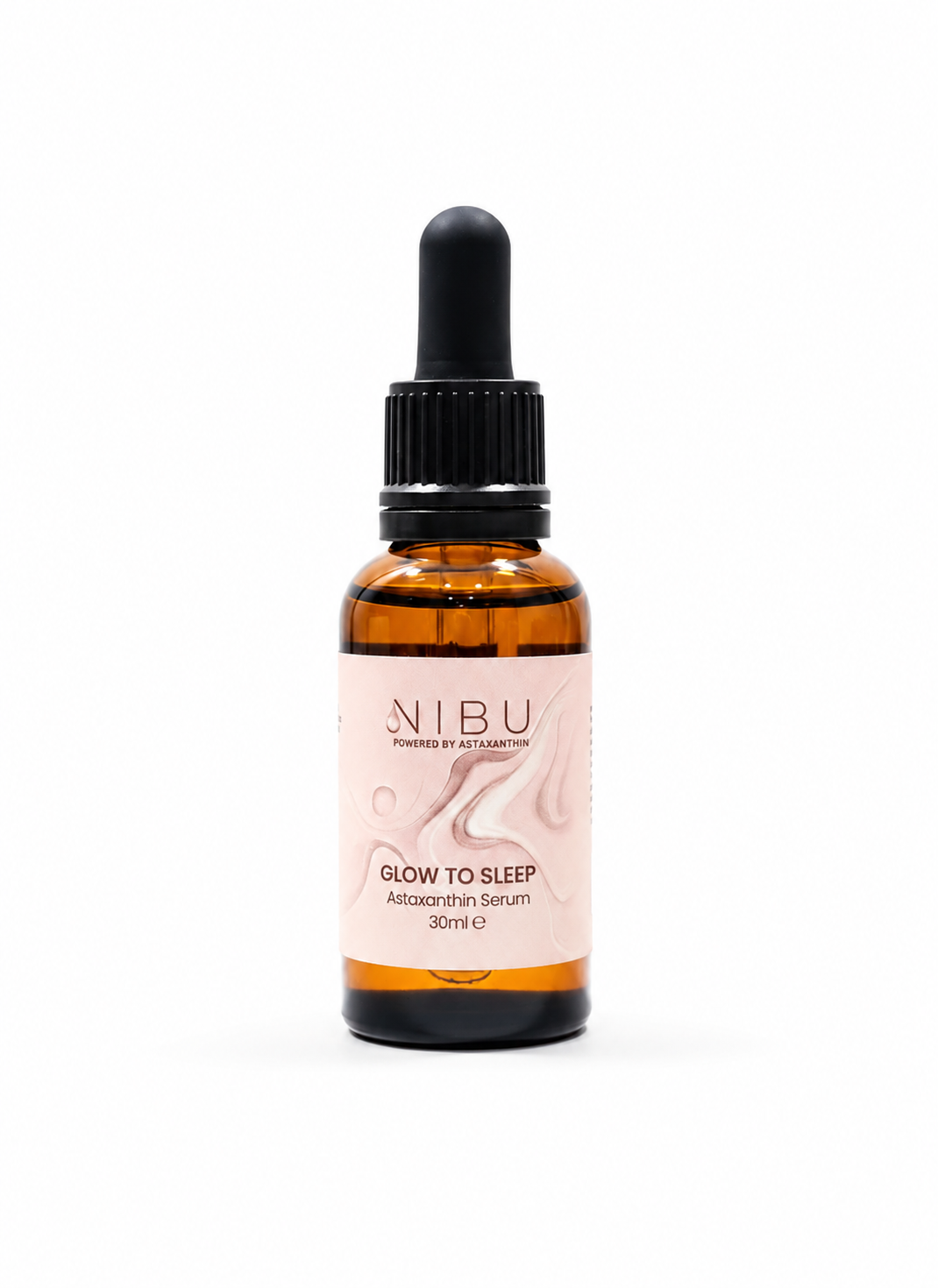
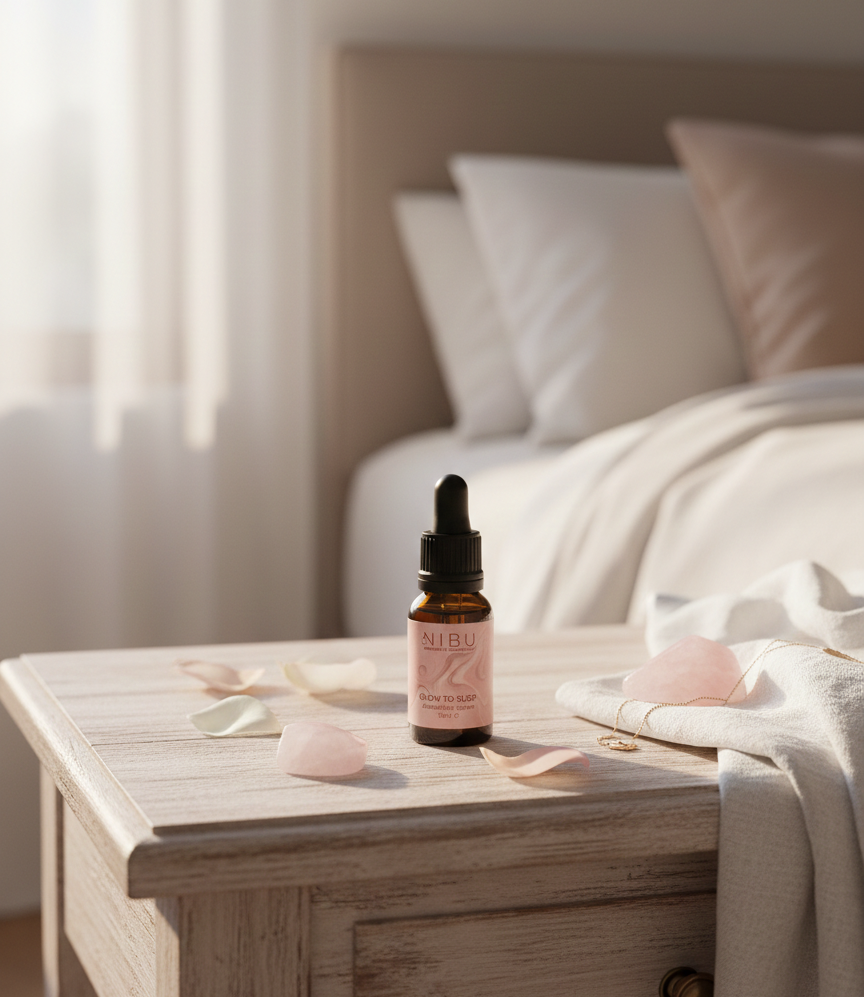
Nibu's Glow to Sleep Astaxanthin Serum is a night-time facial oil designed around nourishment and a calming evening ritual. Its botanical oil blend includes sesame oil, jojoba oil, rosehip oil, vitamin E, astaxanthin from Haematococcus pluvialis, and rose, jasmine, geranium and lavender oils.
But we want to make an important distinction. Glow to Sleep is skincare. It is not a menopause treatment. It cannot replace HRT where HRT is medically appropriate. It does not restore declining oestrogen. What good skincare can do is support the skin you have as it changes. That is a much more honest promise.
Skin Health Starts at the Dinner Table Too
Important dietary components for skin include protein, essential fatty acids, vitamin C, vitamin A, vitamin E, zinc, selenium, copper and a wide variety of plant compounds. A varied diet containing vegetables, fruit, protein-rich foods, fish, nuts, seeds, pulses, whole grains and healthy fats is a far more sensible starting point than buying every nutrient individually.
Omega-3 and Skin
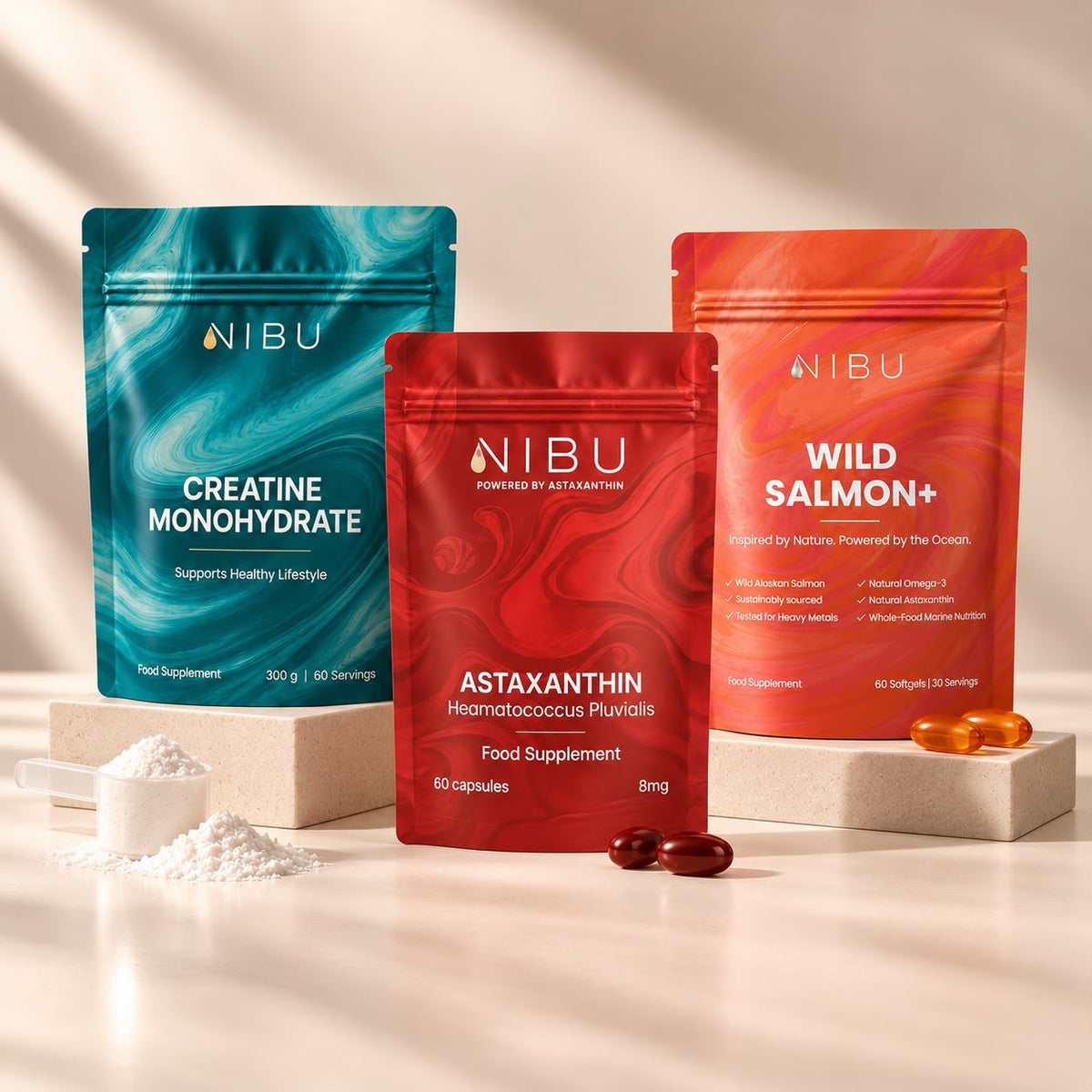
Research is exploring relationships between fatty acids, inflammatory signalling and skin health. The best place to begin is food, particularly oily fish. Nibu Wild Salmon+ belongs in the nutrition side of our inside-and-out philosophy but we would never suggest taking salmon oil instead of using sunscreen or moisturiser. Different tools. Different jobs.
What About Astaxanthin Supplements and Skin?
Some small clinical trials have reported changes in parameters such as skin elasticity, moisture or wrinkle appearance following oral astaxanthin supplementation. These results are interesting rather than definitive.
Topical astaxanthin and oral astaxanthin are not interchangeable. And neither should be promoted as a substitute for sun protection, good nutrition, appropriate skincare, sleep or not smoking. This is why we use the phrase inside and outside rather than searching for one miracle route.
Sleep and Your Skin
Sleep is involved in numerous restorative and regulatory processes. Chronic sleep restriction can affect stress hormones, immune function, mood and skin barrier recovery. And perimenopause can make good sleep considerably harder to achieve. If night sweats or insomnia are repeatedly disrupting your sleep, the answer is not simply another night cream. Skin health is part of whole-body health.
Stress and Skin
Stress can aggravate some skin conditions and influence behaviours that affect skin, including sleep, alcohol intake and diet. Building regular opportunities for recovery matters. Walk. Exercise. Spend time outside. Build a calming evening skincare ritual. Small actions count.
Smoking and Skin Ageing
Smoking contributes to premature skin ageing and has far broader consequences for cardiovascular, respiratory and cancer risk. For healthy ageing, stopping smoking is vastly more powerful than adding another skincare active. That may not make an exciting beauty headline. But it is the truth.
Menopause Skin: What Actually Helps?
| Concern | Useful approach |
|---|---|
| Dryness | Gentle cleansing, moisturisers, emollient facial oils |
| Barrier disruption | Reduce harsh products and support barrier lipids |
| Photoageing | Broad-spectrum SPF and sensible sun behaviour |
| Fine lines | Sun protection, appropriate retinoids, moisturisation |
| Reduced firmness | Manage expectations, protect collagen from UV and consider evidence-based actives |
| Sensitivity | Simplify routine and reduce irritating ingredients |
| Dullness | Hydration, gentle exfoliation if tolerated, healthy lifestyle |
| Oxidative stress | UV protection first, antioxidant-rich diet and appropriate topical antioxidants |
| Overall skin health | Nutrition, sleep, movement, skincare and not smoking |
| Menopause symptoms | Appropriate healthcare, not cosmetic skincare |
Myth vs Fact
Myth: Menopause suddenly ages your skin overnight.
Fact: Skin ageing is a lifelong process. Hormonal changes around menopause can accelerate or alter some aspects, but menopause is only one factor.
Myth: Every woman loses exactly 30% of her collagen.
Fact: Research suggests collagen loss can accelerate around menopause, but individual changes vary considerably.
Myth: Expensive skincare can replace sunscreen.
Fact: No luxury serum compensates for repeated excessive UV exposure.
Myth: More active ingredients mean better results.
Fact: Overloading dry or sensitive skin can damage the barrier and increase irritation.
Myth: You need menopause-specific skincare.
Fact: You need skincare appropriate for your skin's changing needs, regardless of the marketing label.
Myth: Astaxanthin stops skin ageing.
Fact: Astaxanthin has interesting antioxidant properties and emerging skin research, but it does not stop biological ageing.
Myth: Skin health is only about what you put on your face.
Fact: Skin is influenced by nutrition, hormones, UV exposure, sleep, smoking, stress and overall health as well as topical skincare.
Frequently Asked Questions
Why does my skin suddenly feel dry during perimenopause?
Changing hormone levels, natural ageing and alterations in skin barrier function and sebum can all contribute to increased dryness.
Does menopause reduce collagen?
Research suggests declining oestrogen around menopause contributes to changes in dermal collagen and skin thickness.
Can you rebuild collagen after menopause?
Skin continues to remodel throughout life. Sun protection and evidence-based topical ingredients such as retinoids can help support aspects of photoaged skin, but no treatment restores skin permanently to its younger state.
What is the best skincare for menopausal skin?
There is no single best routine. Gentle cleansing, appropriate moisturisation, daily broad-spectrum SPF and carefully selected active ingredients form a sensible foundation.
Should menopausal skin use facial oil?
Facial oils can be useful for dry skin because they help soften the skin and reduce moisture loss. Suitability depends on your individual skin.
Is astaxanthin good for ageing skin?
Astaxanthin has antioxidant properties and has been investigated in human skin research. Early evidence is interesting, but studies remain relatively small.
Can I use astaxanthin skincare and take an astaxanthin supplement?
They represent different routes of use and can form part of an inside-and-out approach where appropriate. Neither replaces the fundamentals of skin and general health.
Does drinking more water fix dry menopausal skin?
Adequate hydration is important for general health, but simply drinking excessive water does not repair an impaired skin barrier.
Should I stop exfoliating during menopause?
Not necessarily. Reduce frequency or intensity if dryness or sensitivity develops.
Does HRT improve skin?
Oestrogen can influence skin biology, and studies have reported skin changes with menopausal hormone therapy. HRT should not be started solely as a cosmetic anti-ageing treatment. Decisions about HRT should focus on appropriate medical indications and individual benefits and risks.
Can skincare treat menopause?
No. Skincare can support the skin during menopause but cannot treat the underlying hormonal transition.
Key Takeaways
- Skin contains oestrogen receptors, so hormonal changes around menopause can influence its structure and function.
- Collagen, thickness, elasticity, hydration and barrier function may all change.
- UV exposure remains one of the most important modifiable causes of premature visible skin ageing.
- Daily sun protection should sit at the heart of a healthy-ageing skincare strategy.
- You do not need a complicated menopause skincare routine.
- Nutrition, sleep, movement, smoking and overall health influence skin too.
- Astaxanthin is an interesting antioxidant with emerging evidence in skin research, but it is not a miracle treatment.
- Healthy skin is best supported from the inside and the outside.
The Nibu Longevity Take
Nibu began with skin. And perhaps that was appropriate. Because skin is often where we first notice that time is passing.
The beauty industry has taught women to see these changes as problems that need fixing. We see them differently. Healthy ageing isn't about trying to erase every sign that you've lived. It is about caring for the body you are living in now.
Protect your skin from excessive sun. Nourish it. Moisturise it. Feed yourself well. Sleep. Move. Don't smoke. Choose evidence-led skincare. And use supplements thoughtfully if they genuinely belong in your wider routine.
Your skin is connected to your nutrition. Your hormones. Your sleep. Your environment. Your lifestyle. Your overall health. So don't fight your skin because it is changing. Understand it. Support it. Look after it.
Healthy ageing isn't about looking 25 forever. It's about looking healthy, feeling confident and caring for yourself at every age.
Conclusion
Menopause can change your skin. But it doesn't mean your skin suddenly becomes unhealthy or that you need to replace your entire bathroom cabinet.
Start with the foundations. Protect against UV exposure. Cleanse gently. Support the skin barrier. Moisturise according to your needs. Introduce evidence-based active ingredients thoughtfully. Eat well. Sleep as well as you can. Move regularly. And seek appropriate medical care when menopause symptoms are affecting your wellbeing.
The goal isn't to stop your skin ageing. That is neither realistic nor necessary. The goal is to help your skin remain healthy, comfortable and cared for as you age. And that is a much more empowering definition of skincare.
References
- Thornton MJ. Estrogens and Aging Skin. Dermato-Endocrinology. 2013;5(2):264-270.
- Lephart ED. A Review of the Role of Estrogen in Dermal Aging and Facial Attractiveness in Women. Journal of Cosmetic Dermatology. 2018;17(3):282-288.
- Hall G, Phillips TJ. Estrogen and Skin. Journal of the American Academy of Dermatology. 2005;53(4):555-568.
- Calleja-Agius J, Brincat M, Borg M. Skin Connective Tissue and Ageing. Best Practice and Research Clinical Obstetrics and Gynaecology. 2013;27(5):727-740.
- Rittie L, Fisher GJ. Natural and Sun-Induced Aging of Human Skin. Cold Spring Harbor Perspectives in Medicine. 2015;5(1):a015370.
- Krutmann J et al. The Skin Aging Exposome. Journal of Dermatological Science. 2017;85(3):152-161.
- Davinelli S, Nielsen ME, Scapagnini G. Astaxanthin in Skin Health, Repair, and Disease. Nutrients. 2018;10(4):522.
- Tominaga K et al. Cosmetic Benefits of Astaxanthin on Human Subjects. Acta Biochimica Polonica. 2012;59(1):43-47.
- Ito N, Seki S, Ueda F. The Protective Role of Astaxanthin for UV-Induced Skin Deterioration. Nutrients. 2018;10(7):817.
- Zasada M, Budzisz E. Retinoids: Active Molecules Influencing Skin Structure Formation. Postepy Dermatologii i Alergologii. 2019;36(4):392-397.
- NICE. Menopause: Identification and Management (NG23). Updated 2024.
Continue Reading
- Perimenopause Explained: What Is Happening to Your Body in Your 40s?
- The Power of Icelandic Astaxanthin in Our Skincare
- Astaxanthin for Skin: Benefits, Evidence and How It Works
- Astaxanthin and Creatine for Skin, Energy and Healthy Ageing
- Oxidative Stress Explained: Why It Matters for Healthy Ageing
- Protein for Women Over 40: How Much Do You Really Need for Healthy Ageing?
- Healthy Ageing After 40: 10 Evidence-Based Habits Every Woman Should Know
About The Nibu Journal
The Nibu Journal is the educational home of Nibu Naturals. Created to help women make informed decisions about healthy ageing, we explore longevity, women's health, nutrition, supplements, skin health and lifestyle through clear, evidence-led education. Nibu began with astaxanthin skincare, but our philosophy has always grown from a bigger idea: skin is part of the body, and healthy ageing should support the whole woman.
Medical Disclaimer
This article is provided for general educational purposes and is not intended to diagnose, treat, cure or prevent any medical condition. Skin changes can have many causes and should not automatically be attributed to perimenopause or menopause. Speak to your GP, pharmacist, dermatologist or another appropriately qualified healthcare professional if you develop persistent, severe or unexplained skin symptoms.
If you are considering HRT or experiencing menopausal symptoms that affect your quality of life, discuss your individual circumstances, benefits and risks with an appropriately qualified healthcare professional. Always follow the directions provided with skincare products and seek professional advice if you experience a significant reaction.

Read more
Perimenopause Explained: What Is Happening to Your Body in Your 40s?
Perimenopause can affect far more than your periods. From sleep and mood to body composition, muscle, skin and temperature regulation, discover what is actually happening during the menopause trans...
Read more
Why Strength Matters More Than Weight as You Age
For decades, women have been encouraged to focus on weighing less. But as we age, another measurement becomes increasingly important: strength. Discover why protecting muscle and physical capabilit...
Read moreShop
Best Sellers