The Complete Guide to Astaxanthin: Benefits, Dosage, Safety and How It Works
Quick Answer
Astaxanthin is a naturally occurring red-orange carotenoid found in microalgae and marine foods such as wild salmon, trout, krill and some shellfish. The microalga Haematococcus pluvialis is one of the richest natural sources used in supplements. Astaxanthin is best known for its antioxidant activity and has been studied for potential benefits relating to skin health, ultraviolet-related skin stress, eye comfort, exercise recovery and cardiometabolic health.
Human research is promising, particularly in skin health, but the evidence is not equally strong for every claimed benefit. Many studies are small, use different doses and formulations, or have commercial funding. Astaxanthin should therefore be viewed as a supportive nutrient rather than a treatment or a substitute for healthy food, sun protection, exercise, sleep or medical care.
Why Read This Guide?
If you've heard astaxanthin described as a "super antioxidant" or wondered whether it's really worth taking, this guide explains what current research actually shows. We'll separate established evidence from early findings, explain where astaxanthin fits into a healthy lifestyle and help you make an informed decision without exaggerated claims.
Astaxanthin at a Glance
| Question | Quick Answer |
|---|---|
| What is astaxanthin? | A naturally occurring red-orange carotenoid found in microalgae and marine foods such as wild salmon. |
| What is it best known for? | Its antioxidant properties and research into skin health, healthy ageing and cellular protection. |
| What is the richest natural source? | The freshwater microalga Haematococcus pluvialis. |
| Should I take it with food? | Yes. As a fat-soluble nutrient, it is best taken with a meal containing some healthy fat. |
| Can it replace sunscreen? | No. Astaxanthin should complement, not replace, daily sun protection. |
| How much does Nibu provide? | Nibu Astaxanthin provides 8 mg per recommended daily serving. |
| Is the evidence strong? | The strongest human evidence relates to skin health. Research into other areas remains promising but varies in quality and consistency. |
What You'll Learn
In this guide, we explain:
- What astaxanthin is
- Where natural astaxanthin comes from
- Why wild salmon is pink
- How astaxanthin behaves in the body
- The difference between natural and synthetic astaxanthin
- What the research says about skin, eyes, exercise and metabolic health
- How much astaxanthin is commonly used
- When and how to take it
- Possible side effects and safety considerations
- Who may find it relevant
- How to recognise a high-quality supplement
- How astaxanthin fits into a healthy ageing lifestyle
Introduction
Every few years, a nutrient appears in the wellness world and is described as though it can solve almost everything. Astaxanthin has sometimes been presented in this way. It has been called a "super antioxidant", a natural sunscreen, an anti-ageing nutrient and even a shortcut to better exercise performance.
The reality is more interesting, but also more measured.
Astaxanthin is a genuine bioactive carotenoid with a distinctive molecular structure. It is produced naturally by certain microalgae and travels through the marine food chain, giving animals such as wild salmon their characteristic pink-red colour.
Scientists have studied it for several reasons. Its antioxidant behaviour is unusual, it can interact with lipid-rich cell membranes, and early human research has explored its potential effects on skin, eyes, inflammation, blood lipids and exercise-related outcomes. Some findings are encouraging. Others remain inconsistent or preliminary.
At Nibu, we believe an ingredient should never be made more impressive by exaggerating it. Trust comes from explaining what the evidence supports, what it does not yet prove and how the ingredient fits within the foundations of a healthy lifestyle.
This is the complete guide to astaxanthin, without the miracle claims.
What Is Astaxanthin?
Astaxanthin is a naturally occurring pigment belonging to the carotenoid family. Carotenoids are compounds responsible for many of the yellow, orange and red colours found in plants and foods. Familiar examples include beta-carotene in carrots, lutein in leafy greens and lycopene in tomatoes. Astaxanthin belongs to a subgroup known as xanthophyll carotenoids.
Unlike beta-carotene, astaxanthin is not primarily converted into vitamin A in the body. Its biological interest comes mainly from its antioxidant properties and the way its structure allows it to interact with fatty cell membranes.
Under stressful environmental conditions, certain microalgae produce astaxanthin as a protective pigment. When marine animals consume the algae directly or indirectly, the pigment moves through the food chain. That is why astaxanthin is found naturally in wild salmon, trout, krill, shrimp, lobster, crayfish and some other marine organisms.
Where Does Astaxanthin Come From?
Microalgae
The freshwater microalga Haematococcus pluvialis is one of the richest natural sources of astaxanthin used in dietary supplements. During normal growing conditions, the algae are green. When exposed to environmental stress such as intense light or nutrient limitation, the cells begin producing large amounts of astaxanthin, gradually turning deep red. This acts rather like a biological shield, helping the organism cope with environmental stress.
Marine foods
Marine animals obtain astaxanthin through their diet. Wild salmon eat organisms that have consumed astaxanthin-producing algae. The pigment accumulates in their tissues, contributing to the salmon's natural coral-pink colour. Farmed salmon may receive astaxanthin through feed because it is not naturally exposed to the same food chain in the wild.
Synthetic production
Astaxanthin can also be manufactured synthetically. Synthetic astaxanthin is widely used in aquaculture feed to provide colour to farmed fish. Most human dietary supplements use astaxanthin derived from Haematococcus pluvialis, while synthetic astaxanthin is used predominantly in animal and aquaculture applications.
For a human food supplement, the meaningful questions are: What is the source? Is it intended and authorised for human consumption? Has it been correctly identified? Is the dose standardised? Has it been tested for purity and contaminants? Is the final product protected from oxidation?
Why Is Astaxanthin Called an Antioxidant?
Your body constantly produces energy, repairs tissue and responds to the environment. During these normal processes, reactive molecules are created. Your body also has an antioxidant defence system that helps keep them under control. Oxidative stress may occur when reactive molecules are produced faster than the body can regulate them.
Astaxanthin can interact with reactive molecules in laboratory settings, which is why it is described as an antioxidant. Its molecular structure includes both water-compatible and fat-compatible regions, allowing it to sit across lipid membranes in a way that differs from some other carotenoids.
Think of a cell membrane as a sandwich. The outer surfaces interact with watery environments, while the centre is fatty. Astaxanthin's structure may allow parts of the molecule to interact with different regions of this membrane.
This biochemical behaviour is scientifically interesting, but laboratory antioxidant activity does not automatically translate into dramatic health benefits in people.
How Is Astaxanthin Absorbed?
Astaxanthin is fat-soluble, meaning it is absorbed alongside dietary fats rather than dissolving easily in water. Once consumed, it is incorporated into structures called micelles within the digestive system, then absorbed by intestinal cells and transported through the body in lipoproteins.
Taking astaxanthin with a meal containing some dietary fat may support absorption. Examples include meals containing avocado, olive oil, eggs, nuts or seeds, oily fish or full-fat yoghurt. You do not need an especially high-fat mea a normal balanced meal containing some fat is usually sufficient.
Astaxanthin is also sensitive to oxygen, heat and light, so formulation, packaging and storage can influence product stability.
Natural Astaxanthin vs Synthetic Astaxanthin
Natural and synthetic astaxanthin have the same basic chemical formula, but they are not identical in every respect. The astaxanthin molecule can exist in different spatial arrangements known as stereoisomers. Natural astaxanthin from Haematococcus pluvialis is predominantly found in one stereoisomeric form and is generally present as esterified astaxanthin. Synthetic astaxanthin contains a mixture of stereoisomers in different proportions.
For a human food supplement, look for: a clearly named natural source, Haematococcus pluvialis on the label, a stated amount of actual astaxanthin (not only algae weight), appropriate extraction and processing, protection against oxidation, quality and contaminant testing, traceability and suitable packaging.
What Is Icelandic Astaxanthin?
"Icelandic astaxanthin" refers to astaxanthin cultivated and produced in Iceland, rather than a separate type of astaxanthin molecule. The natural environment and local energy infrastructure can make Iceland an attractive location for controlled microalgae cultivation.
The astaxanthin ingredient used by Nibu is an oleoresin extracted from non-GMO Haematococcus pluvialis biomass using solvent-free supercritical carbon dioxide technology. According to its product specification, the ingredient contains at least 5% astaxanthin. The specification includes testing criteria for astaxanthin concentration, identity, microorganisms, heavy metals and a range of environmental contaminants. The ingredient is described in supplier documentation as non-GMO, free from animal ingredients and approved as a novel food ingredient in the European Union.
These details tell us about the ingredient's source, composition and quality controls. They do not, by themselves, prove that the finished supplement will deliver a particular health outcome.
What Are the Potential Benefits of Astaxanthin?
Astaxanthin has been studied across many areas of health. However, the strength of evidence varies considerably. It is useful to separate three levels of research: laboratory and animal research (which helps explain potential mechanisms), small human trials (which suggest possible effects), and larger, well-designed and independently replicated trials (which provide stronger confidence).
Much of the excitement surrounding astaxanthin comes from the first two levels. That does not make the research meaningless. It means we should avoid speaking as though every proposed benefit has been firmly established.
1. Astaxanthin and Skin Health
Skin is one of the best-studied areas of astaxanthin research. Human studies have examined outcomes including skin moisture, elasticity, fine lines and wrinkles, skin texture, transepidermal water loss and responses to ultraviolet exposure.
A systematic review identified 11 clinical studies, including six randomised, placebo-controlled trials. Several studies reported improvements in skin moisture, texture or appearance, along with possible protection against ultraviolet-related skin changes. However, many studies were small, involved healthy Japanese women and had commercial funding.
One placebo-controlled trial gave participants 4 mg of astaxanthin daily for nine weeks and reported some protective effects on ultraviolet-related redness, moisture and transepidermal water loss compared with placebo.
Astaxanthin may support selected aspects of skin condition, particularly hydration and responses to environmental stress. It should not be described as an oral sunscreen, a replacement for SPF, a treatment for sun damage, a substitute for skincare or a proven way to reverse skin ageing.
A realistic inside-out skin routine includes broad-spectrum sunscreen, avoiding excessive sun exposure, adequate protein, colourful fruit and vegetables, essential fatty acids, hydration, sleep, not smoking and appropriate topical skincare. Astaxanthin may complement those habits. It cannot replace them.
2. Astaxanthin and Eye Health
Small studies have explored outcomes such as eye fatigue, visual accommodation, blood flow within the eye, screen-related discomfort and visual performance. Reviews describe eye health as a promising area, but the clinical evidence remains more limited than the marketing language often suggests.
Astaxanthin should not be presented as a treatment for glaucoma, cataracts, macular degeneration or any other eye disease. Anyone experiencing persistent visual changes, eye pain, flashes, new floaters or loss of vision should seek prompt professional assessment.
3. Astaxanthin, Exercise and Recovery
Astaxanthin has been studied for possible effects on exercise-related oxidative stress, fatigue, muscle damage, endurance, fat metabolism and recovery. Results have been mixed. Some small trials have reported changes in markers of oxidative stress or exercise metabolism, while others have found little meaningful improvement in performance.
A recent trial involving active young women found that two weeks of 12 mg daily altered respiratory exchange ratio during submaximal cycling, suggesting a shift towards greater fat use. However, it included only 20 participants, used a relatively high dose and did not demonstrate broader improvements in cardiovascular or perceived exercise responses. This is an interesting early finding, not evidence that astaxanthin causes fat loss or meaningfully improves fitness.
For exercise performance and recovery, the priorities remain appropriate training, sufficient energy intake, protein, carbohydrate availability, hydration, rest and sleep.
4. Astaxanthin and Cardiometabolic Health
A systematic review of seven trials involving 321 adults with metabolic risk factors found a possible reduction in LDL cholesterol and marginal effects on total cholesterol and systolic blood pressure. The authors concluded that more robust research was needed before firm conclusions could be drawn.
Astaxanthin should not be promoted as a treatment for high cholesterol, diabetes, hypertension or metabolic syndrome. Women with abnormal blood tests or cardiovascular risk factors should speak to their GP rather than relying on a supplement.
5. Astaxanthin and Inflammation
Astaxanthin has shown effects on inflammatory pathways in laboratory studies, and some human trials have measured changes in markers such as C-reactive protein and inflammatory cytokines. However, inflammation is not one simple process; it is an essential part of immune defence and tissue repair. The evidence does not support describing astaxanthin as a general treatment for inflammatory disease.
6. Astaxanthin and Healthy Ageing
Astaxanthin may be relevant to healthy ageing because oxidative stress, environmental exposure and chronic low-grade inflammation are involved in several age-related processes. However, it would be misleading to call astaxanthin an anti-ageing treatment. No supplement can stop ageing.
A better question is: can astaxanthin provide useful support within the habits that help women remain healthy and resilient over time? The answer is potentially yes, particularly for someone interested in inside-out skin health or adding a researched carotenoid to an otherwise strong lifestyle. But the foundations remain more powerful: not smoking, resistance training, cardiovascular movement, sufficient protein, eating plants in variety, sleeping well, maintaining healthy blood pressure and blood glucose, protecting skin from ultraviolet radiation, maintaining meaningful relationships and attending health checks.
How Strong Is the Evidence?
| Area | Current evidence | Responsible interpretation |
|---|---|---|
| Skin hydration and appearance | Promising human evidence | May support selected skin measures, but studies are generally small |
| Ultraviolet-related skin stress | Some positive human trials | May offer complementary support but cannot replace sunscreen |
| Eye comfort and visual fatigue | Limited, promising trials | More independent research is needed |
| Exercise recovery | Mixed findings | Not established as a reliable performance supplement |
| Blood lipids | Some potentially favourable changes | Insufficient evidence to treat high cholesterol |
| Glucose regulation | Early and inconsistent evidence | Not a treatment for diabetes or insulin resistance |
| Inflammation | Strong mechanistic interest | Clinical significance remains uncertain |
| Healthy ageing | Indirect and emerging | Should be considered one optional part of a much wider lifestyle |
Why Do Astaxanthin Claims Sometimes Sound Confusing?
Astaxanthin is often described using bold phrases such as "super antioxidant", "natural sunscreen" or "anti-ageing nutrient". These descriptions can make the research sound more conclusive than it really is.
Laboratory studies can help researchers understand how astaxanthin interacts with cells, membranes and reactive molecules. Animal studies can then explore possible biological effects in a living system. However, they cannot prove that the same benefit will occur in people. Marketing often removes these important details.
The most responsible way to understand astaxanthin is to ask three questions: Was the research carried out in humans? Was the study large, well designed and independently replicated? Does the claim reflect the actual outcome measured?
At Nibu, we do not believe promising research should be dismissed. We also do not believe it should be presented as proven before the evidence is strong enough.
How Much Astaxanthin Should You Take?
Human studies have used a wide range, commonly from around 2 mg to 12 mg daily. In skin research, doses between approximately 3 mg and 6 mg daily have frequently been studied.
EFSA concluded that combined exposure from the diet and a supplement providing 8 mg of astaxanthin daily is safe for adults. Nibu Astaxanthin provides 8 mg per recommended daily serving and is intended for adults. Always follow the directions on the specific product rather than combining several astaxanthin-containing supplements. More is not automatically better.
When Is the Best Time to Take Astaxanthin?
Astaxanthin is fat-soluble, so it is sensible to take it with a meal containing some fat. Breakfast or lunch may work well for many people for example with eggs and avocado, with yoghurt and nuts, with porridge containing nut butter, alongside a lunch dressed with olive oil, or with a meal containing oily fish.
The exact time of day is less important than taking it consistently and in accordance with the product instructions. Astaxanthin is not a stimulant, so it does not need to be taken before exercise or avoided near bedtime.
How Long Does Astaxanthin Take to Work?
Astaxanthin does not usually create an immediate sensation. Clinical studies commonly run for several weeks — skin trials, for example, have often measured changes after approximately six to twelve weeks.
Whether an individual notices a difference depends on the reason for taking it, baseline diet, dose, formulation, consistency, individual absorption and the outcome being measured. Supplements should not be continued indefinitely simply because the user assumes something invisible must be happening.
Can You Get Enough Astaxanthin from Food?
Astaxanthin occurs naturally in seafood, especially wild salmon and trout. Eating these foods also provides valuable nutrients including protein, omega-3 fatty acids, vitamin D, selenium, vitamin B12 and iodine.
For many people, obtaining nutrients through food is preferable because foods provide a combination of compounds rather than one isolated ingredient. However, the amount of astaxanthin in seafood varies by species, diet, origin and portion size. A supplement provides a standardised amount, but it does not provide the protein, omega-3 fats or broader nutritional value found in fish.
Is Astaxanthin Safe?
Astaxanthin has generally been well tolerated in clinical studies at the doses commonly used in supplements. A small randomised human safety study evaluated 6 mg daily from a Haematococcus pluvialis extract for eight weeks and did not identify significant safety concerns in healthy adult participants. EFSA's updated assessment concluded that an intake of 8 mg per day from supplements, combined with dietary exposure, is safe for adults.
Safety findings in healthy adults do not guarantee that every product or dose is suitable for every individual.
Possible Side Effects
Reported side effects appear uncommon at typical supplemental doses, but may include digestive discomfort, changes in stool colour, red or orange stool at higher intakes, individual intolerance or allergic reaction to another ingredient in the capsule or formulation. Stop using the supplement and seek medical advice if you experience signs of an allergic reaction, severe digestive symptoms or any unexpected health change.
Who Should Seek Professional Advice?
Speak to a GP, pharmacist or suitably qualified healthcare professional before taking astaxanthin if you are pregnant or breastfeeding, are under 18, take prescribed medication, have liver or kidney disease, have a bleeding disorder, are preparing for surgery, have a diagnosed immune or inflammatory condition, are undergoing treatment for cancer, have unexplained symptoms or are allergic to ingredients in the product.
Can Astaxanthin Interact with Medication?
Formal clinical interaction data are limited. Theoretical or preliminary concerns have been raised regarding medicines affecting blood pressure, blood glucose, blood clotting and immune function. A pharmacist can assess the full product alongside your medicines and medical history. Remember to mention supplements before surgery or when being prescribed a new medicine.
Who May Find Astaxanthin Relevant?
Women in their twenties and thirties may be interested in skin health, environmental exposure, establishing preventative habits, active lifestyles and antioxidant nutrition. The most important habits at this age remain sunscreen, strength training, not smoking, balanced nutrition and good sleep.
Women approaching perimenopause may notice changes in skin hydration, recovery, sleep, body composition and stress tolerance. Astaxanthin may support an inside-out skincare routine, but it does not treat hormonal symptoms or replace personalised menopause care.
Women over 50 may value astaxanthin as one part of a wider approach alongside strength training, adequate protein, omega-3-rich foods and preventative healthcare.
Active women may be drawn to research on oxidative stress and recovery. The evidence is not strong enough to promise better performance. Astaxanthin should sit behind training, food, hydration and sleep in the order of importance.
People who eat little seafood may be interested in supplementation, though astaxanthin does not replace the protein or omega-3 fatty acids found in oily fish.
How to Choose a High-Quality Astaxanthin Supplement
- Check the source; look for natural astaxanthin derived from Haematococcus pluvialis, clearly named on the label
- Check the actual astaxanthin dose; the label should clearly state milligrams of astaxanthin per daily serving, not just algae or oleoresin weight
- Consider the formulation; an oil-based formulation may be appropriate given its fat-soluble nature
- Look for traceability a responsible company should know where its ingredient comes from and how it is processed
- Look for quality testing: identity, concentration, microbiological quality, heavy metals, pesticides, environmental contaminants, oxidation and stability
- Consider the packaging; astaxanthin is sensitive to oxygen, light and heat
- Avoid exaggerated promises; be cautious of products claiming to reverse ageing, cure inflammation, replace sunscreen, prevent disease, guarantee weight loss or treat eye conditions
Astaxanthin Supplement vs Astaxanthin Skincare
Oral astaxanthin is absorbed through the digestive system and distributed through the body. Research has investigated systemic outcomes including skin moisture, ultraviolet responses and metabolic markers.
Topical astaxanthin is applied directly to the skin. Its behaviour depends heavily on concentration, formulation, product stability, supporting ingredients, packaging and frequency of use.
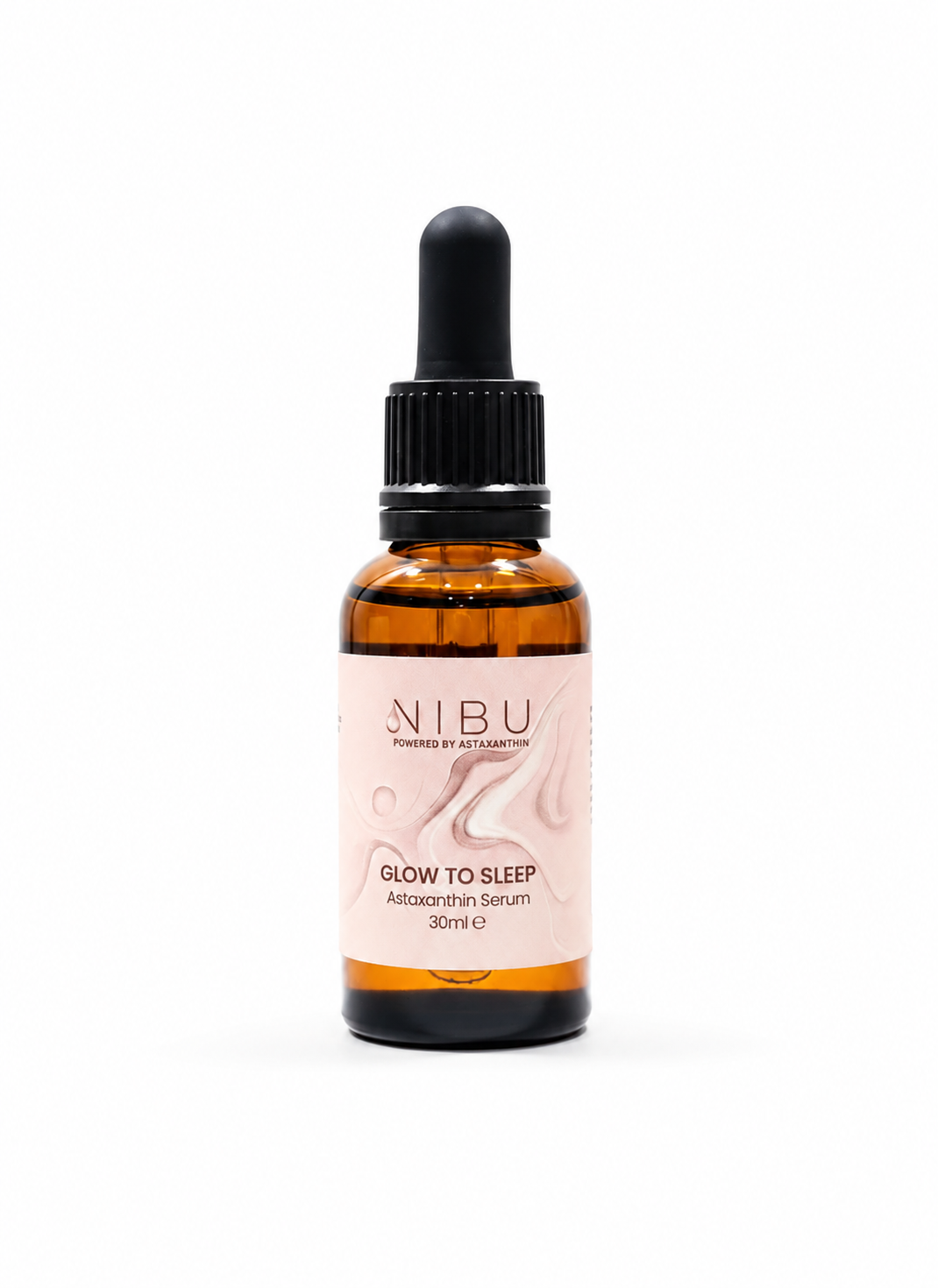
Nibu began with astaxanthin skincare because skin health was the original expression of our inside-out philosophy. As the brand has developed, that philosophy has expanded. Skincare supports the surface. Nutrition, movement, sleep and carefully selected supplements support the wider body. Neither approach should be presented as complete on its own.
Astaxanthin Myths vs Facts
| Myth | Fact |
|---|---|
| Astaxanthin stops ageing. | Nothing stops ageing. Astaxanthin is a carotenoid being studied for selected health outcomes. |
| It is an oral sunscreen. | Astaxanthin cannot replace sunscreen, clothing or sensible sun exposure. |
| It cures inflammation. | It has been studied for effects on inflammatory pathways, but it is not a treatment for inflammatory disease. |
| The strongest antioxidant must be the best supplement. | Laboratory antioxidant comparisons do not prove superior clinical outcomes in humans. |
| Everyone should take astaxanthin. | It is optional and should be chosen according to individual needs, diet and health. |
| More astaxanthin works better. | Higher doses are not automatically more effective and may exceed recommended intake. |
| All astaxanthin supplements are the same. | Source, dose, formulation, stability and testing can differ substantially. |
| Astaxanthin from algae provides omega-3. | Astaxanthin and omega-3 fats are different nutrients. An astaxanthin supplement does not automatically supply meaningful omega-3. |
| It works immediately. | Studies generally assess outcomes after several weeks, and many possible effects cannot be felt directly. |
| Natural means risk-free. | Natural ingredients can still be unsuitable for some people or interact with individual health circumstances. |
Frequently Asked Questions
What is astaxanthin made from? Natural astaxanthin supplements are commonly made using the microalga Haematococcus pluvialis. Astaxanthin can also be produced synthetically, primarily for aquaculture applications.
Is astaxanthin a vitamin? No. Astaxanthin is a carotenoid, not an essential vitamin. There is no established deficiency disease caused by failing to consume it.
Is astaxanthin the same as beta-carotene? No. Both are carotenoids, but their structures and behaviour differ. Astaxanthin is not primarily converted into vitamin A.
Why is wild salmon pink? Wild salmon obtains astaxanthin through the marine food chain. The pigment accumulates in its tissues and contributes to its pink-red colour.
Can I take astaxanthin every day? Many research studies use daily supplementation. Adults should follow the directions on their product and avoid combining several astaxanthin supplements without professional advice.
Should I take astaxanthin with food? Yes. As astaxanthin is fat-soluble, taking it with a meal containing some dietary fat is sensible.
Can I take astaxanthin and creatine together? There is no established reason healthy adults must separate them. They have different functions and are not known to cancel each other out. Direct research on the combination is limited.
Can I take astaxanthin with omega-3? Astaxanthin and omega-3 fatty acids occur together naturally in foods such as wild salmon. They may also be included within the same routine, provided the products are suitable for the individual.
Does astaxanthin help wrinkles? Some small studies have reported improvements in wrinkle appearance, moisture or elasticity. The evidence is encouraging but not strong enough to guarantee visible results.
Does astaxanthin protect against sun damage? Research suggests it may influence certain skin responses to ultraviolet exposure. It does not replace SPF or safe sun habits.
Does astaxanthin help with weight loss? There is not enough evidence to recommend astaxanthin as a weight-loss supplement. Early exercise-metabolism findings do not prove that it reduces body fat.
Is astaxanthin good for menopause? Astaxanthin does not treat menopause. Some women may value it for skin or general antioxidant support, but symptoms should be managed through evidence-based, personalised care.
Is astaxanthin vegan? Astaxanthin derived from microalgae may be suitable for vegans, but the finished capsule shell and other ingredients must also be checked.
Can astaxanthin replace eating salmon? No. Salmon provides protein, omega-3 fats and several vitamins and minerals. Astaxanthin is only one component.
Can children take astaxanthin? Adult astaxanthin supplements should not automatically be given to children. EFSA's safety assessment indicates that age affects safe total exposure, so professional guidance and age-appropriate products are essential.
Key Takeaways
- Astaxanthin is a naturally occurring red-orange carotenoid found in microalgae, wild salmon, trout, krill and some shellfish
- Haematococcus pluvialis is one of the main natural sources used in supplements
- Astaxanthin is fat-soluble and is best taken with a meal containing some fat
- Skin health is one of its more promising areas of human research
- Evidence for eye health, exercise recovery, inflammation and metabolic outcomes remains limited or mixed
- Astaxanthin cannot replace sunscreen, skincare, a healthy diet or medical treatment
- European safety assessments support up to 8 mg daily from supplements for adults when dietary exposure is also considered
- Source, dose, formulation, stability and quality testing all matter
- Astaxanthin may support healthy ageing, but it is one small part of a much bigger lifestyle
The Nibu Longevity Take
Healthy ageing does not begin when we notice our first line, feel less energetic or reach a particular birthday. It begins in the small decisions we repeat long before then.
Astaxanthin is interesting because its story starts with protection. Under environmental stress, a tiny green alga produces a vivid red pigment that helps it survive. Our bodies are far more complex, and no ingredient can create the same kind of shield around us. Yet the principle still offers a useful reminder.
Resilience is built through layers. We protect our skin from excessive sunlight. We nourish ourselves well. We build muscle, care for our sleep and remain active. We attend health checks and ask for help when something feels wrong.
A supplement may strengthen one small part of that foundation, but it should never become the foundation itself. Astaxanthin can support the journey. The way we live still shapes the destination.
Conclusion
Astaxanthin is a distinctive carotenoid with genuine scientific interest and a growing body of human research. It is naturally produced by microalgae, travels through the marine food chain and contributes to the familiar pink colour of wild salmon.
Skin health currently has some of the most encouraging human evidence, although studies remain relatively small and are not always independent. The right conclusion is not that astaxanthin is ineffective, nor that it is miraculous. It is a promising, well-tolerated carotenoid that may provide targeted support when used responsibly.
Choose a clearly sourced product, follow the recommended dose, take it with food and place it where it belongs: alongside nourishing food, movement, sleep, sun protection and appropriate healthcare.
That is the Nibu approach. Education first. Lifestyle always. Supplements where they genuinely add value.
References
- Ng QX, et al. Effects of astaxanthin supplementation on skin health: a systematic review of clinical studies. Journal of Dietary Supplements. 2021;18(2):169–182.
- Zhou X, et al. Systematic review and meta-analysis on the effects of astaxanthin on human skin ageing. Nutrients. 2021;13(9).
- Ito N, et al. The protective role of astaxanthin for ultraviolet-induced skin deterioration in healthy people. Nutrients. 2018;10(7):817.
- Donoso A, et al. Therapeutic uses of natural astaxanthin: an evidence-based review focused on human clinical trials. Pharmacological Research. 2021;166:105479.
- Ursoniu S, et al. Astaxanthin influence on health outcomes of adults at risk of metabolic syndrome: a systematic review and meta-analysis. Nutrients. 2022;14(10):2050.
- Brendler T, Williamson EM. Astaxanthin: how much is too much? A safety review. Phytotherapy Research. 2019;33(12):3090–3111.
- Spiller GA, Dewell A. Safety of an astaxanthin-rich Haematococcus pluvialis algal extract: a randomised clinical trial. Journal of Medicinal Food. 2003;6(1):51–56.
- EFSA Panel on Nutrition, Novel Foods and Food Allergens. Safety of astaxanthin for its use as a novel food in food supplements. EFSA Journal. 2020;18(2):5993.
- EFSA Panel on Nutrition, Novel Foods and Food Allergens. Safety of a change in specifications of the novel food oleoresin from Haematococcus pluvialis containing astaxanthin. EFSA Journal. 2023;21(10):8338.
- Nibu Naturals supplier documentation. Astalíf 5 Product Specification, issue REG-0010.17, 2 December 2021.
Continue Reading
-
Oxidative Stress Explained: Why It Matters for Healthy Ageing
Oxidative Stress Explained: Why It Matters for Healthy Ageing -
Inflammaging: The Hidden Cause of Ageing
Inflammaging: The Hidden Cause of Ageing -
What Is Biological Age? Why It Matters More Than Your Birthday
What Is Biological Age? Why It Matters More Than Your Birthday -
Why Muscle Is One of the Most Important Organs for Healthy Ageing
Why Muscle Is One of the Most Important Organs for Healthy Ageing -
Astaxanthin and Creatine: The Perfect Pair for Skin, Strength and Healthy Ageing
Astaxanthin and Creatine: The Perfect Pair for Skin, Strength and Healthy Ageing
Coming soon: Astaxanthin for Skin | Healthy Ageing After 40 | What Is Salmon+?
About The Nibu Journal
The Nibu Journal is Nibu Naturals' evidence-led publication for women who want to understand healthy ageing and make informed decisions about their wellbeing. We translate complex research into clear, practical guidance covering nutrition, supplements, women's health, skin, strength and everyday lifestyle habits.
Our philosophy is simple: Educate first. Support second. Sell naturally.
This article is for general educational purposes only and does not constitute medical advice. It is not intended to diagnose, treat, cure or prevent any disease. Speak to your GP, pharmacist or another suitably qualified healthcare professional before starting a new supplement, particularly if you are pregnant, breastfeeding, taking prescribed medication, preparing for surgery or living with a medical condition.

Read more
What Is Biological Age? Why It Matters More Than Your Birthday
Your birthday tells you how many years you've lived, but it doesn't tell the whole story about your health. Discover what biological age really means, what influences it, and the evidence-based hab...
Read more
What Is Wild Salmon+? Benefits for Women's Healthy Ageing
Discover why wild salmon oil is more than just another omega-3 supplement. Learn how whole-food marine nutrition may support heart, brain, joint and healthy ageing in women.
Read moreShop
Best Sellers