Artikel: How to Cleanse Your Face Properly: A Simple Guide for Healthy Skin
How to Cleanse Your Face Properly: A Simple Guide for Healthy Skin
Cleansing might be one of the simplest steps in your skincare routine, but it is also one of the easiest to overcomplicate.
The purpose of cleansing isn't to leave your face feeling squeaky clean. It's to gently remove makeup, excess oil, perspiration, sunscreen and the everyday impurities that collect on your skin, while respecting your natural skin barrier.
At Nibu, we believe good skincare doesn't need to involve endless steps. A gentle, consistent routine is often a much better place to start.
Quick Guide
Lukewarm water → Cleanser → Gentle massage → Rinse thoroughly → Pat dry → Follow with your usual skincare
Here's how to make your daily cleanse simple and effective.
Step 1: Wash Your Hands
Before touching your face, start with clean hands. It sounds obvious, but your hands come into contact with phones, keyboards, door handles and countless other surfaces throughout the day. A quick hand wash means you're ready to cleanse your skin rather than adding more dirt or residue to it.
Step 2: Use Lukewarm Water
Wet your face with comfortable, lukewarm water. Very hot water isn't necessary for effective cleansing and can be uncomfortable or drying, particularly if your skin is already dry, sensitive or becoming more delicate with age. You don't need to “open your pores” with hot water either pores don't open and close like little doors. Keep it simple and comfortable.
Step 3: Apply Your Cleanser
Dispense a small amount of your cleanser onto your fingertips. If you're using the Nibu Facial Cleanser, gently work it over your skin rather than scrubbing. The aim is to remove what you don't want on your skin without making your face feel stripped afterwards.
Step 4: Massage Gently
Using your fingertips, gently massage the cleanser across your face using small circular movements. Pay attention to areas where makeup, oil and residue commonly collect, including around the nose, the forehead, chin and jawline, and around the hairline. There is no need for aggressive rubbing or scrubbing. Gentle cleansing is still effective cleansing.
Step 5: Remember Your Neck and Décolletage
If you've applied skincare, makeup or sunscreen to your neck and décolletage during the day, remember these areas when cleansing too. Use the same gentle approach you use on your face. The skin here deserves care, but it doesn't need vigorous scrubbing or complicated techniques.
Step 6: Rinse Thoroughly
Rinse your skin thoroughly with lukewarm water until the cleanser has been removed. Take a moment to check around your hairline, jawline and sides of the nose — these are easy places to accidentally leave cleanser behind.
Step 7: Pat Your Skin Dry
Use a clean, soft towel and gently pat your skin dry. Avoid vigorously rubbing your face with the towel. Your skin should feel clean and comfortable, rather than tight or stripped.
If your face regularly feels very dry, tight, itchy or irritated immediately after cleansing, it may be worth looking at the cleanser you're using, how frequently you're cleansing or the rest of your routine.
How Often Should You Cleanse Your Face?
There isn't one rule that works perfectly for everyone. For many people, evening cleansing is particularly important because it removes the makeup, sunscreen, excess oil and everyday impurities that have accumulated during the day.
Morning cleansing is more individual. Some people enjoy cleansing again in the morning, particularly if they have oilier skin. Others, especially those with dry or sensitive skin, may find that a splash of lukewarm water is enough before beginning their morning skincare. The right routine is the one that leaves your skin feeling comfortable. More cleansing isn't necessarily better cleansing.
Do You Need to Double Cleanse?
Not necessarily. Double cleansing usually means cleansing twice, often beginning with an oil or balm-based cleanser to remove makeup or sunscreen before following with another cleanser. It can be useful if you wear heavier makeup, long-wear foundation, water-resistant products or products that are difficult to remove with one cleanse.
But double cleansing isn't a requirement for healthy skin. If one gentle cleanse effectively removes everything and leaves your skin comfortable, there is no need to add another step simply because you've seen it recommended online.
Should You Remove Makeup Before Cleansing?
It depends on your makeup and your cleanser. If your cleanser removes your makeup effectively, one thorough cleanse may be enough. For heavier eye makeup, long-wear foundation or particularly stubborn products, you may prefer to remove these first with a suitable makeup remover before cleansing your face. Afterwards, check around your hairline, jaw and eyes to make sure everything has been removed.
How Long Should You Cleanse For?
You don't need to stand at the sink with a stopwatch. Take enough time to gently work the cleanser across the whole face rather than applying and immediately rinsing it away. Equally, there is little benefit in repeatedly massaging and scrubbing your face for several minutes. Be thorough. Be gentle. Then rinse.
Cleansing Dry or Sensitive Skin
If your skin is naturally dry or sensitive, gentleness becomes particularly important. Look for a cleanser that leaves your skin feeling comfortable rather than tight. You may also find that you don't need a full cleanse every morning.
Avoid assuming that tingling, tightness or that “squeaky clean” sensation means a product is working particularly well. Your skin barrier plays an important role in helping retain moisture and protecting the skin from the outside environment. Looking after it matters.
Cleansing During Perimenopause and Menopause
Skin can change considerably during midlife. As oestrogen levels change around menopause, many women notice their skin becoming drier, more sensitive, less comfortable and different from the skin they had in their 20s and 30s.
This can mean that a cleansing routine you've followed for years suddenly feels too harsh. You don't necessarily need to cleanse more you may need to cleanse more gently. Pay attention to how your skin feels afterwards and adapt your routine as your skin changes. Skincare should work with the skin you have today, not the skin you had ten years ago.
What Should You Apply After Cleansing?
Once you've cleansed and gently dried your skin, you can move on to the rest of your routine. For a simple Nibu morning routine, that might look like:
Cleanse → Glow Serum → Glow Moisturiser
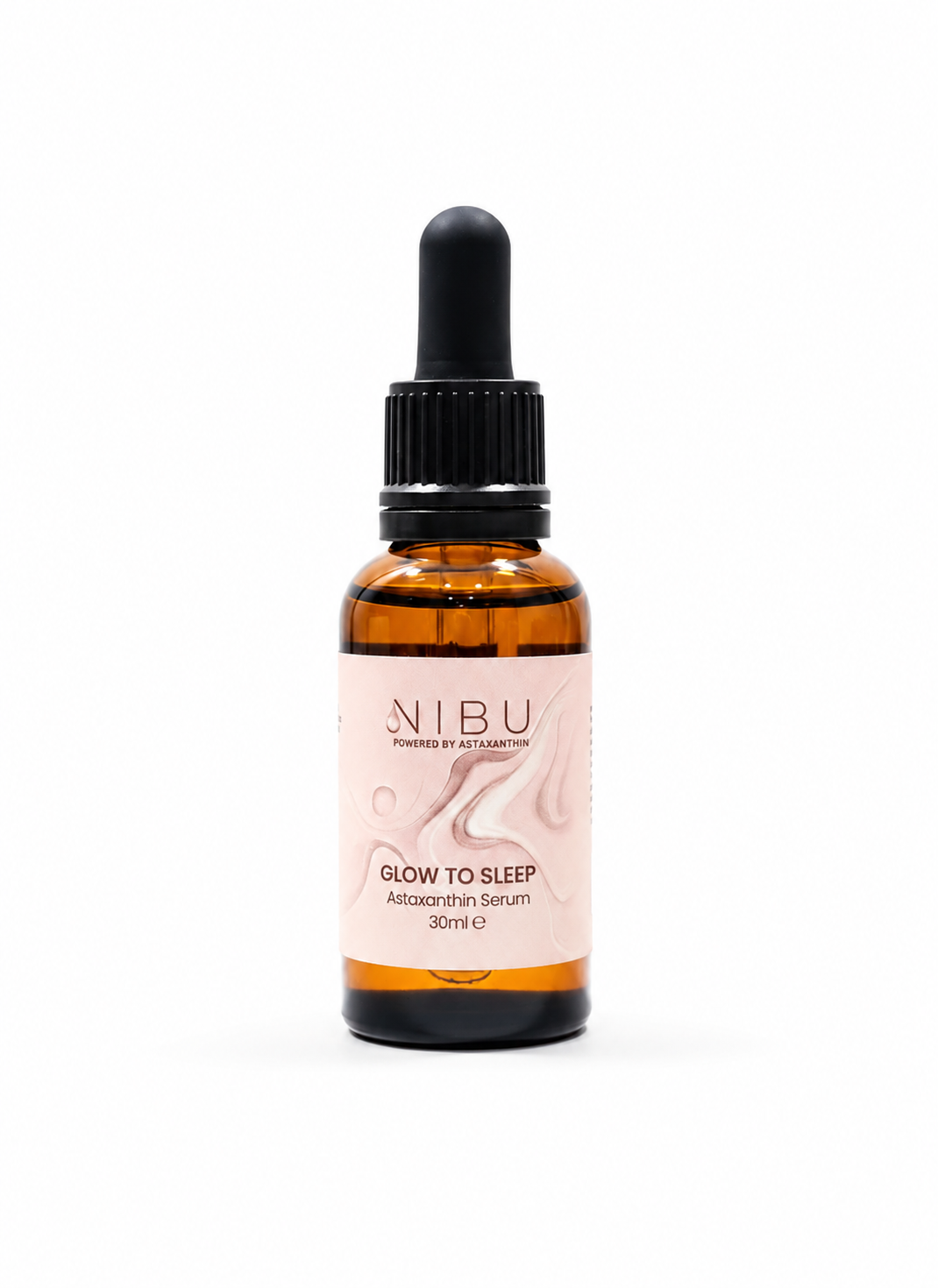
You don't have to use every product or create a complicated routine. In the evening, follow cleansing with the skincare products you normally use at night. If Glow to Sleep is part of your routine, apply it to clean skin as your nourishing night-time facial oil. Consistency matters far more than having an overflowing bathroom shelf.
Common Cleansing Mistakes
Using Very Hot Water
Hotter doesn't mean cleaner. Comfortable lukewarm water is all you need.
Scrubbing Your Skin
Your face isn't a kitchen surface. You don't need to scrub aggressively to remove impurities.
Assuming Tight Skin Means Clean Skin
That tight feeling after cleansing isn't something you need to aim for. Clean skin can still feel soft and comfortable.
Cleansing More Because Your Skin Is Oily
It can be tempting to repeatedly cleanse oily skin, but excessive cleansing may leave skin irritated. Choose an appropriate routine rather than trying to remove every trace of natural oil.
Forgetting Your Hairline and Jaw
Makeup and cleanser residue can easily remain around these areas. Take a few extra seconds when rinsing.
Following Someone Else's Routine Exactly
Your friend's skin isn't your skin. Use skincare advice as guidance, then pay attention to how your own skin responds.
Frequently Asked Questions
Should I cleanse my face every morning and evening?
Not necessarily. Evening cleansing is particularly useful for removing makeup, sunscreen, excess oil and impurities accumulated throughout the day. Whether you also need cleanser in the morning depends on your skin and routine.
Can I just wash my face with water?
For some people, water alone may be enough in the morning. In the evening, particularly if you've worn makeup or sunscreen, a suitable cleanser will usually be more effective at removing residue.
Should my skin feel tight after cleansing?
No. Tightness isn't a sign that you've achieved a better cleanse. If your skin regularly feels uncomfortable afterwards, consider whether your cleanser or routine may be too harsh for your skin.
Do I need to double cleanse every night?
No. Double cleansing can be helpful for removing heavier or long-wear products, but it isn't compulsory.
Should I use hot or cold water?
Lukewarm water is a simple choice. Very hot water isn't necessary and may feel drying or irritating.
Should I cleanse my neck too?
If you've applied skincare, makeup or sunscreen to your neck and décolletage, gently cleanse these areas too.
Can I use a face cloth?
Yes, if you enjoy using one. Keep it clean and use it gently rather than scrubbing your skin.
Should I exfoliate while cleansing?
Cleansing and exfoliating have different purposes. You don't need to exfoliate every time you cleanse, and excessive exfoliation can irritate the skin.
What should I apply immediately after cleansing?
Follow with the skincare appropriate for your routine. This might include a serum, moisturiser or facial oil depending on the time of day and what your skin needs.
The Nibu Approach to Cleansing
Good cleansing isn't about doing the most. It's about removing what needs to be removed while treating your skin with care. As we age, that becomes an increasingly useful philosophy.
Skin changes. Hormones change. Our routines change. The products that suited us at 25 may not necessarily be what our skin wants at 45 or 55.
So rather than chasing complicated routines, start by paying attention. Does your skin feel comfortable? Does it feel clean without feeling stripped? Is your routine something you can realistically maintain?
If the answer is yes, you're probably doing far more right than you think. Healthy-looking skin isn't built through aggressive cleansing or endless steps. It starts with something much simpler:
Cleanse gently. Be consistent. Listen to your skin.

Read more

How to Use Nibu Glow Moisturiser as a Makeup Base
Nibu Glow Moisturiser isn't only the final step in your skincare routine. Its soft, radiant finish also makes it a beautiful base beneath makeup. Available in Glow Natural and Glow Darker, the mois...
WeiterlesenShop
Bestseller