Article: How to Layer Your Skincare Products: The Correct Order for Cleanser, Toner, Serum and Moisturiser
How to Layer Your Skincare Products: The Correct Order for Cleanser, Toner, Serum and Moisturiser
Not sure whether your serum goes before moisturiser? Discover how to build a simple skincare routine around the products you enjoy.
Quick Answer
Begin with cleanser, followed by toner if you use one. Then choose your serum, moisturiser or a combination that suits your skin. Sunscreen is the final morning skincare step.
Lightweight, water-based serums usually go before moisturiser. Nibu Glow Serums are oil-based, so their position is more flexible: apply after lighter skincare and, if using moisturiser too, follow both products' instructions and choose the order that gives a comfortable finish.
A simple Nibu morning routine: Cleanser → Optional Rose Toner → Glow Serum or Glow Moisturiser → SPF 30+
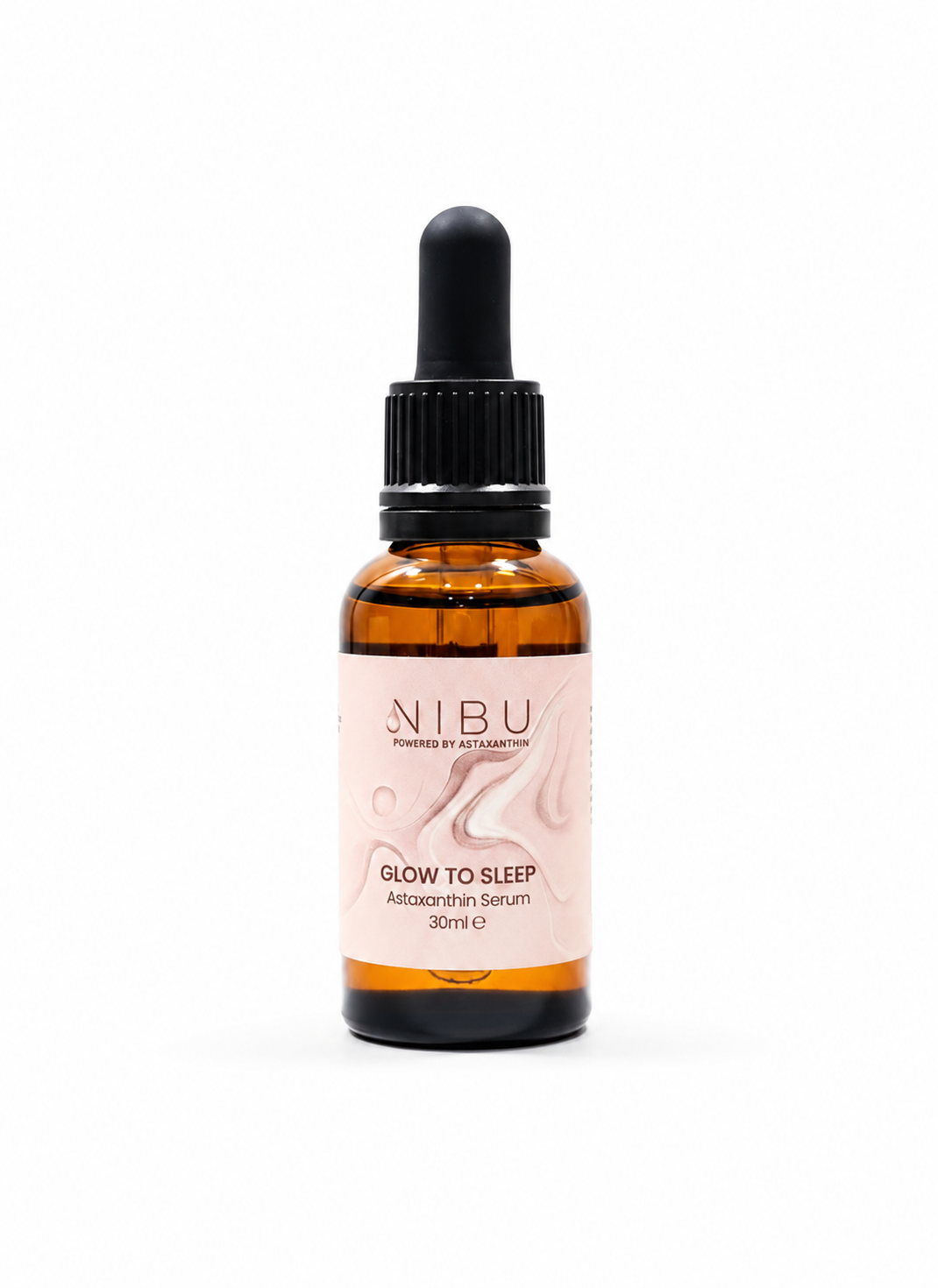
A simple Nibu evening routine: Cleanser → Optional Rose Toner → Moisturiser if needed → Glow to Sleep
You don't need an additional daytime facial oil alongside your Glow Serum. Red light therapy, if used, often fits after cleansing and before skincare, subject to the device instructions.
What You'll Learn
- Where cleanser, toner, serum and moisturiser fit
- Why water-based and oil-based serums may layer differently
- How to use Nibu Glow Serum with moisturiser
- Simple Nibu morning and evening routines
- Where sunscreen and red light therapy belong
- Common layering mistakes to avoid
Introduction: Does Skincare Layering Order Really Matter?
You've cleansed your face. On the bathroom shelf are your toner, serum and moisturiser. But which one comes next?
Perhaps you've heard that skincare should always go from thinnest to thickest, or that every serum must come before moisturiser. These are useful starting points, but the formulation matters too.
A lightweight, water-based serum behaves differently from Nibu's oil-based Glow Serums. Treatments may have specific application instructions, while sunscreen needs to form an even protective layer.
At Nibu, we believe skincare should be something you enjoy, not another task to worry about. Let's make it simple.
Why Does Skincare Layering Order Matter?
Order can influence how comfortably products sit on your skin and how well they perform. Lightweight products generally spread more easily before richer layers, but texture isn't the only consideration.
Some treatments need clean skin, certain retinoids require dry skin, and individual instructions take priority over a general layering rule.
Consider three things: the formulation, the product's purpose and its application instructions.
A Simple Guide to Your Skincare Steps
| Stage | Product | Where it fits |
|---|---|---|
| Cleanse | Nibu Facial Cleanser | First, to remove make-up, sunscreen and everyday residue |
| Tone, if desired | Nibu Rose Toner | After cleansing |
| Choose your Glow | Nibu Glow Serum or Glow Moisturiser | After lighter skincare; if using both, follow their instructions and adjust the order to suit the formulations |
| Protect in the morning | Broad-spectrum SPF 30+ | The final skincare step, applied separately |
| Nourish in the evening | Nibu Glow to Sleep | An evening option, commonly after moisturiser if you use one |
This is a guide, not a requirement to use every product. Any additional water-based serum would generally go before richer skincare.
Step 1: Cleanser Comes First
Cleansing removes make-up, sunscreen, natural oils and everyday residue, preparing your skin for what follows.
Choose a cleanser that leaves skin comfortable rather than tight or stripped. Use lukewarm water, avoid vigorous scrubbing and gently pat dry.
Should you cleanse in the morning?
Dry or sensitive skin may be comfortable with a lukewarm rinse. If your skin is oily or you prefer a fresh cleanse, a gentle cleanser can be appropriate.
Where Nibu fits
Nibu Facial Cleanser is a natural starting point. If your skin feels unusually tight afterwards, consider your cleanser, water temperature and washing frequency before adding more products.
Step 2: Does Toner Go Before Serum?
Yes. Toner usually goes after cleansing and before serum.
Hydrating toners differ from exfoliating toners containing acids or targeted actives. Take extra care when combining exfoliating products with retinoids or other strong treatments, as irritation may increase.
Toner isn't essential, but it can be a pleasant addition if your skin tolerates it.
Where Nibu fits
Nibu Rose Toner can be applied after cleansing. Check the ingredient list and introduce it gradually if you're sensitive to fragranced botanical ingredients.
Step 3: Where Does Nibu Glow Serum Fit?
The word “serum” describes different types of formulation, so it doesn't automatically tell you the application order.
Water-based versus oil-based serums
Lightweight water-based serums, such as some hyaluronic acid or niacinamide products, usually go before moisturiser.
Nibu Glow Serums are oil-based. They provide an emollient texture and a warm, radiant-looking finish, rather than behaving like a lightweight water-based treatment.
Using Glow Serum with moisturiser
Apply your Glow Serum after lighter skincare. If you also use moisturiser, choose the order that works with both products' instructions and gives a comfortable finish. There is no need to insist on serum first simply because of its name.
Start with a small amount, blend evenly and let the products settle. Keep sunscreen separate and apply it last in the morning.
You can also experiment with a little Glow Serum mixed into a compatible moisturiser immediately before application. If the products separate, pill or feel uncomfortable, apply them separately instead. Never mix the serum into sunscreen.
Choose your preferred finish
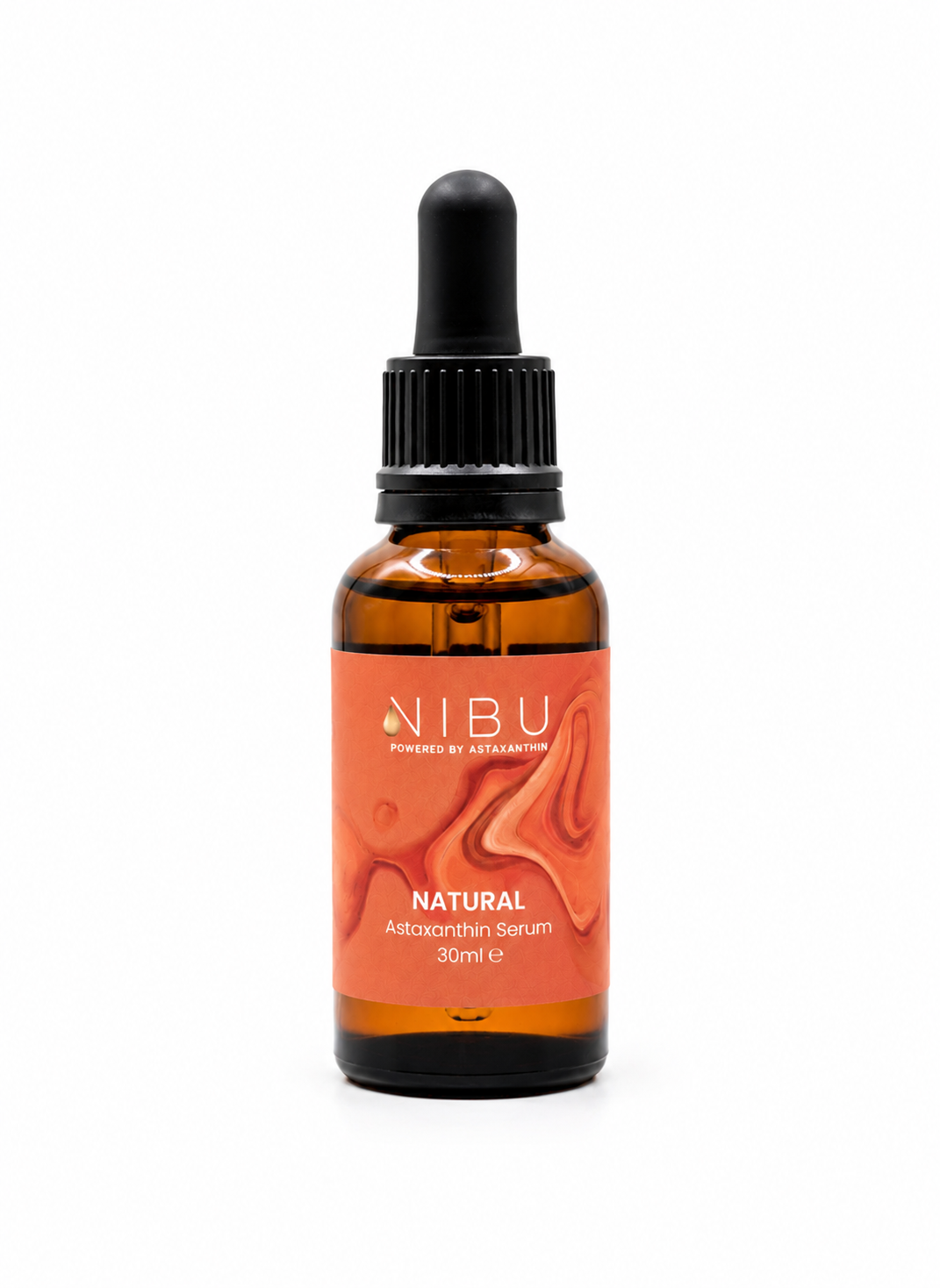
Nibu's Glow Serums combine botanical oils with Astaxanthin, the naturally occurring red-orange carotenoid at the heart of our original skincare collection.
- Glow Natural: Subtle, gentle-looking warmth
- Glow Darker: A richer, sun-kissed appearance
- Glow Deeper: The deepest, most intense finish
The immediate radiance is a cosmetic effect of the formulation, not evidence of a proven long-term change to skin structure.
Explore Nibu Astaxanthin Glow Serums.
Read our guide: How to Choose the Right Nibu Glow Serum for Your Skin.
Step 4: When Should You Use Moisturiser?
Moisturiser supports skin hydration and comfort. Depending on the formulation, it may include humectants that retain water, emollients that soften skin and occlusive ingredients that reduce moisture loss.
An oil-based serum doesn't necessarily provide all these functions. If your skin feels dry or uncomfortable, a suitable moisturiser may still be useful.
Where Nibu fits
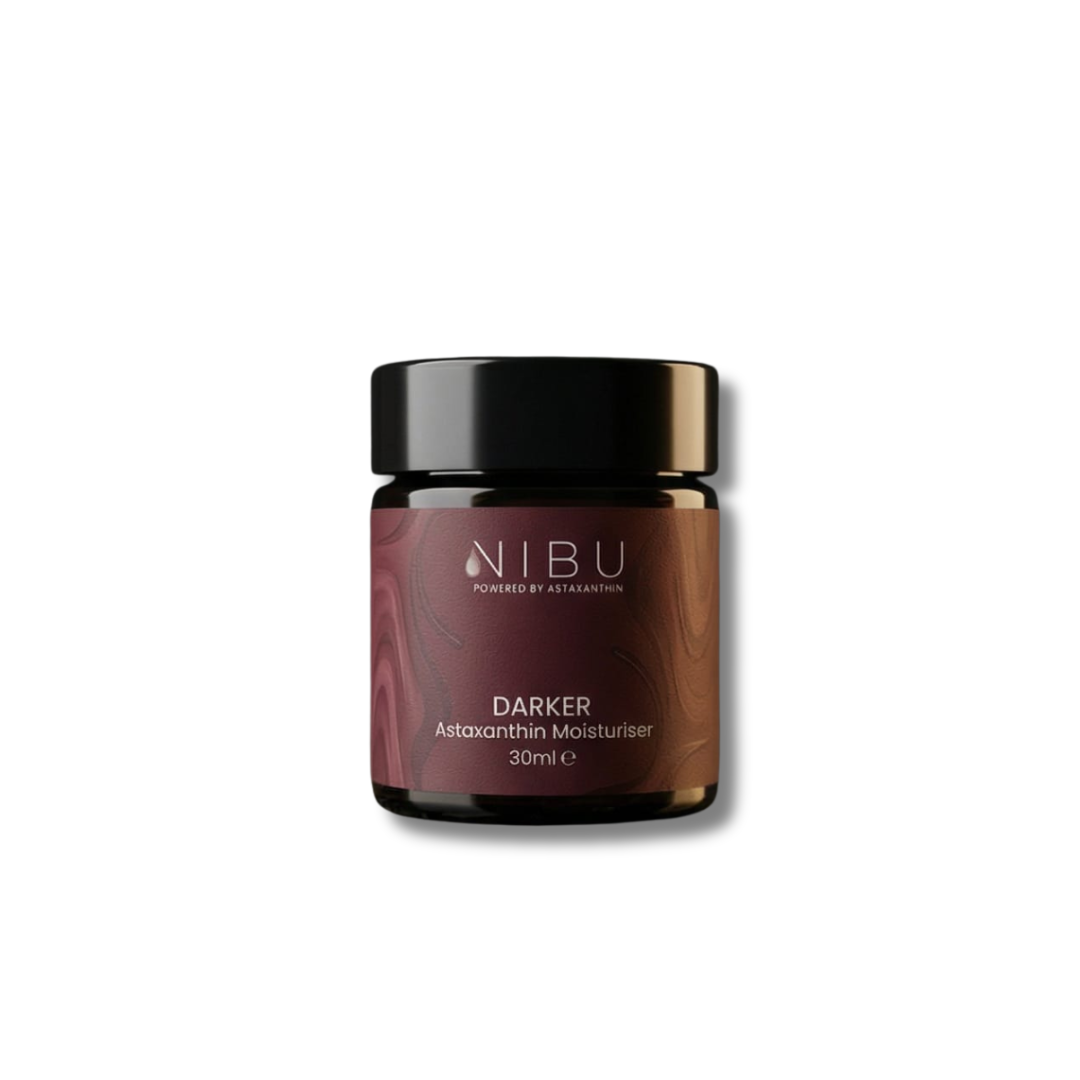
Nibu Glow Moisturisers come in Natural and Darker, offering a warm, radiant-looking finish in a moisturiser format. Deeper is available as a serum, not a Glow Moisturiser.
Choose Glow Serum, Glow Moisturiser or both according to your skin and preferred finish. Using both isn't a requirement.
Discover Glow Moisturisers in Natural and Darker.
Step 5: Finish Your Morning Skincare With Sunscreen
Ultraviolet exposure contributes to premature skin ageing and increases the risk of skin cancer.
Choose broad-spectrum SPF 30 or higher with suitable UVA protection. Apply after your other skincare has settled, following the instructions for application and reapplication. Make-up generally follows sunscreen.
Never mix serum or moisturiser directly into sunscreen: this may alter its formulation and tested protection. Nibu's Astaxanthin skincare does not replace SPF.
Your Evening Option: Nibu Glow to Sleep
Glow to Sleep is Nibu's dedicated night-time facial oil. Its botanical blend includes sesame, jojoba and rosehip, alongside vitamin E and Astaxanthin.
Use it according to your skin's needs and the product instructions. If you also use moisturiser, you may prefer Glow to Sleep afterwards.
Check the ingredient list if you are sensitive to essential oils or fragrance.
Explore Nibu Glow to Sleep Night Oil.
Where Does Red Light Therapy Fit?
Red light therapy, or photobiomodulation, uses particular wavelengths of red light, sometimes with near-infrared light. It is an optional addition, not a basic layering step.
What does the research say?
A 2026 systematic review of eight studies involving 365 participants reported improvements in selected facial skin measurements, including wrinkles, texture and elasticity. Adverse effects were generally infrequent and mild.
Small studies, varied protocols and limited representation of diverse skin tones mean larger, standardised trials are still needed. Findings from one device don't automatically apply to another.
Before or after skincare?
Many home devices are used on clean, dry skin before skincare. Follow your manufacturer's preparation instructions and don't apply oils or active products beforehand unless compatibility is confirmed.
- Cleanse and pat dry, removing any products the device instructions say to avoid.
- Use the device for the recommended duration.
- Continue with skincare, finishing with sunscreen in the daytime.
Eye safety and suitability
Follow the device's eye-protection instructions and avoid staring directly into a bright light source. Seek professional advice before use if you have an eye condition, take photosensitising medication or have another relevant medical concern.
Nibu's red light therapy partner
Nibu has an affiliate partnership with Red Light Rising, whose Target Light 670nm is featured on our website.
This does not mean the device has been clinically proven to deliver every benefit reported in published studies. Check its intended uses, safety information and instructions before purchasing or using it.
Explore Nibu's Red Light Therapy Partner.
Affiliate disclosure: Nibu Naturals has a commercial affiliate relationship with Red Light Rising and may earn a commission if you purchase through our partner link. This does not change our commitment to balanced, evidence-led information.
A Simple Nibu Morning Routine
- Cleanse with Nibu Facial Cleanser if needed.
- Apply Nibu Rose Toner if you enjoy using one.
- Choose Glow Serum or Glow Moisturiser. If using serum with moisturiser, follow both products' instructions and adjust their order to suit the formulations.
- Let skincare settle, then apply broad-spectrum SPF 30+ separately.
No additional facial-oil step is needed alongside your daytime Glow Serum.
A Simple Nibu Evening Routine
- Remove make-up, sunscreen and everyday residue with Nibu Facial Cleanser.
- Apply Rose Toner if desired.
- Use any selected or prescribed treatment according to its instructions.
- Apply moisturiser if your skin needs it.
- Use Glow to Sleep according to its instructions for a nourishing evening finish.
Common Skincare Layering Mistakes
1. Assuming all serums work the same way
Check whether a product is water-based or oil-based instead of relying on its name.
2. Combining too many active ingredients
Exfoliating acids, retinoids and other strong treatments may increase irritation when layered together. Introduce new products gradually.
3. Expecting an oil-based serum to do everything a moisturiser does
Their functions can differ. Let skin comfort and the formulations guide your choice.
4. Mixing skincare into sunscreen
Apply sunscreen separately to avoid diluting or altering its formulation.
5. Using a device over unsuitable products
Only apply skincare before red light treatment if the manufacturer confirms compatibility.
Myth vs Fact: Skincare Layering
| Myth | Fact |
|---|---|
| Every serum must go before moisturiser | The order depends on the formulation and instructions |
| Toner is essential | Toner is optional |
| Glow Serum needs a separate daytime facial oil | Glow Serum is already oil-based; a separate oil is not a required step |
| You must use Glow Serum and Glow Moisturiser together | You can choose either format or combine them if it suits your skin |
| You can mix serum into sunscreen | Sunscreen should be applied separately |
| Red light therapy works the same for every device | Outcomes depend on device characteristics and treatment protocols |
| More products always mean better results | Excessive layering may increase irritation without additional benefit |
Frequently Asked Questions
| Question | Answer |
|---|---|
| What is the correct order to apply skincare? | Cleanse first, then use toner if desired. Apply water-based treatments before richer skincare, and follow individual instructions for serum and moisturiser. Sunscreen is the final morning skincare step. |
| Does toner go before or after serum? | Usually before serum, after cleansing. Exfoliating toners require extra care when combined with other active ingredients. |
| Should Nibu Glow Serum go before moisturiser? | Not necessarily. Glow Serum is oil-based. Apply after lighter skincare and, if using moisturiser too, choose the order that works with both products' instructions and gives a comfortable finish. |
| Can I use Nibu Glow Serum with moisturiser? | Yes, if both suit your skin. Start with a small amount and allow the products to settle before applying sunscreen separately. |
| Can I mix Glow Serum with moisturiser? | You can try a small amount mixed into a compatible moisturiser immediately before application. Apply separately if they pill, separate or feel uncomfortable. Never mix it into sunscreen. |
| Do I need another facial oil with Glow Serum? | No additional daytime facial oil is required. Glow Serum is already an oil-based formulation. |
| Should I use Glow Serum and Glow Moisturiser together? | You can, but you don't need both. Choose the format or combination that suits your skin and preferred finish. |
| When should I use Glow to Sleep? | It's designed for evening skincare. If you also use moisturiser, you may prefer Glow to Sleep afterwards, following the product instructions. |
| Where does red light therapy go? | Many devices are used after cleansing and before skincare. Follow your specific device instructions. |
| Can I use red light therapy after Glow Serum? | Don't assume compatibility. Unless the manufacturer confirms otherwise, use the device on clean, dry skin before applying skincare. |
| Does red light therapy reduce wrinkles? | Some small studies report improvements in selected skin measurements, but results vary and further high-quality research is needed. |
| Does red light therapy replace sunscreen? | No. It does not provide protection against ultraviolet exposure. |
| Can I use red light therapy every day? | Use the frequency specified by the manufacturer rather than increasing treatment in the hope of faster results. |
| Do I need an expensive skincare routine after 40? | No. Gentle cleansing, moisturising and appropriate sun protection remain important foundations at any age. |
Key Takeaways
- Choose Glow Serum, Glow Moisturiser or both according to your skin and preferred finish.
- Glow Serums are oil-based, so serum-before-moisturiser is not a universal rule.
- Keep Glow to Sleep as an evening option rather than adding a separate daytime oil step.
- Apply sunscreen separately and follow any device's safety instructions.
The Nibu Longevity Take
At Nibu, skincare should feel like a moment of care, not another task on your to-do list.
Our journey began with Astaxanthin skincare and the idea of combining thoughtful ingredients with naturally radiant-looking skin. Today, that curiosity extends to nutrition, healthy habits and emerging technologies, while staying clear about what the evidence can tell us.
A good routine is about choosing well, caring consistently and enjoying the rituals that help you feel comfortable in your own skin.
Conclusion: Your Skincare Routine, Made Simple
Start with clean skin, choose your preferred Glow format and add moisturiser according to your needs. Keep sunscreen as your final morning skincare step and Glow to Sleep as an evening option.
Your routine doesn't need every product to feel beautifully considered.
Explore Nibu's Astaxanthin skincare collection and discover a routine that feels right for you.
References
- American Academy of Dermatology Association. Should I apply my skin care products in a certain order? Dermatologist guidance on skincare application. Read the guidance.
- American Academy of Dermatology Association. How to select anti-aging skin care products. Guidance on sunscreen, moisturiser and choosing products for individual concerns. Read the guidance.
- Das RK, Thayer WP, Kubiak CA, et al. Efficacy and Safety of At-Home Light-Emitting Diode Photobiomodulation for Facial Rejuvenation: A Systematic Review. Aesthetic Plastic Surgery. 2026. Read the systematic review.
- Evidence-based consensus on the clinical application of photobiomodulation. Journal of the American Academy of Dermatology. 2025;93(2):429–443. Read the consensus.
- Unlocking the Power of Light on the Skin: A Comprehensive Review on Photobiomodulation. International Journal of Molecular Sciences. 2024;25(8):4483. Read the review.
- Zhou X, Cao Q, Orfila C, Zhao J, Zhang L. Systematic Review and Meta-Analysis on the Effects of Astaxanthin on Human Skin Ageing. Nutrients. 2021;13(9):2917. Read the systematic review.
- Rittié L, Fisher GJ. Natural and Sun-Induced Aging of Human Skin. Cold Spring Harbor Perspectives in Medicine. 2015;5(1). Read the review.
Continue Reading
Explore more evidence-led articles from The Nibu Journal:
- How to Choose the Right Nibu Glow Serum for Your Skin
- Astaxanthin for Skin: Supplements vs Serums, Which Should You Choose?
- Menopause and Skin: Why Your Skin Changes and How to Support It
- Astaxanthin Skincare: What It Is and What the Evidence Says
- Does Astaxanthin Protect Your Skin From the Sun?
- Skin Ageing in Your 20s and 30s: What Actually Matters?
About The Nibu Journal
The Nibu Journal is the educational home of Nibu Naturals, a female-founded British healthy-ageing brand.
Nibu began with Astaxanthin skincare and has evolved into a wider mission encompassing nutrition, evidence-led supplements, women's health and everyday lifestyle education.
Our philosophy is Healthy Ageing, Inside & Out.
We believe women deserve clear, trustworthy information that helps them make confident decisions about healthy ageing.
Educate first. Build trust. Create desire through understanding. Sell naturally.
Medical Disclaimer
This article provides general educational information and does not replace personalised medical or dermatological advice.
Skincare products and red light therapy devices should be used according to their individual instructions. Discontinue skincare products if irritation occurs.
Seek professional advice if you have a persistent skin condition, photosensitivity, an eye condition or another relevant medical concern before using a light therapy device.
Red light therapy is not a substitute for prescribed medical treatment, sunscreen or appropriate dermatological care.

Read more

Astaxanthin for Skin: Supplements vs Serums, Which Should You Choose?
Should you use Astaxanthin on your skin, take it as a supplement or consider both? Discover what the science says about oral and topical Astaxanthin, how they differ and what matters most for healt...
Read moreShop
Best Sellers