Artikel: Astaxanthin for Skin: Supplements vs Serums, Which Should You Choose?
Astaxanthin for Skin: Supplements vs Serums, Which Should You Choose?
Discover the differences between topical Astaxanthin skincare and oral supplements, what the research tells us and how to choose an approach that suits your skin.
Quick Answer
Astaxanthin serums and supplements are used in different ways, and neither has been proven universally better for skin health.
Topical Astaxanthin is applied directly to the skin as part of a skincare routine. Depending on the formulation, it may provide immediate cosmetic effects such as softness, radiance and a warmer-looking complexion.
Oral Astaxanthin is taken as a supplement and absorbed through the digestive system. Researchers have investigated its effects on various skin measurements, although the clinical evidence remains limited.
Can you use both? Some adults may choose to combine topical and oral Astaxanthin, but there is insufficient high-quality evidence to establish that the combination provides greater benefits than either approach alone.
The most appropriate choice depends on your skincare goals, personal preferences, overall health and individual circumstances.
What You'll Learn
- What Astaxanthin is and why it interests skincare researchers
- The main differences between topical Astaxanthin and oral supplements
- What human studies have investigated
- Whether combining skincare and supplements offers additional benefits
- What to consider for dry, mature or menopausal skin
- How Nibu's Astaxanthin products fit into an everyday healthy-ageing routine
Introduction: Healthy Skin Starts With More Than One Habit
Have you ever wondered whether looking after your skin should begin with what you apply to it or what you put into your body?
It's a question many women ask, particularly as they begin to notice changes in their skin.
Perhaps your skin feels drier than it used to. Maybe your complexion looks a little less radiant, or you've become more interested in understanding the ingredients in your skincare.
At the same time, you may have come across supplements marketed for skin health and wondered whether they offer something different.
Skin health is influenced by both external care and internal factors. Appropriate cleansing, moisturising and protection from ultraviolet radiation all matter, alongside good nutrition, adequate sleep and general health.
Astaxanthin is particularly interesting because it has been investigated in both topical skincare and oral supplementation. It's also the ingredient that inspired Nibu's original skincare collection.
Before deciding whether to use a serum, a supplement or both, it's worth understanding what each approach can realistically offer.
What Is Astaxanthin?
Astaxanthin is a naturally occurring red-orange carotenoid produced by certain microorganisms, including the freshwater microalga Haematococcus pluvialis.
You may also recognise Astaxanthin as one of the pigments responsible for the pink-orange colouring of salmon.
Researchers are interested in its antioxidant properties. Antioxidants can interact with reactive molecules involved in oxidative processes, and oxidative stress is one of several biological processes associated with skin ageing.
Human studies have investigated Astaxanthin in relation to selected skin measurements, including moisture, elasticity and responses to environmental exposure.
Astaxanthin Serum vs Supplement: What's the Difference?
Although both approaches involve Astaxanthin, they are not interchangeable.
| Feature | Topical Astaxanthin serum | Oral Astaxanthin supplement |
|---|---|---|
| How it's used | Applied directly to the skin | Taken orally as a capsule or other supplement |
| How it's delivered | Through a topical skincare formulation | Absorbed through the digestive system |
| Immediate cosmetic effect | May provide softness, radiance or colour depending on the formulation | Does not create an immediate cosmetic glow |
| Research | Limited human clinical evidence, including some combined-use studies | Human studies have investigated selected skin measurements |
| Main considerations | Skin type, formulation, tolerance and preferred finish | Product instructions, safety, medicines and individual circumstances |
| Can it replace sunscreen? | No | No |
Think of a topical serum as part of your external skincare routine and an oral supplement as a separate nutritional decision.
How Does Topical Astaxanthin Work in Skincare?
The characteristics of a topical Astaxanthin product depend on several factors:
- The concentration of Astaxanthin
- The other ingredients in the formulation
- The stability of the ingredient
- How the product interacts with the skin
- How regularly and appropriately it is used
Astaxanthin is fat-soluble, making it compatible with oil-based skincare formulations.
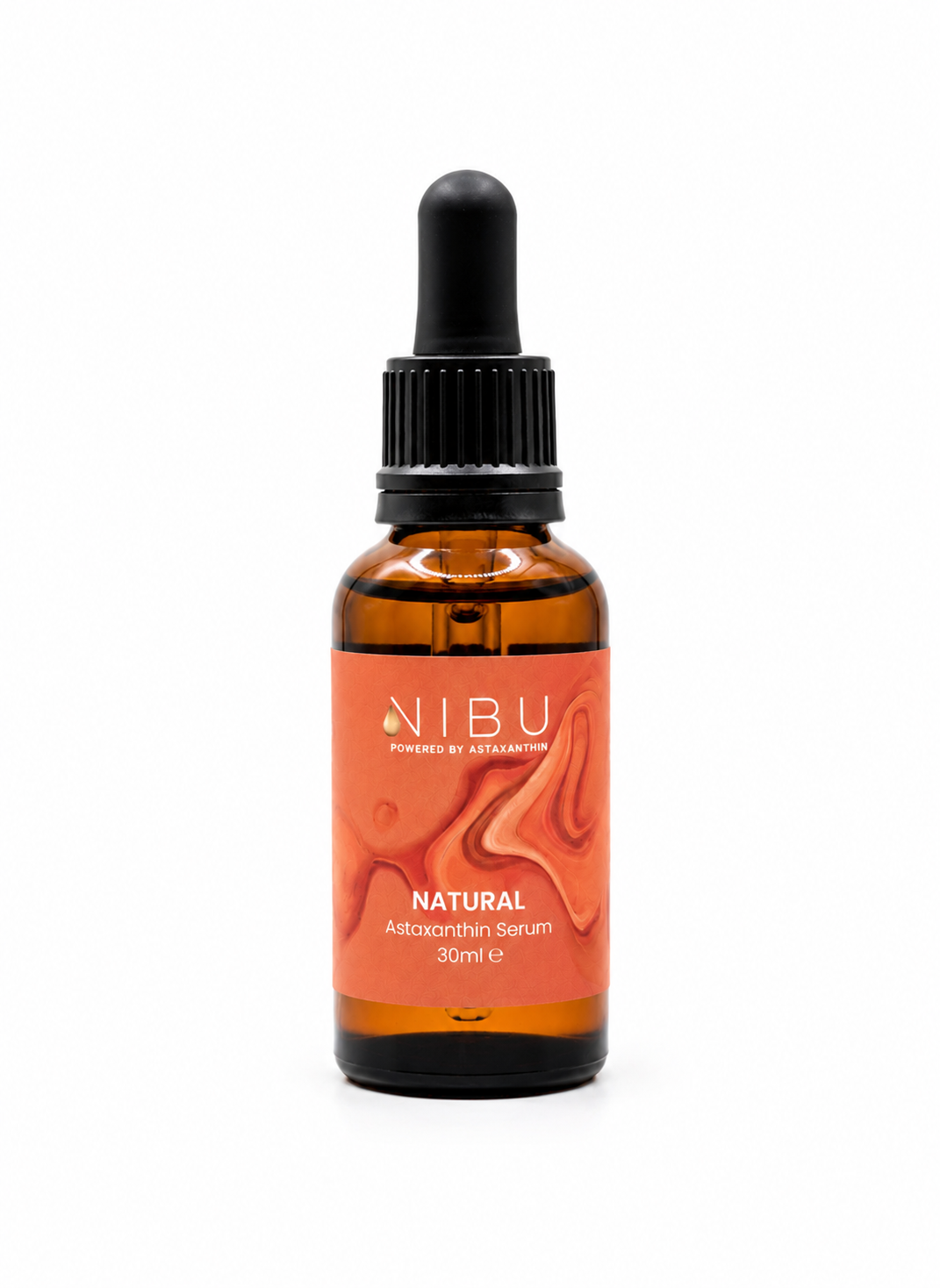
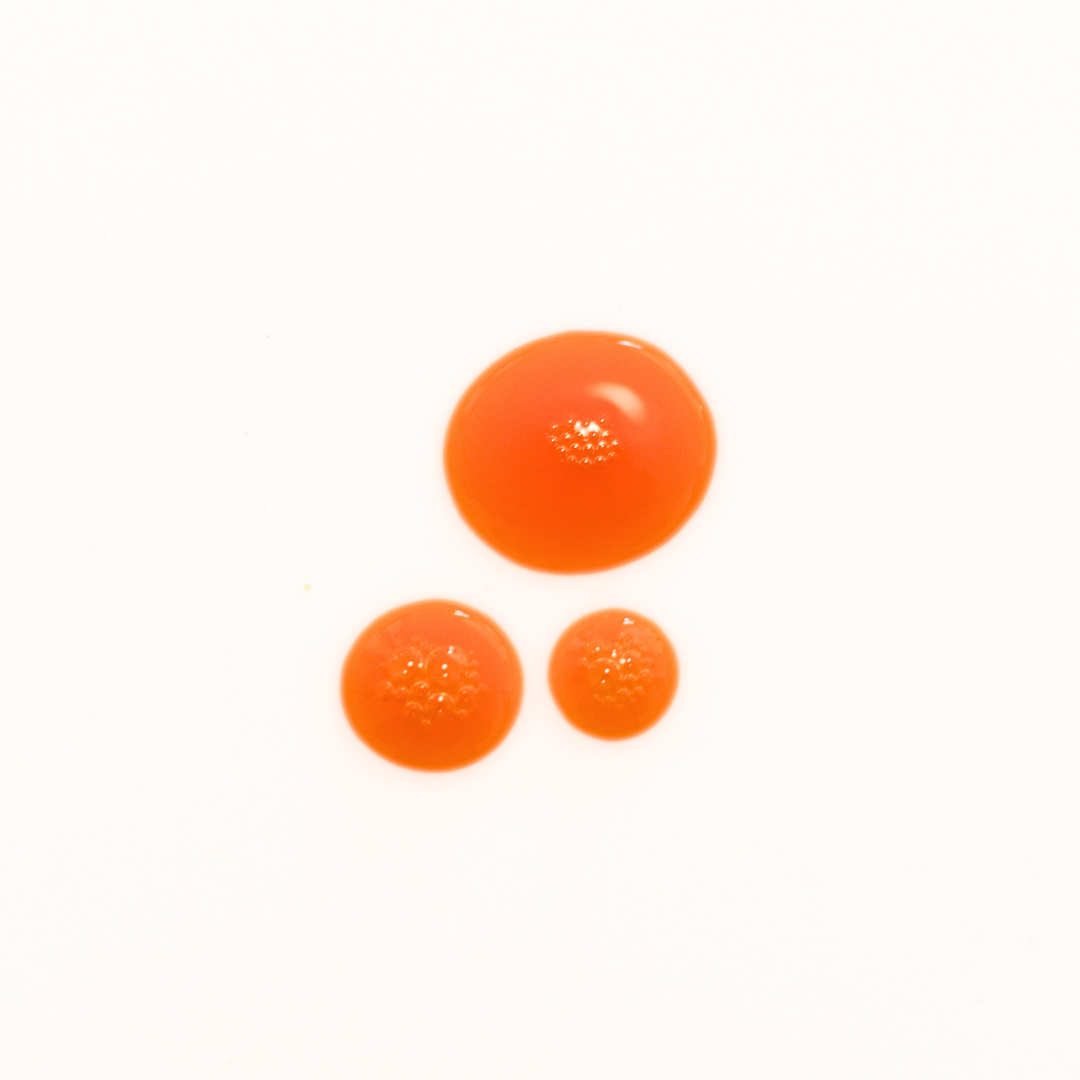
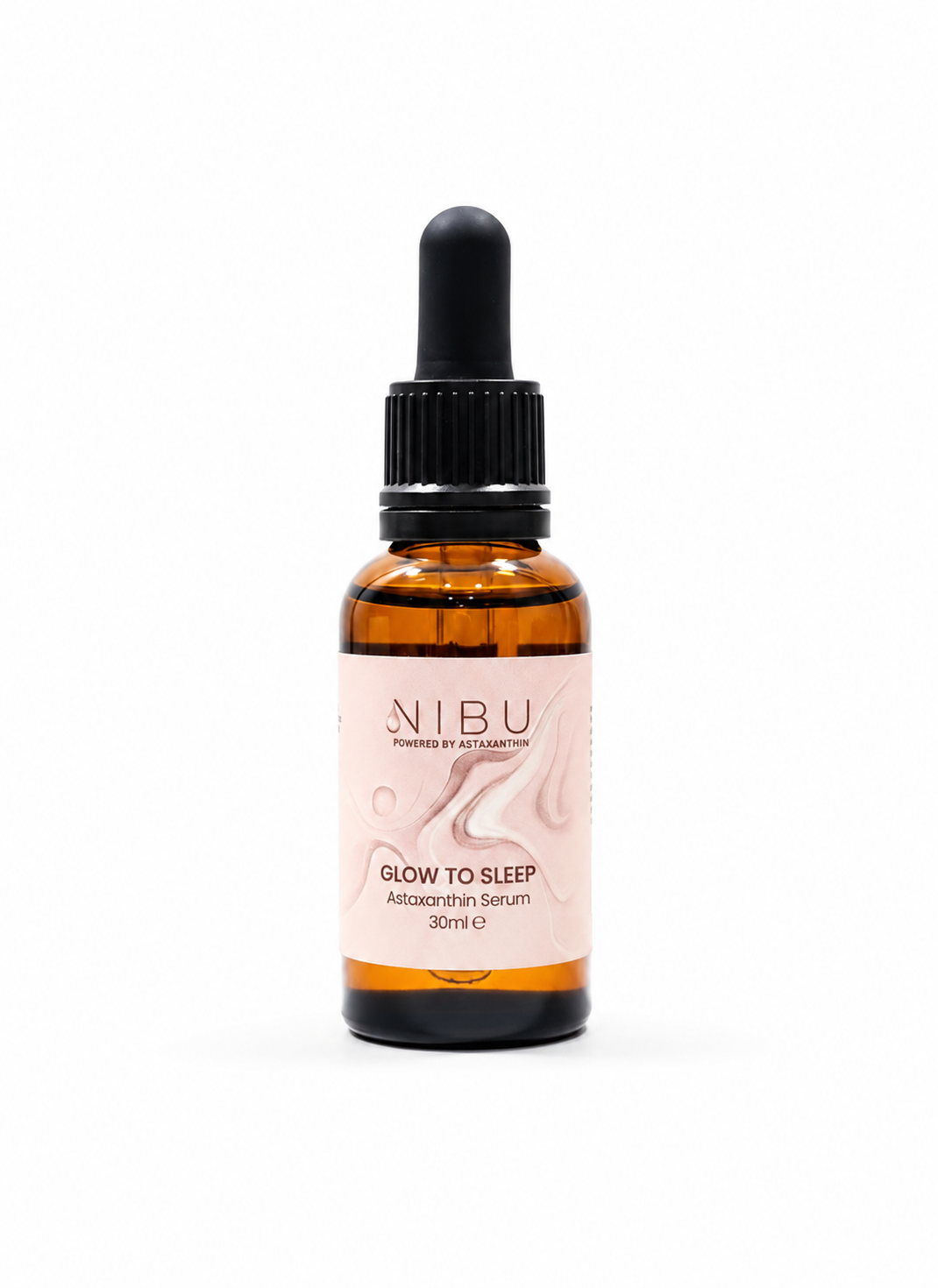
In Nibu's Glow Serums, botanical oils contribute to how the serum feels, spreads and leaves the skin looking radiant. Astaxanthin also contributes to the serums' distinctive warm colouring.
The immediate glow is a cosmetic effect created by the formulation, rather than evidence of a long-term biological change in the skin.
And there's nothing wrong with enjoying that immediate radiance. Skincare can be scientifically interesting while also being a lovely part of everyday life.
What does the research say about topical Astaxanthin?
Laboratory research has explored how Astaxanthin interacts with processes associated with oxidative stress. Some small human studies have also investigated topical preparations.
However, the clinical evidence for topical Astaxanthin alone remains limited. We cannot assume that every Astaxanthin serum will reduce wrinkles, improve elasticity or produce measurable changes in skin structure.
The finished formulation matters just as much as the presence of the ingredient.
Discover Nibu's Astaxanthin Glow Serums
Nibu's daytime Glow Serums combine Astaxanthin with botanical oils and are available in three finishes:
- Glow Natural: A subtle, gentle-looking warmth.
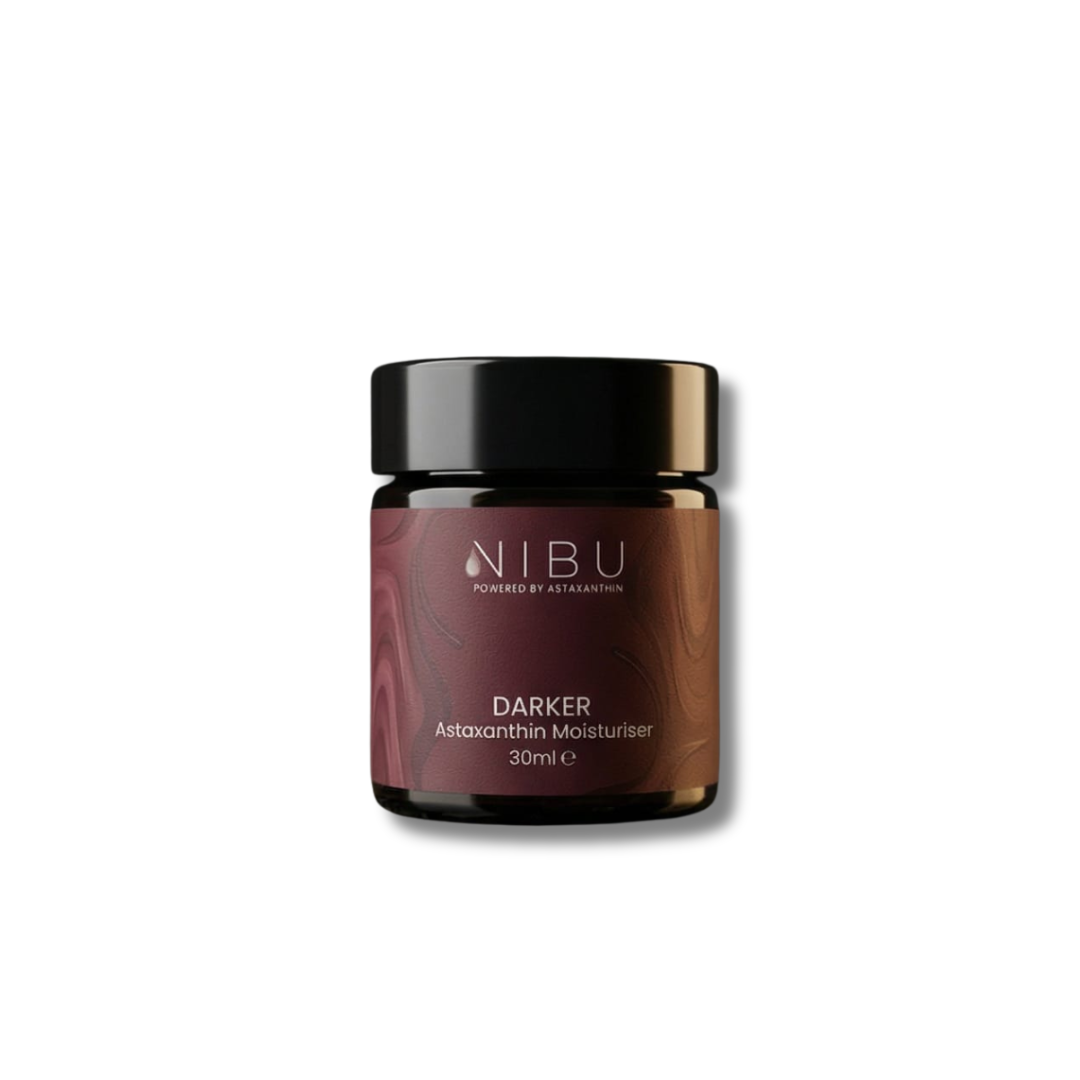
- Glow Darker: A richer, sun-kissed appearance.
- Glow Deeper: The deepest, most intense colour in the collection.
Explore Nibu Glow Serums and discover your preferred everyday glow.
Not sure which shade to choose? Read our guide: How to Choose the Right Nibu Glow Serum for Your Skin.
How Does Oral Astaxanthin Work?
After digestion, some of the Astaxanthin in an oral supplement is absorbed and transported through the body.
Its formulation and the presence of dietary fat can influence absorption. Taking Astaxanthin with a meal containing some fat is generally a sensible approach, subject to the product's instructions.
Researchers have investigated whether supplementation over several weeks influences selected biological and skin-related measurements.
What have human studies found?
A 2021 systematic review and meta-analysis examined human studies investigating Astaxanthin and skin ageing.
The researchers reported improvements in certain skin moisture and elasticity measurements in some comparisons of oral Astaxanthin with placebo. However, the pooled analysis did not find a statistically significant reduction in wrinkle depth.
The review highlighted limitations, including relatively small studies and differences in research methods. These findings do not establish that supplementation prevents or reverses skin ageing, or that everyone will experience visible improvements.
Research findings and established health claims are not the same thing. More robust clinical studies are needed.
Discover Nibu Astaxanthin 8 mg
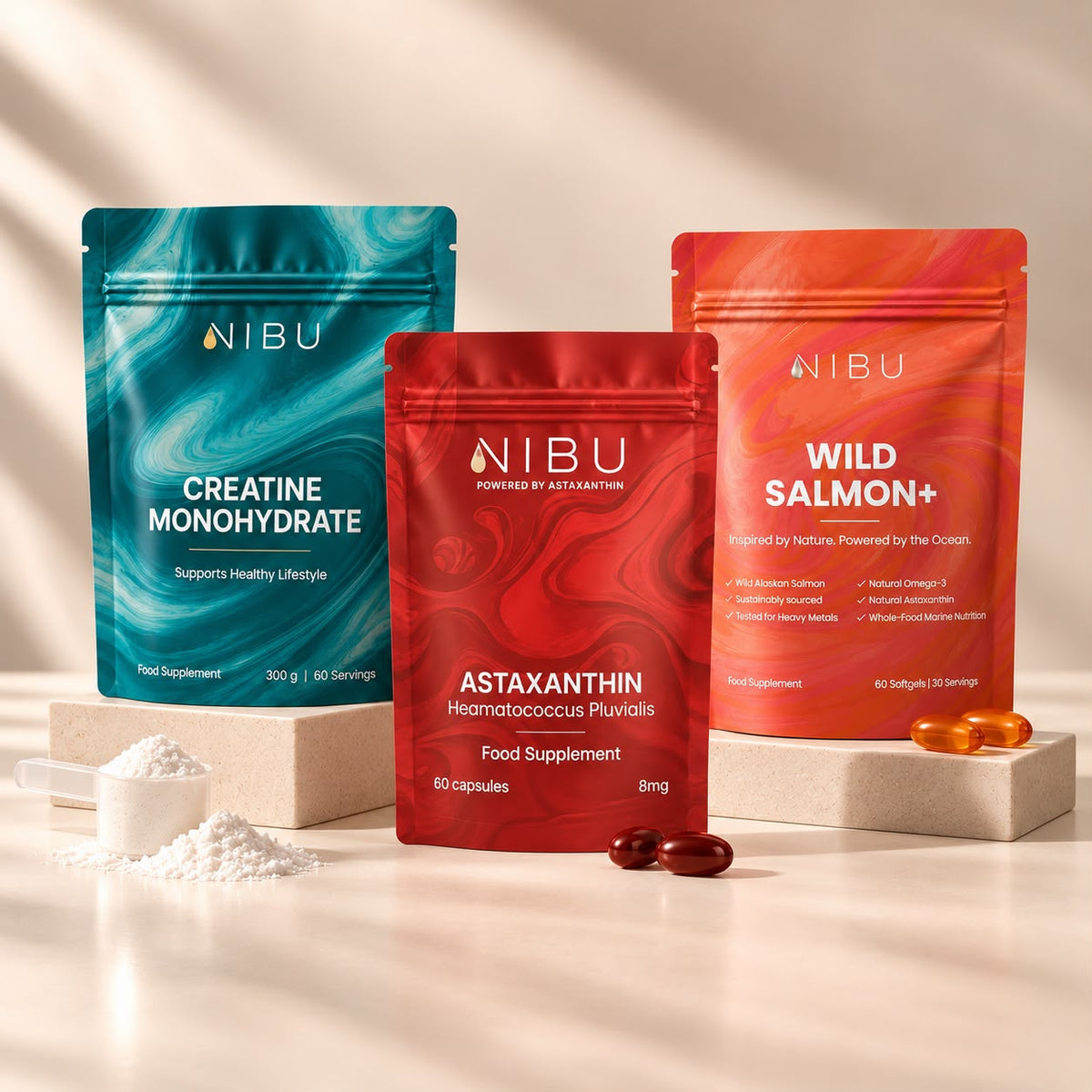
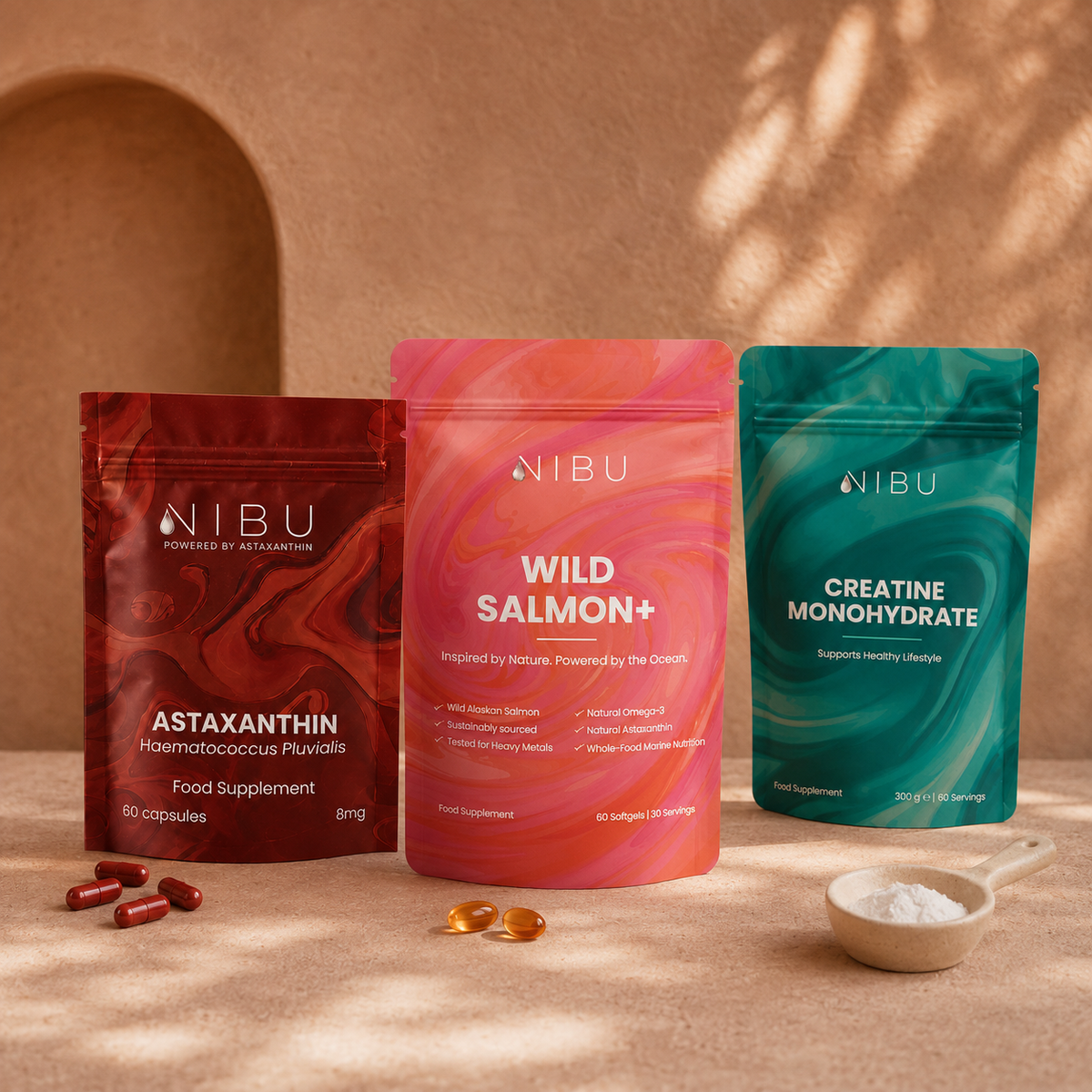
Nibu's Astaxanthin supplement provides 8 mg of natural Astaxanthin from Haematococcus pluvialis per recommended daily serving.
It offers an oral format for adults who have considered the product information, safety guidance and their individual circumstances.
Discover Nibu Astaxanthin 8 mg and explore the product information.
Is Oral Astaxanthin Better Than Topical Astaxanthin?
Reliable head-to-head clinical evidence is insufficient to rank one approach above the other. A more useful question is: what am I hoping to achieve?
If you want a warmer, more radiant-looking complexion as part of your daily skincare routine, a topical product may be the more direct choice.
If you're interested in oral Astaxanthin, consider it in the context of your nutrition, health and personal preferences, rather than expecting the visible finish of a serum.
Can You Use Astaxanthin Serum and Supplements Together?
Some adults choose to include both, and this combination has been investigated in human research.
In a 2012 study by Tominaga and colleagues, 30 healthy women used an oral Astaxanthin supplement and a topical preparation for eight weeks. Researchers reported changes in selected skin measurements.
However, this part of the research had no placebo-controlled comparison group, so it could not establish whether the combination was more effective than either approach alone.
A separate placebo-controlled study in men investigated oral supplementation, not the additional value of combined use.
The findings are preliminary and do not support assuming that two products double the benefits.
Which Approach Should You Consider for Dry Skin?
If your skin feels dry or uncomfortable, your first priority should usually be a suitable skincare routine.
A gentle cleanser and an appropriate moisturiser are often more directly relevant than adding a supplement.
Moisturisers may contain combinations of humectants, emollients and occlusive ingredients that help support skin hydration and reduce moisture loss.
Oil-based facial serums can complement this routine, particularly if you enjoy a richer, more emollient texture. However, facial oils and moisturisers are not necessarily interchangeable.
Although researchers have investigated oral Astaxanthin in relation to skin moisture, it should not be presented as a treatment for persistent dryness.
If your skin is severely dry, itchy, inflamed or persistently uncomfortable, seek professional advice.
What About Skin During Perimenopause and Menopause?
Declining oestrogen levels can influence collagen, skin thickness, hydration and elasticity. Some women notice increased dryness or sensitivity, or find that their usual skincare no longer feels quite right.
Astaxanthin is not an established treatment for menopause-related skin changes. That doesn't mean women going through menopause cannot enjoy its cosmetic qualities.
Adapt your routine to how your skin feels. If you enjoy the texture and appearance of an Astaxanthin Glow Serum, it may have a place alongside gentle cleansing, appropriate moisturising and sun protection.
What Does Astaxanthin Research Say About Fine Lines and Wrinkles?
Intrinsic ageing, changes in collagen and elastin, repeated facial movement and cumulative ultraviolet exposure all contribute to wrinkles.
As the review discussed above shows, improvements in selected skin measurements should not be treated as proof of wrinkle reduction.
If fine lines are your main concern, a broader evidence-led skincare routine may be more useful than relying on one antioxidant ingredient. Consistent sun protection is far better established for protecting against UV-related premature ageing.
Can Astaxanthin Protect Your Skin From the Sun?
Small human studies have investigated Astaxanthin in relation to ultraviolet exposure, but Astaxanthin is not sunscreen.
Neither a serum nor an oral supplement should replace broad-spectrum SPF or established sun-protection measures.
How Much Oral Astaxanthin Has Been Studied?
Human skin studies have investigated different daily amounts, including 4 mg, 6 mg and 12 mg. Research doses are not universal recommendations.
In 2020, the European Food Safety Authority evaluated the safety of Astaxanthin from Haematococcus pluvialis in food supplements. It concluded that 8 mg daily from supplements was safe for adults under the exposure conditions considered.
This was a safety assessment, not evidence that 8 mg is an optimal dose for skin benefits.
Follow the product instructions and warnings. If you are pregnant, breastfeeding, taking medicines or managing a significant medical condition, seek advice from an appropriately qualified healthcare professional before starting a supplement.
How Long Does Astaxanthin Take to Work for Skin?
Topical skincare
A facial serum containing botanical oils and naturally coloured Astaxanthin may leave skin looking more radiant immediately after application. This describes the cosmetic finish, not a change in collagen or skin structure.
Oral supplementation
Many human skin studies have lasted approximately six to sixteen weeks. Those are research assessment periods, not a guaranteed timetable for visible results.
How Nibu Approaches Astaxanthin: Inside & Out
Astaxanthin has been at the heart of Nibu Naturals since the beginning. Our interest in the red-orange carotenoid produced by Haematococcus pluvialis inspired our original Glow collection.
Today, Nibu encompasses skincare, nutrition, supplements and practical lifestyle education. Our philosophy remains Healthy Ageing, Inside & Out: recognising that skin health is connected to wider wellbeing.
That can mean enjoying a facial oil for its texture, keeping your routine simple or exploring supplementation after considering the evidence. The aim is an informed choice, not a longer shopping list.
How to Build a Simple Inside-Out Skin Routine
A thoughtful routine doesn't need to be complicated.
Morning: Care for Your Skin
- Cleanse gently. Remove overnight residue without unnecessarily stripping the skin.
- Hydrate and moisturise. Choose products suited to your skin's needs.
- Add your preferred Glow Serum. Natural, Darker or Deeper can provide a warm, radiant-looking finish.
- Protect with SPF. Use broad-spectrum sunscreen according to its instructions. Avoid mixing facial oils directly into sunscreen.
Throughout the Day: Support Your Wellbeing
- Eat a varied diet. Include fruit, vegetables, protein sources and foods containing healthy fats.
- Stay comfortably hydrated. Drinking enough supports general health, although excessive water intake will not erase wrinkles.
- Move regularly. Physical activity supports wider health and healthy ageing.
Evening: Keep Things Simple
- Cleanse away the day. Remove sunscreen, make-up and accumulated residue.
- Support skin comfort. Use an appropriate moisturiser or night-time facial oil if it suits your skin.
- Prioritise sleep. Rest is an important part of overall wellbeing.
Myth vs Fact: Astaxanthin for Skin
| Myth | Fact |
|---|---|
| Astaxanthin supplements are always better than serums | There is insufficient head-to-head evidence to establish this |
| A topical Astaxanthin serum works throughout the body | Topical effects depend on the formulation and local skin exposure |
| Using oral and topical Astaxanthin together doubles the benefits | Additional benefits from combining them have not been established |
| Astaxanthin removes wrinkles | Current evidence does not establish a guaranteed wrinkle-reducing effect |
| Astaxanthin replaces sunscreen | Neither topical nor oral Astaxanthin replaces SPF |
| Every woman needs an Astaxanthin supplement | Astaxanthin is not an essential nutrient |
| The strongest supplement gives the best skin results | An optimal dose for skin benefits has not been established |
Frequently Asked Questions
| Question | Answer |
|---|---|
| Is Astaxanthin better as a supplement or serum? | Neither is proven universally better. A serum is applied topically and its cosmetic effects depend on the formulation. Oral Astaxanthin is taken as a supplement and has been investigated in human studies for selected skin-related outcomes. |
| Does oral Astaxanthin improve skin? | Some small human studies have reported changes in selected skin measurements. However, the evidence remains limited, and these findings do not establish that an Astaxanthin supplement will visibly improve everyone's skin. |
| Can Astaxanthin serum reduce wrinkles? | Topical Astaxanthin has been investigated in small studies, but there is insufficient high-quality evidence to guarantee wrinkle reduction from an Astaxanthin serum. |
| Can I use Astaxanthin serum and capsules together? | Some adults may choose to use both. However, clinical evidence has not established that combining them provides greater benefits than either approach alone. |
| Is Astaxanthin good for mature skin? | Astaxanthin is an ingredient of scientific interest, but mature skin benefits from a wider approach that includes appropriate moisturising products and consistent sun protection. |
| Is Astaxanthin suitable during menopause? | Menopause itself does not automatically rule out Astaxanthin skincare. However, Astaxanthin is not an established treatment for menopause-related skin changes. Supplement suitability should be considered individually. |
| Does Astaxanthin make skin glow? | A topical product containing naturally coloured Astaxanthin and botanical oils may provide an immediate radiant-looking finish. This cosmetic effect is different from longer-term biological changes. |
| How long does oral Astaxanthin take to work? | Human skin studies have commonly lasted several weeks, often around six to sixteen weeks. There is no guaranteed timeframe for visible results. |
| Is 8 mg of Astaxanthin safe? | EFSA assessed 8 mg daily from supplements as safe for adults under the evaluated exposure conditions. Individual circumstances, current guidance and product instructions still matter. |
| Does Astaxanthin protect against UV damage? | Some preliminary research has investigated Astaxanthin in relation to UV exposure, but it does not replace sunscreen or established sun-protection measures. |
| Should I use a serum or supplement first? | If your immediate goal is a more radiant-looking complexion, a topical serum may be a more direct starting point. Supplementation is a separate decision based on your health, preferences and understanding of the evidence. |
| Do I need Astaxanthin if I already eat healthily? | No. Astaxanthin is not an essential nutrient, and there is no general requirement for healthy adults to supplement it. |
Key Takeaways
- Choose a topical serum for its skincare texture and immediate cosmetic finish.
- Consider oral supplementation separately, with attention to the evidence, product information and your health.
- Neither approach has been proven universally better, and extra benefits from combining them remain unestablished.
- Keep moisturising, sun protection and everyday healthy habits at the centre of your routine.
The Nibu Longevity Take
At Nibu, healthy-looking skin is about more than what you see in the mirror. It's about feeling comfortable in your skin and looking after yourself through the different stages of life.
Sometimes that means finding skincare you enjoy. Sometimes it's making time for nourishing meals, movement or rest.
There is no perfect formula that suits every woman. Healthy Ageing, Inside & Out, means caring for the whole person, not simply adding another product to the shelf.
Conclusion: Which Approach Is Right for You?
Start with your goal. For a radiant-looking finish, explore a topical serum. For an interest in oral Astaxanthin, review the research and safety guidance before deciding whether supplementation fits your circumstances.
At Nibu, we believe understanding your options is the first step towards making confident decisions.
Explore Nibu's Astaxanthin skincare collection and Nibu Astaxanthin 8 mg and discover an approach to healthy ageing that feels right for you.
References
- Zhou X, Cao Q, Orfila C, Zhao J, Zhang L. Systematic Review and Meta-Analysis on the Effects of Astaxanthin on Human Skin Ageing. Nutrients. 2021;13(9):2917. Read the systematic review.
- Ng QX, De Deyn MLZQ, Loke W, Foo NX, Chan HW, Yeo WS. Effects of Astaxanthin Supplementation on Skin Health: A Systematic Review of Clinical Studies. Journal of Dietary Supplements. 2021;18(2):169–182. Read the review.
- Tominaga K, Hongo N, Karato M, Yamashita E. Cosmetic benefits of astaxanthin on human subjects. Acta Biochimica Polonica. 2012;59(1):43–47. Read the clinical studies.
- Ito N, Seki S, Ueda F. The Protective Role of Astaxanthin for UV-Induced Skin Deterioration in Healthy People: A Randomized, Double-Blind, Placebo-Controlled Trial. Nutrients. 2018;10(7):817. Read the study.
- Tominaga K, Hongo N, Fujishita M, Takahashi Y, Adachi Y. Protective effects of astaxanthin on skin deterioration. Journal of Clinical Biochemistry and Nutrition. 2017;61(1):33–39. Read the study.
- Davinelli S, Nielsen ME, Scapagnini G. Astaxanthin in Skin Health, Repair, and Disease: A Comprehensive Review. Nutrients. 2018;10(4):522. Read the review.
- EFSA Panel on Nutrition, Novel Foods and Food Allergens. Safety of astaxanthin for its use as a novel food in food supplements. EFSA Journal. 2020;18(2):5993. Read the scientific opinion.
- Mercke Odeberg J, Lignell Å, Pettersson A, Höglund P. Oral bioavailability of the antioxidant astaxanthin in humans is enhanced by incorporation of lipid-based formulations. European Journal of Pharmaceutical Sciences. 2003;19(4):299–304. Read the study.
Continue Reading
Explore more evidence-led articles from The Nibu Journal:
- How to Choose the Right Nibu Glow Serum for Your Skin
- Astaxanthin Benefits for Skin
- How Much Astaxanthin Should You Take? A Guide to Dosage for Women
- Astaxanthin Side Effects: Is It Safe to Take Every Day?
- Does Astaxanthin Protect Your Skin From the Sun?
- The Complete Guide to Astaxanthin: Benefits, Dosage, Safety and How It Works
About The Nibu Journal
The Nibu Journal is the educational home of Nibu Naturals, a female-founded British healthy-ageing brand.
Nibu began with Astaxanthin skincare and has evolved into a wider mission encompassing nutrition, evidence-led supplements, women's health and everyday lifestyle education.
Our philosophy is Healthy Ageing, Inside & Out.
We believe women deserve clear, trustworthy information that helps them make confident decisions about healthy ageing.
Educate first. Build trust. Create desire through understanding. Sell naturally.
Medical Disclaimer
This article provides general educational information and does not replace personalised medical or dermatological advice.
Skincare products should be used according to their instructions. Discontinue use if irritation occurs.
Food supplements are not substitutes for a varied, balanced diet and healthy lifestyle. If you are pregnant, breastfeeding, taking medication or managing a medical condition, consult an appropriately qualified healthcare professional before starting supplementation.

Read more
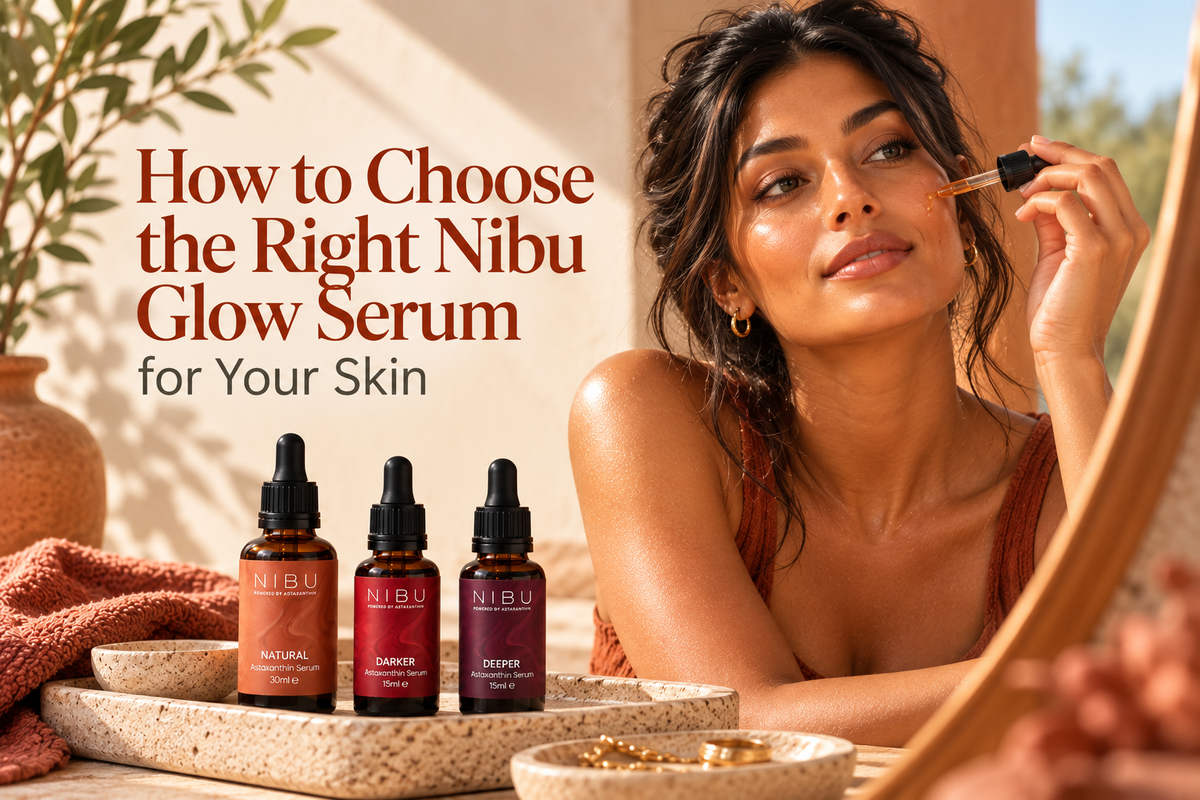
How to Choose the Right Nibu Glow Serum for Your Skin
Not sure whether to choose Natural, Darker or Deeper? Our simple guide explains the differences between Nibu's Astaxanthin Glow Serums, how to find your preferred glow and how to use them in your d...
WeiterlesenShop
Bestseller