Artikel: How Much Astaxanthin Should You Take? A Guide to Dosage for Women
How Much Astaxanthin Should You Take? A Guide to Dosage for Women
Quick Answer
Astaxanthin supplements commonly contain between 4 mg and 8 mg per daily serving, but there is no scientifically established optimal dose for every woman or every health goal.
Human studies have investigated several doses, including 4 mg and 6 mg for selected skin-health outcomes. An 8 mg daily intake from supplements has also been assessed as safe for adults by the European Food Safety Authority (EFSA), taking estimated dietary exposure into account.
However, a dose shown to be safe is not necessarily the most effective dose.
The right approach is to understand what has been studied, consider your individual circumstances and follow the recommended serving of a quality-controlled supplement.
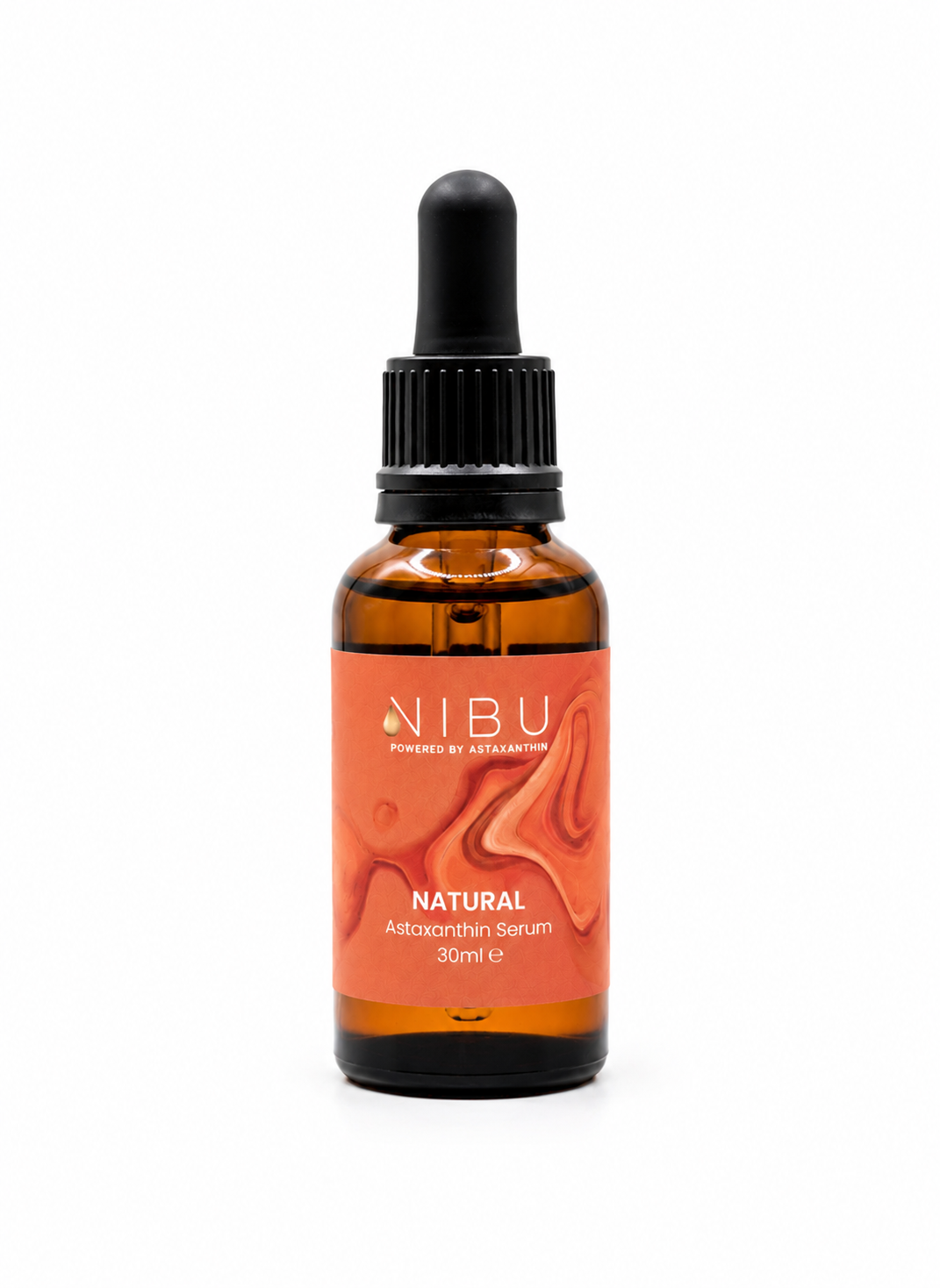
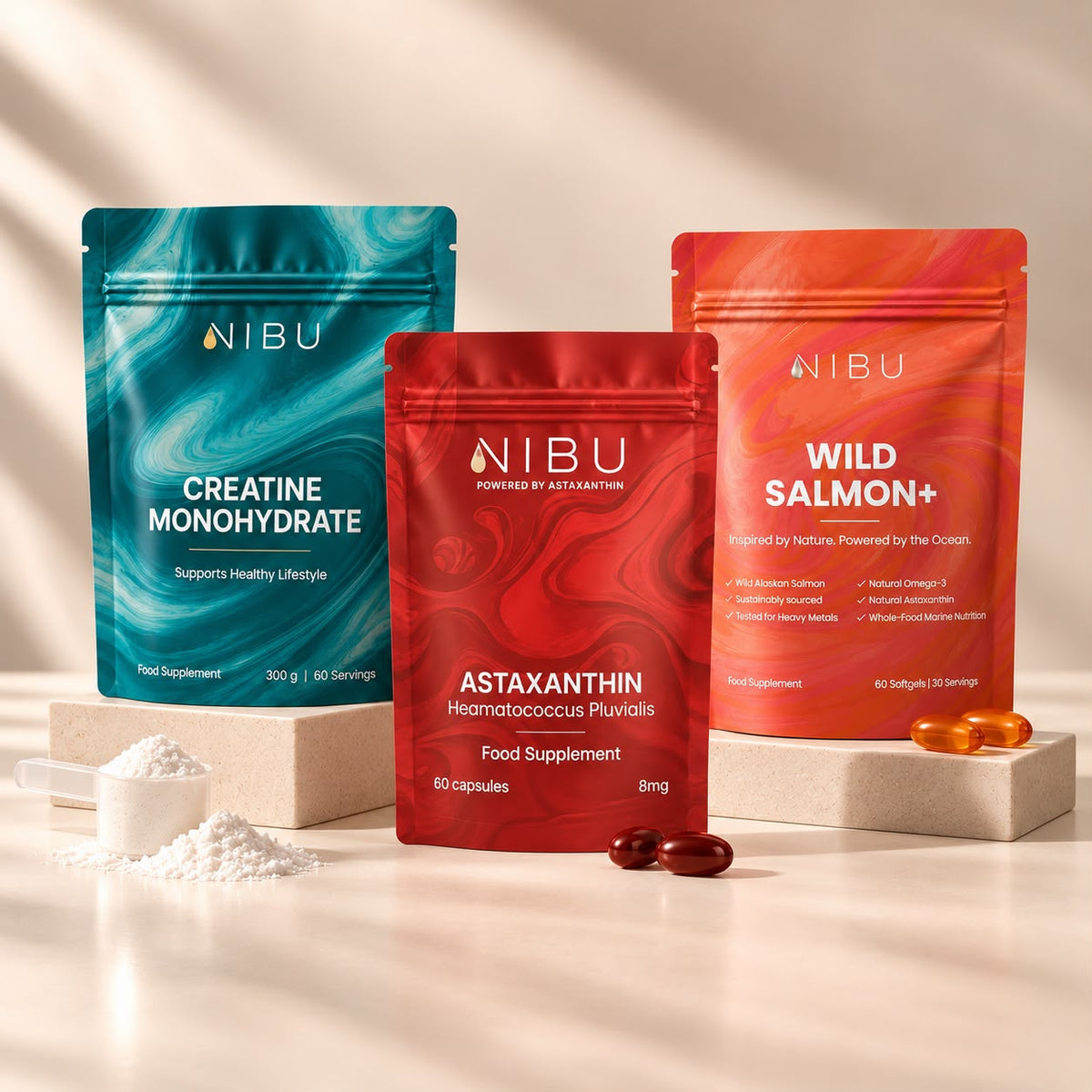
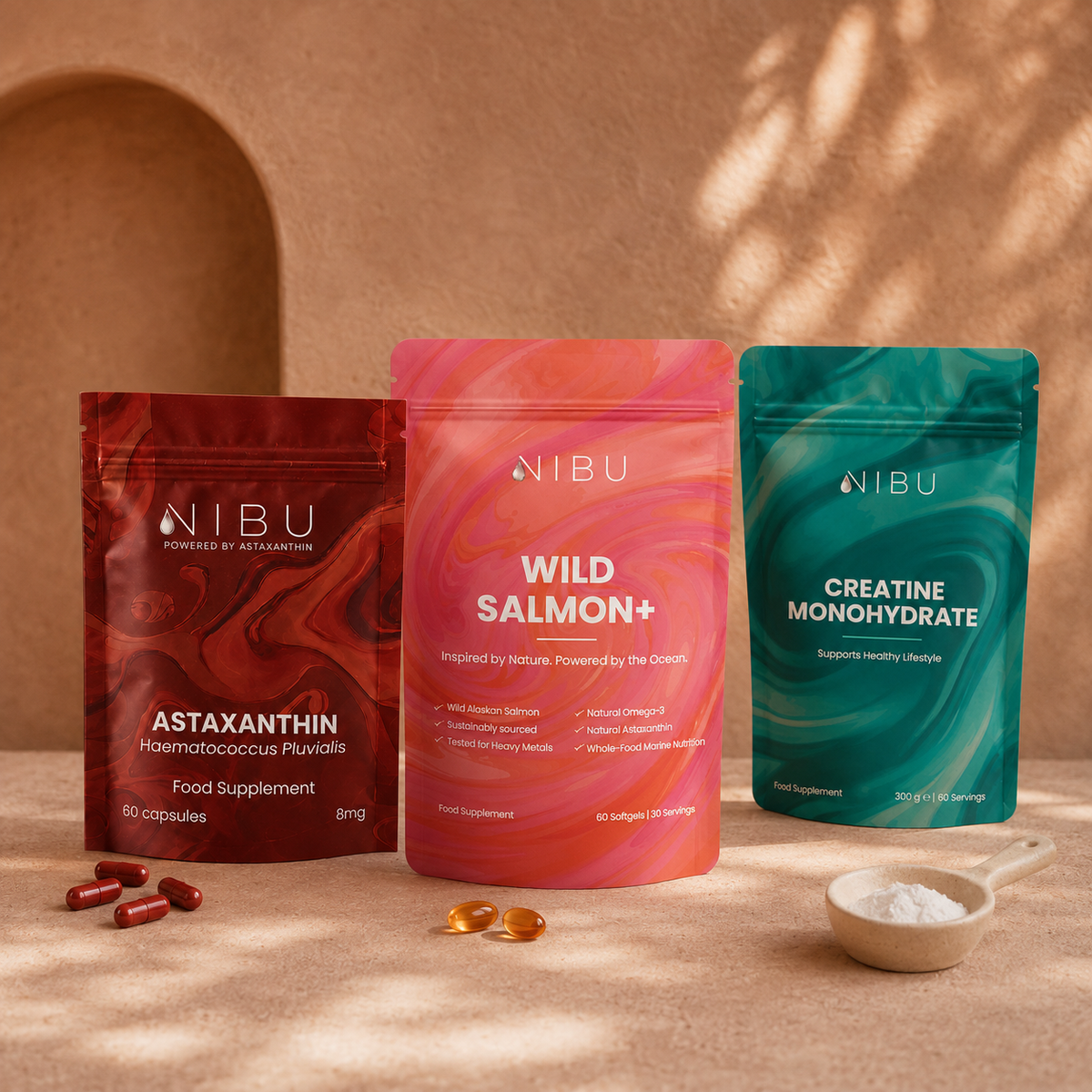
Nibu Astaxanthin provides 8 mg of natural Astaxanthin from Haematococcus pluvialis per recommended daily serving.
For most women considering supplementation, consistency, appropriate dosing and taking Astaxanthin with food are more useful considerations than simply choosing the highest-strength product.
What You'll Learn
- What Astaxanthin is and why dosage matters
- The difference between 4 mg, 6 mg and 8 mg
- What human research tells us about Astaxanthin intake
- Why a safety assessment is not the same as an optimal dose
- Whether women need different doses at different ages
- Why taking Astaxanthin with food matters
- How to understand supplement labels and avoid taking too much
Introduction: When It Comes to Supplements, More Isn't Always Better
Imagine standing in front of a shelf of supplements. One bottle contains 4 mg of Astaxanthin. Another contains 6 mg. A third contains 8 mg. Which should you choose?
It's tempting to assume that the highest number must offer the greatest benefits. But nutrition and supplement science rarely work quite so simply.
The amount of an ingredient matters, but so do its formulation, how the body absorbs it, what it has been studied for and the quality of the evidence.
Astaxanthin is a particularly interesting example. It has attracted attention for its antioxidant properties and potential relevance to skin health and healthy ageing.
Yet different studies have used different doses, and there is no universal agreement that one amount is best for everyone.
At Nibu, we believe women deserve to understand those differences before making decisions about supplementation. Let's look at what the science actually tells us.
What Is Astaxanthin?
Astaxanthin is a naturally occurring red-orange carotenoid. It is produced by certain microorganisms, including the freshwater microalga Haematococcus pluvialis.
This microalga is one of the principal natural sources used in Astaxanthin food supplements. Astaxanthin is also found in marine animals such as salmon, which acquire it through the food chain.
Researchers are interested in Astaxanthin because of its antioxidant activity and the way its chemical structure interacts with lipid-rich environments.
In human studies, it has been investigated for skin moisture, elasticity and other measures related to skin health.
However, Astaxanthin is not an essential vitamin or mineral, and supplementation is not a requirement for healthy ageing.
It is one possible addition to a wider lifestyle that includes nutritious food, physical activity, good sleep and appropriate skincare.
How Much Astaxanthin Should You Take Per Day?
There is no single clinically established Astaxanthin dose that is optimal for every adult.
Several amounts have been used in human research, but their significance depends on the outcome being investigated.
For example, studies examining skin health have used daily doses such as 4 mg and 6 mg. Separately, EFSA evaluated the safety of an 8 mg daily supplemental intake for adults.
These findings are useful, but they answer different questions. A skin study asks whether a particular amount influences a measured skin outcome. A safety assessment asks whether an amount can be consumed without appreciable health risk under the evaluated conditions.
Neither automatically establishes the best dose for every woman.
Astaxanthin dosage comparison: 4 mg, 6 mg and 8 mg
| Daily amount | What the research tells us | What it does not establish |
|---|---|---|
| 4 mg | Used in some human skin-health studies | That 4 mg is the minimum effective dose for everyone |
| 6 mg | Investigated in human skin studies, including oral and combined oral/topical approaches | That 6 mg is superior to 4 mg or 8 mg |
| 8 mg | Evaluated by EFSA as a safe supplemental intake for adults alongside estimated dietary exposure | That 8 mg produces greater benefits than lower doses |
| Above 8 mg | Higher amounts have been investigated in particular research settings | That higher-dose routine use is necessary or more effective |
The important message is that study doses, safety limits and personal recommendations are not interchangeable.
What Does the Research Say About 4 mg of Astaxanthin?
A randomised, double-blind, placebo-controlled trial published in Nutrients in 2018 investigated 4 mg of Astaxanthin daily in healthy Japanese adults.
Researchers examined skin responses to ultraviolet exposure and selected measures of skin condition. The findings suggested potential effects on some skin-related outcomes over the study period.
However, the study was relatively small. It does not prove that 4 mg is the ideal dose for all women, and its findings should not be interpreted as evidence that Astaxanthin can replace sunscreen.
It does show why researchers are interested in relatively modest daily amounts. A supplement does not necessarily need an exceptionally high dose to be scientifically interesting.
What Does the Research Say About 6 mg of Astaxanthin?
A 2012 study by Tominaga and colleagues investigated Astaxanthin in two groups.
One study involved 30 women using 6 mg of oral Astaxanthin alongside a topical Astaxanthin preparation for eight weeks. The researchers reported improvements in several skin-related measures.
However, because this part of the research was not placebo-controlled, it cannot establish how much of the observed change was caused by oral supplementation, topical application or other factors.
A separate placebo-controlled study in men also investigated 6 mg daily and reported improvements in selected skin measurements.
These findings are encouraging, but they do not establish that 6 mg is the best dose for women. They also illustrate why study design matters.
An improvement observed in a small trial is a reason for further investigation, not a guarantee that everyone will experience the same result.
What Does the Research Say About 8 mg of Astaxanthin?
Eight milligrams is particularly important because it has been examined in a formal European safety assessment.
In 2020, EFSA concluded that 8 mg of Astaxanthin daily from food supplements was safe for adults, even when combined with high estimated dietary exposure.
The assessment considered an acceptable daily intake of 0.2 mg per kilogram of body weight per day. This is a toxicological safety benchmark, not a recommended amount that everyone should aim to consume.
EFSA's conclusion provides an important scientific foundation for understanding the safety of an 8 mg daily supplement intake in adults. This is particularly relevant when choosing a product with a clearly stated serving size and transparent ingredient information.
However, it does not demonstrate that 8 mg is more effective than 4 mg or 6 mg for skin health, healthy ageing or other outcomes.
That distinction is essential when interpreting supplement research. A dose can be supported by a safety assessment without being proven the optimal dose for a particular benefit.
Does a Higher Dose of Astaxanthin Work Better?
Not necessarily. The relationship between dose and effect is not always straightforward.
In some areas of nutrition, increasing the amount of an ingredient produces benefits only up to a certain point. Beyond that, additional intake may offer little or no advantage.
For Astaxanthin, the available human evidence is not sufficient to establish a reliable dose-response relationship across all the outcomes being investigated.
There are not enough large, high-quality studies directly comparing several daily doses in similar groups of women.
So, although higher amounts have been used in some research, that does not mean taking more will produce better skin, greater antioxidant benefits or healthier ageing.
A useful principle is to choose a dose supported by relevant evidence and appropriate safety considerations, rather than simply selecting the highest number on the label.
What Does EFSA Say About Astaxanthin Dosage?
EFSA's 2020 opinion is an important reference for understanding adult supplemental intake.
It concluded that 8 mg daily from food supplements was safe for adults when considered alongside high estimated exposure from the diet.
The same assessment found that age matters. At 8 mg daily, combined supplement and dietary exposure reached the acceptable daily intake in adolescents aged 14 to under 18, while exceeding it in younger children.
European Union authorisation conditions were subsequently updated to specify age-related maximum amounts for Astaxanthin-rich oleoresin from Haematococcus pluvialis.
These conditions distinguish between children, adolescents and adults, with age-specific maximum amounts and labelling requirements.
What does this mean in the UK?
EFSA's opinion is valuable scientific evidence, but an EFSA safety conclusion is not itself a UK product authorisation.
As Nibu is a British brand, the applicable Great Britain rules, including relevant novel-food conditions and labelling requirements, must also be considered.
Consumers should follow the directions and warnings on the specific product they use.
For adult readers, the key point is that 8 mg has a defined scientific safety context, but it is not a universal recommendation to supplement.
Does Astaxanthin Dosage Depend on Your Age?
There is no convincing evidence that healthy adult women need progressively higher Astaxanthin doses as they get older.
You may see marketing claims suggesting that women over 40, 50 or 60 require stronger antioxidant supplements. Ageing does involve changes in the skin and other body systems, but those changes do not automatically establish a need for higher Astaxanthin intake.
For women in their 20s and 30s, the foundations of healthy ageing remain particularly important: balanced nutrition, sun protection, movement and sleep.
For women in their 40s and 50s, maintaining muscle, bone health, metabolic wellbeing and skin health becomes increasingly relevant.
And for women later in life, the same principle applies: focus on the whole person rather than assuming a single supplement needs to be increased.
The evidence does not currently support a separate standard Astaxanthin dose for each adult age group.
How Much Astaxanthin Should Women Take for Skin Health?
Human studies investigating skin-related outcomes have used different doses and formulations.
A 2021 systematic review and meta-analysis examined clinical research on Astaxanthin and skin ageing. It reported improvements in some measures, including skin moisture and elasticity, but the evidence was limited by small study sizes and differences between trials.
The review did not establish one ideal daily dose for skin health.
That means we should be cautious about claims such as: “8 mg is twice as effective as 4 mg.” Or: “Women over 50 need a stronger Astaxanthin supplement.” Neither conclusion is established by the available research.
Astaxanthin may be an interesting ingredient within an inside-out approach to skin health, but it should not replace daily sun protection, suitable skincare or good nutrition.
Should You Take Astaxanthin With Food?
Yes. Taking Astaxanthin with a meal containing some fat is a sensible approach.
Astaxanthin is fat-soluble. This means its absorption depends partly on how it is delivered and what is present in the digestive system.
Human research has shown that lipid-based formulations can improve Astaxanthin bioavailability. Bioavailability simply means how much of a substance becomes available to the body after it has been consumed.
Imagine adding a little olive oil to a salad containing carotenoid-rich vegetables. Dietary fat can help the body absorb certain fat-soluble compounds.
Astaxanthin follows a similar general principle, although the exact amount absorbed also depends on the supplement formulation.
Practical meal options include breakfast with eggs or yoghurt, lunch containing avocado or a main meal with olive oil.
You do not need to eat an unusually fatty meal. The aim is simply to take the supplement in a way that supports absorption and fits naturally into your routine.
Is Morning or Evening Better for Astaxanthin?
There is no convincing human evidence that Astaxanthin produces better results when taken in the morning rather than the evening.
Taking it consistently with a suitable meal is a more practical consideration. For some women, breakfast is easiest. Others prefer lunch or dinner.
The best time is generally the one that fits your routine and follows the product instructions.
For a more detailed explanation, read our Journal guide, When Is the Best Time to Take Astaxanthin? Morning, Night or With Food?
Can You Take Astaxanthin Every Day?
Daily supplementation has been used in human research. EFSA's assessment also provides reassurance about the evaluated 8 mg adult daily intake.
However, daily use is not a requirement for everyone. Whether to supplement depends on your circumstances, preferences and the reasons you are considering it.
There is no established need to cycle Astaxanthin on and off, although large human studies following continuous use over many years remain limited.
If you take regular medicines, are pregnant or breastfeeding, or have a significant medical condition, seek professional advice before starting supplementation.
Can You Take Too Much Astaxanthin?
Yes, it is possible to exceed the amounts covered by relevant safety assessments.
This can happen when people combine several supplements containing Astaxanthin without checking their total intake.
For example, a person might take a standalone Astaxanthin supplement alongside a multinutrient product or another supplement that also contains the ingredient.
Even if each product appears reasonable individually, the combined amount may be higher than intended.
The practical solution is to check all supplement labels and avoid unnecessary duplication. Do not exceed the recommended daily serving simply because Astaxanthin is naturally derived.
How Do You Read an Astaxanthin Supplement Label?
One of the most important details is understanding the difference between Astaxanthin-rich extract and actual Astaxanthin content. These are not always the same number.
For example, an algal extract standardised to 5% Astaxanthin contains approximately 5 mg of Astaxanthin in every 100 mg of extract.
| Label information | What it means |
|---|---|
| 100 mg algal extract standardised to 5% | Approximately 5 mg actual Astaxanthin |
| 160 mg algal extract standardised to 5% | Approximately 8 mg actual Astaxanthin |
| 8 mg Astaxanthin | The stated amount of Astaxanthin itself |
| Serving size: two capsules | The daily amount may refer to two capsules rather than one |
These are illustrative calculations, not descriptions of a particular product formulation.
When comparing supplements, look for the amount of actual Astaxanthin per recommended daily serving. Also check the source, full ingredients, storage instructions and any warnings.
Why Astaxanthin Source Matters
Astaxanthin can come from different sources, and not every preparation is identical.
Natural Astaxanthin from Haematococcus pluvialis is widely used in supplements and has been investigated in human research.
Different preparations can vary in their composition, molecular forms, accompanying ingredients and delivery systems.
However, natural does not automatically mean safer or more effective. The quality of the ingredient, its purity, manufacturing controls and supporting evidence all matter.
At Nibu, Astaxanthin has been central to our story since our original skincare range. Our interest in this ingredient began with its relationship to skin health and antioxidant science.
Today, that same curiosity informs our wider approach to healthy ageing from the inside and the outside.
Nibu Astaxanthin provides 8 mg of natural Astaxanthin derived from Haematococcus pluvialis per recommended daily serving.
We believe women should understand what that amount represents rather than simply being encouraged to choose a higher dose.
Myth vs Fact: Astaxanthin Dosage
| Myth | Fact |
|---|---|
| The highest dose is always the best | Higher doses have not been proven better for every outcome |
| Every woman needs 8 mg | There is no universal requirement to supplement Astaxanthin |
| A safe dose is automatically the most effective dose | Safety and effectiveness are separate scientific questions |
| Women over 50 need double the dose | There is no established age-based adult dosing rule |
| Astaxanthin works only when taken in the morning | No convincing evidence establishes a superior time of day |
| Taking it without food makes no difference | Dietary fat and formulation can influence absorption |
| Extract weight always equals Astaxanthin content | Extracts may contain only a percentage of Astaxanthin |
| More antioxidants always mean healthier ageing | Overall health depends on far more than antioxidant supplementation |
Frequently Asked Questions
| Question | Answer |
|---|---|
| How much Astaxanthin should I take daily? | There is no single optimal dose established for every adult. Human studies have investigated several amounts, while EFSA has assessed 8 mg daily from supplements as safe for adults under the evaluated exposure conditions. |
| Is 4 mg of Astaxanthin enough? | Four milligrams has been used in human research, including a small skin-health trial. However, there is insufficient evidence to establish that it is the ideal amount for every person or goal. |
| Is 6 mg of Astaxanthin effective? | Six milligrams has been investigated in human skin studies, with some encouraging findings. The available evidence does not establish it as universally effective or superior to other doses. |
| Is 8 mg of Astaxanthin safe? | EFSA concluded that 8 mg daily from food supplements was safe for adults when combined with high estimated dietary exposure. Individual health circumstances and the product's instructions still matter. |
| Is 12 mg of Astaxanthin better than 8 mg? | There is insufficient evidence to conclude that 12 mg routinely provides greater benefits than 8 mg. Higher-dose research should not be treated as a general recommendation. |
| Should women over 50 take more Astaxanthin? | There is no established evidence-based requirement for women over 50 to take a higher Astaxanthin dose solely because of age. |
| How long does Astaxanthin take to work? | This depends on the outcome being studied. Some skin-health trials have lasted approximately six to twelve weeks, but results vary and benefits are not guaranteed. |
| Can I take Astaxanthin with omega-3? | There is no established general need to separate them. However, check whether your omega-3 product already contains Astaxanthin and consider your total supplement intake. |
| Should I take Astaxanthin on an empty stomach? | Taking Astaxanthin with a meal containing some fat is generally more sensible because it is fat-soluble. |
| Can I take Astaxanthin during menopause? | Menopause itself does not establish a need for a different dose. If you take medicines or have medical concerns, seek personalised advice. |
| Do I need to cycle Astaxanthin? | There is no established scientific requirement for routine cycling, although direct long-term human evidence remains limited. |
| Is Astaxanthin suitable during pregnancy? | There is insufficient evidence to establish the safety of concentrated Astaxanthin supplements during pregnancy or breastfeeding. Seek advice from your healthcare professional before use. |
Key Takeaways
- There is no single scientifically established optimal Astaxanthin dose for every woman.
- Human skin studies have investigated doses including 4 mg and 6 mg.
- EFSA assessed 8 mg daily from supplements as safe for adults alongside high estimated dietary exposure.
- A safe dose is not automatically the most effective dose.
- Higher amounts have not been proven to produce better results for every outcome.
- Adult women do not have an established age-specific dosing schedule.
- Taking Astaxanthin with food containing some fat is sensible.
- Check the actual Astaxanthin amount, not just the weight of algal extract.
- Avoid combining multiple Astaxanthin supplements without checking the total daily amount.
- Supplements should complement healthy habits, not replace them.
The Nibu Longevity Take
One of the most empowering things we can learn about nutrition is that more isn't always better.
Healthy ageing isn't a competition to take the highest dose, follow the most complicated routine or collect the greatest number of supplements. It's about understanding what our bodies need and making thoughtful choices that support us over time.
Astaxanthin has a special place in Nibu's story. It was the ingredient that first inspired our skincare range and encouraged us to explore the fascinating relationship between skin health, antioxidant science and wellbeing.
But our belief in Astaxanthin has never meant that everyone needs to take it, or that a higher amount must be better.
We believe in looking at the evidence, understanding the dose and remembering that the foundations of healthy ageing are built through everyday habits.
A nourishing diet. Movement that keeps us strong. Restful sleep. Looking after our skin. And taking time to understand what we put into our bodies.
Supplements may have a place within that picture, but they are only one part of it.
Healthy ageing isn't about doing more. It's about making the choices that matter, consistently and with understanding.
Conclusion
So, how much Astaxanthin should you take? The answer depends on what you are hoping to achieve, your individual circumstances and the evidence available.
Human research has investigated several daily amounts, including 4 mg and 6 mg for selected skin outcomes. An 8 mg daily supplement intake has also been assessed as safe for adults by EFSA under the evaluated exposure conditions.
But none of these findings establishes a universal ideal dose.
The most responsible approach is to understand what has been studied, choose a quality-controlled supplement, follow the recommended serving and avoid assuming that more is better.
At Nibu, we believe informed decisions are at the heart of healthy ageing. Because understanding an ingredient is always more valuable than simply following a trend.
References
- EFSA Panel on Nutrition, Novel Foods and Food Allergens (NDA). Safety of astaxanthin for its use as a novel food in food supplements. EFSA Journal. 2020;18(2):5993.
- European Commission. Commission Implementing Regulation (EU) 2023/1581, amending the conditions of use of astaxanthin-rich oleoresin from Haematococcus pluvialis algae. 2023.
- Ito N, Seki S, Ueda F. The Protective Role of Astaxanthin for UV-Induced Skin Deterioration in Healthy People: A Randomized, Double-Blind, Placebo-Controlled Trial. Nutrients. 2018;10(7):817.
- Tominaga K, Hongo N, Karato M, Yamashita E. Cosmetic benefits of astaxanthin on humans subjects. Acta Biochimica Polonica. 2012;59(1):43–47.
- Zhou X, Cao Q, Orfila C, Zhao J, Zhang L. Systematic Review and Meta-Analysis on the Effects of Astaxanthin on Human Skin Ageing. Nutrients. 2021;13(9):2917.
- Ng QX, De Deyn MLZQ, Loke W, Foo NX, Chan HW, Yeo WS. Effects of Astaxanthin Supplementation on Skin Health: A Systematic Review of Clinical Studies. Journal of Dietary Supplements. 2021;18(2):169–182.
- Mercke Odeberg J, Lignell Å, Pettersson A, Höglund P. Oral bioavailability of the antioxidant astaxanthin in humans is enhanced by incorporation of lipid based formulations. European Journal of Pharmaceutical Sciences. 2003;19(4):299–304.
- Spiller GA, Dewell A. Safety of an astaxanthin-rich Haematococcus pluvialis algal extract: a randomized clinical trial. Journal of Medicinal Food. 2003;6(1):51–56.
Continue Reading
Continue exploring Astaxanthin, its benefits and how it fits into a healthy-ageing routine with these related articles from The Nibu Journal.
- Astaxanthin Side Effects: Is It Safe to Take Every Day?
- The Complete Guide to Astaxanthin: Benefits, Dosage, Safety and How It Works
- When Is the Best Time to Take Astaxanthin? Morning, Night or With Food?
- Astaxanthin Benefits for Skin
- Does Astaxanthin Protect Your Skin From the Sun?
- Oral vs Topical Astaxanthin: What's the Difference and Can You Use Both?
- Icelandic Astaxanthin for Skin: Why the Source Matters
About The Nibu Journal
The Nibu Journal is the educational home of Nibu Naturals, a female-founded British healthy-ageing brand.
Nibu began with Astaxanthin skincare and has evolved into a wider mission encompassing nutrition, evidence-led supplements, women's health and everyday lifestyle education.
Our philosophy is Healthy Ageing, Inside & Out.
We believe women deserve clear, trustworthy information that helps them make confident decisions about healthy ageing.
Educate first. Build trust. Create desire through understanding. Sell naturally.
Medical Disclaimer
This article provides general educational information and does not replace personalised medical advice.
Astaxanthin supplements are not intended to diagnose, treat, cure or prevent disease. If you are pregnant, breastfeeding, taking medication or managing a medical condition, consult an appropriately qualified healthcare professional before starting supplementation.

Read more

Introducing Nibu Soul: A New Chapter with Nici
Nici shares a personal update on her spiritual journey and introduces Nibu Soul, a new independent business focused on spiritual wellbeing, personal reflection and reconnection. Coming soon.
WeiterlesenShop
Bestseller