Artículo: Why Does Your Skin Feel So Dry During Menopause? What Actually Helps
Why Does Your Skin Feel So Dry During Menopause? What Actually Helps
Has your skin suddenly become drier, tighter or more sensitive? Discover why perimenopause and menopause can change your skin, and the simple things that may help it feel comfortable again.
Quick Answer
Dry skin is common during perimenopause and menopause, partly because changes in oestrogen can affect how well your skin retains moisture.
You might notice that your face feels tight after washing, your usual moisturiser doesn't seem quite enough, or products you've happily used for years suddenly feel uncomfortable.
The good news is that you don't necessarily need to replace your entire skincare routine.
Start with a gentle cleanser, choose a moisturiser containing ingredients such as glycerin or ceramides, avoid over-exfoliating and protect your skin from the sun. If your skin feels particularly dry, a richer moisturiser or a suitable facial oil may offer additional comfort.
Sometimes, a few small changes are all your skin needs.
What You'll Learn
- Why skin can become noticeably drier during perimenopause and menopause
- How oestrogen influences skin hydration and the skin barrier
- Why your usual moisturiser might no longer feel sufficient
- Which skincare ingredients are worth looking for
- Whether facial oils can help dry skin
- How to adapt your morning and evening skincare routines
- When dry or itchy skin needs professional advice
When Your Skin Suddenly Feels Different
You know that moisturiser you've used for years?
The one that always left your skin feeling soft and comfortable?
Then, almost without warning, it doesn't seem to do quite enough.
You apply it in the morning, but by lunchtime your cheeks feel tight again. Your foundation doesn't sit quite as smoothly. Perhaps you've noticed dry patches around your nose, or your skin feels rougher than it used to.
The strange thing is, you haven't necessarily changed anything.
So why has your skin changed?
For many women, this is one of the less talked-about surprises of perimenopause and menopause.
We hear plenty about hot flushes, interrupted sleep and changing periods. Skin changes don't always get the same attention, even though they can affect how comfortable and confident we feel every day.
And while hormones aren't the only possible explanation, they can certainly play a part.
Understanding what's happening beneath the surface can help you make better decisions about what your skin needs now.
Why Does Menopause Make Your Skin Drier?
Most of us associate oestrogen with reproductive health, but it also has an important relationship with our skin.
Oestrogen influences processes involved in skin hydration, collagen and the structures that help skin remain supple.
During perimenopause, hormone levels fluctuate. After menopause, oestrogen levels are generally much lower.
These changes can affect the way your skin looks and feels.
Your skin may struggle to hold on to moisture
Healthy skin contains naturally occurring substances that help attract and retain water.
One of these is hyaluronic acid, which is found within the skin itself.
Oestrogen influences processes involved in maintaining these water-binding substances.
As hormone levels change, your skin may become less effective at retaining moisture.
You might notice that your face feels comfortable immediately after applying moisturiser, only to feel tight again a few hours later.
Your natural skin oils can change
Your skin produces sebum, an oily substance that contributes to its protective surface.
Sebum production can change with age and hormonal fluctuations.
For some women, this means skin that was once fairly balanced begins to feel noticeably drier.
Of course, this doesn't happen to everyone.
Some women continue to have oily or combination skin during menopause. Others experience breakouts alongside dryness.
There really is no single menopausal skin type.
Your skin barrier may need more support
Think of your skin barrier as a protective wall.
The skin cells are the bricks, while the natural lipids between them act a little like mortar.
Together, they help keep moisture in and irritants out.
When this barrier isn't functioning as well as it should, water can escape more easily.
Your skin may feel dry, rough, itchy or unusually sensitive.
Researchers call this moisture loss transepidermal water loss.
You don't need to remember the terminology. What matters is understanding that your skin may need more help retaining the moisture it already has.
Research has identified links between menopause, skin dryness and changes in skin barrier function, although experiences vary considerably.
Why Does Your Usual Moisturiser Suddenly Stop Working?
It's easy to assume your favourite moisturiser has somehow become less effective.
But often, the product hasn't changed.
Your skin has.
A lightweight cream that felt perfect in your thirties might not provide quite enough comfort in your late forties or fifties.
That doesn't mean you need the most expensive moisturiser on the shelf.
It may simply mean paying closer attention to the ingredients and texture.
A good moisturiser often combines three types of ingredients.
| Ingredient type | What it does | Examples |
|---|---|---|
| Humectants | Help attract or retain water in the outer skin layers | Glycerin, hyaluronic acid, urea |
| Emollients | Help soften and smooth the skin | Squalane, certain plant oils, fatty alcohols |
| Occlusives | Help reduce moisture loss | Petrolatum, dimethicone, mineral oil |
Many moisturisers combine these functions.
If your skin has become noticeably drier, you may find that a richer formulation provides more lasting comfort.
And if your current moisturiser still works beautifully?
Keep using it.
There's no reason to change a product simply because you've reached a particular age.
Seven Things That Can Actually Help Dry Menopausal Skin
When your skin starts feeling uncomfortable, it's tempting to buy several new products and hope something works.
But the most useful changes are often surprisingly simple.
1. Be gentler with cleansing
This is one of the first things I'd look at.
When our skin feels dry, we often concentrate on adding more moisturiser without considering what happens when we wash our face.
Harsh cleansers, very hot water and repeated washing can leave skin feeling stripped.
If your face feels tight immediately after cleansing, pay attention to that feeling.
Choose a gentle cleanser, use lukewarm water and avoid scrubbing.
You might also find that you don't need a cleansing product every morning. For some women with dry or sensitive skin, a rinse with lukewarm water is enough.
In the evening, cleansing is important for removing sunscreen, make-up and everyday residue.
Where Nibu fits
Our Nibu Facial Cleanser can be part of a simple daily routine if it suits your skin.
The important thing is how your skin feels afterwards. Clean skin shouldn't have to feel squeaky clean.
2. Apply moisturiser while your skin is still slightly damp
Here's a small change that's easy to overlook.
After washing your face, gently pat your skin rather than rubbing it completely dry.
Then apply moisturiser while your skin is still slightly damp, unless the product instructions say otherwise.
This can help retain some of that surface moisture.
It's a simple habit that takes only a few seconds.
3. Look for ingredients that genuinely help with hydration
When choosing a moisturiser, it's easy to become distracted by impressive packaging and long ingredient lists.
But more ingredients don't necessarily mean better skincare.
A few well-established moisturising ingredients are worth knowing about.
Glycerin is a humectant that helps attract and retain water.
Hyaluronic acid is another water-binding ingredient commonly used in hydrating skincare.
Ceramides are naturally occurring components of the skin barrier. Products containing them may help support barrier function, depending on the formulation.
Petrolatum and dimethicone help reduce moisture loss.
You don't need all these ingredients in one product.
What matters is finding a well-formulated moisturiser that feels comfortable on your skin and provides enough hydration for your needs.
If your skin has become particularly reactive, a simple, fragrance-free moisturiser may be the best place to start.
4. Consider adding a facial oil
Facial oils can be lovely, especially when your skin feels dry and you enjoy a richer, more nourishing texture.
They can help soften the skin and may reduce moisture loss, depending on the formulation.
But there's one important distinction.
A facial oil isn't automatically the same as a moisturiser.
Many facial oils contain little or no water and may not provide the same humectant ingredients found in a moisturising cream.
For some women, applying a suitable facial oil after moisturiser provides additional comfort.
Others prefer using just one product.
There's no need to use both unless your skin benefits from the combination.
Where Nibu fits
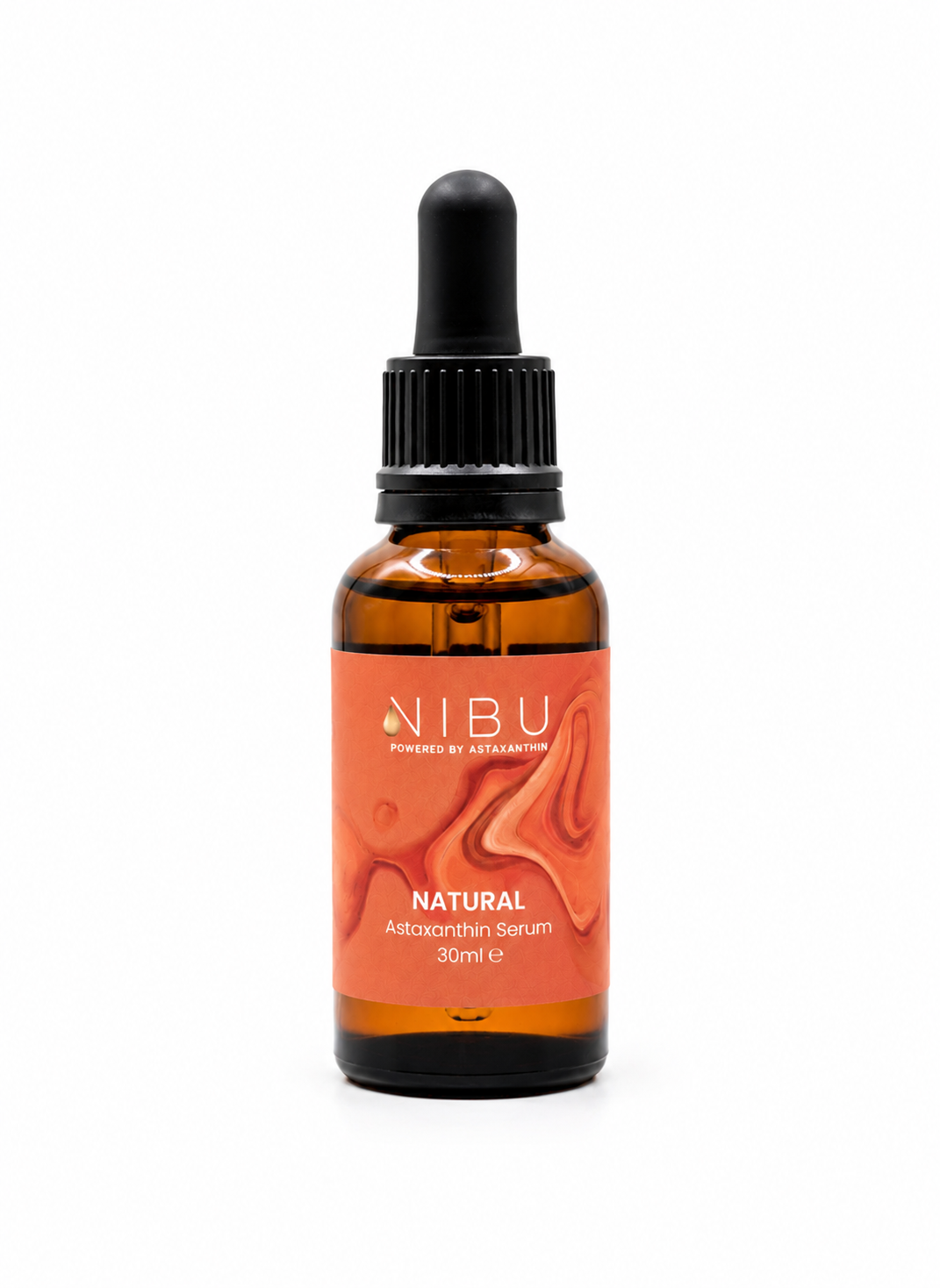
Astaxanthin facial oils are where Nibu's skincare story began.
Our daytime Glow Serums combine botanical oils with Astaxanthin, providing a warm, naturally radiant-looking finish.
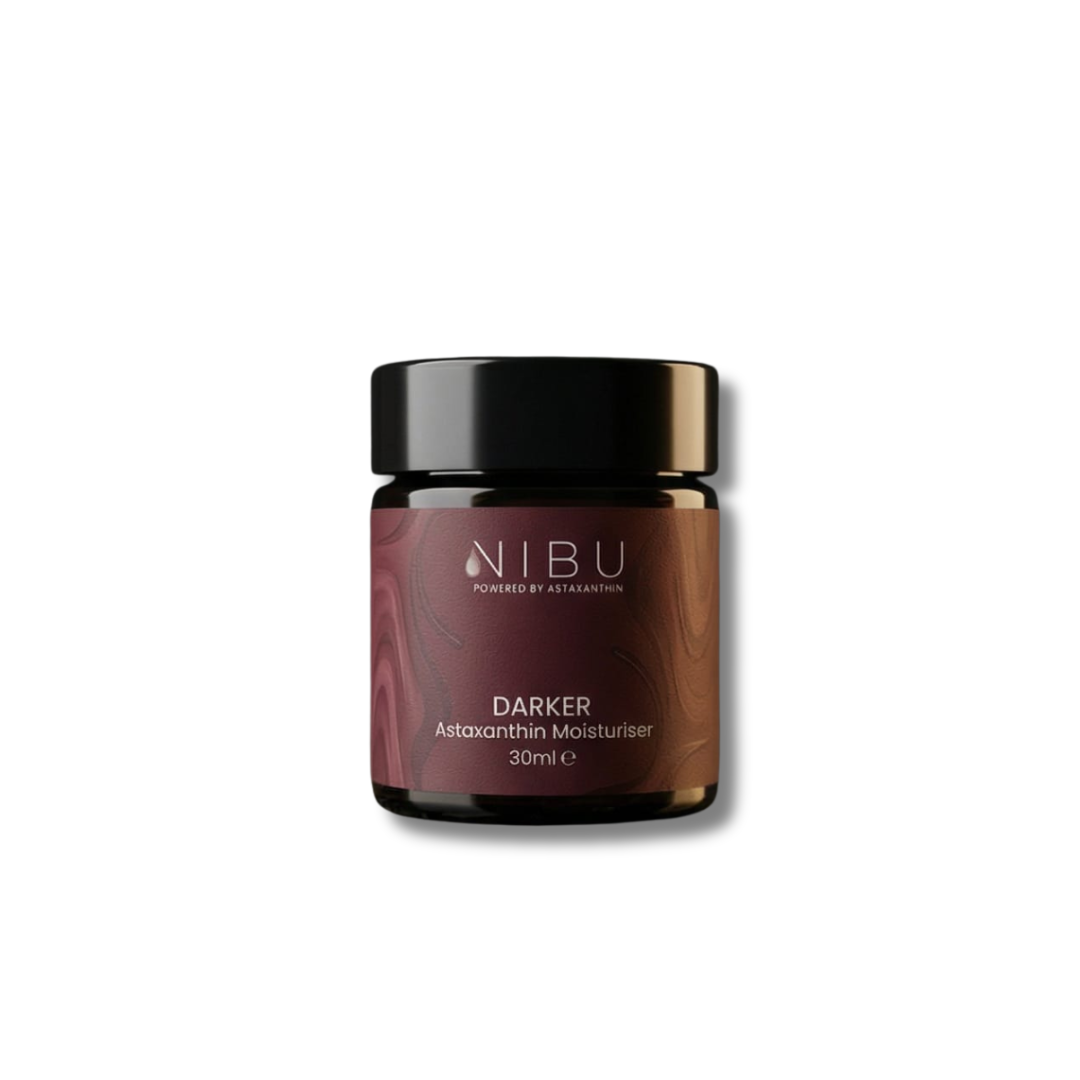
They're available in Natural, Darker and Deeper, allowing you to choose the level of colour you prefer.
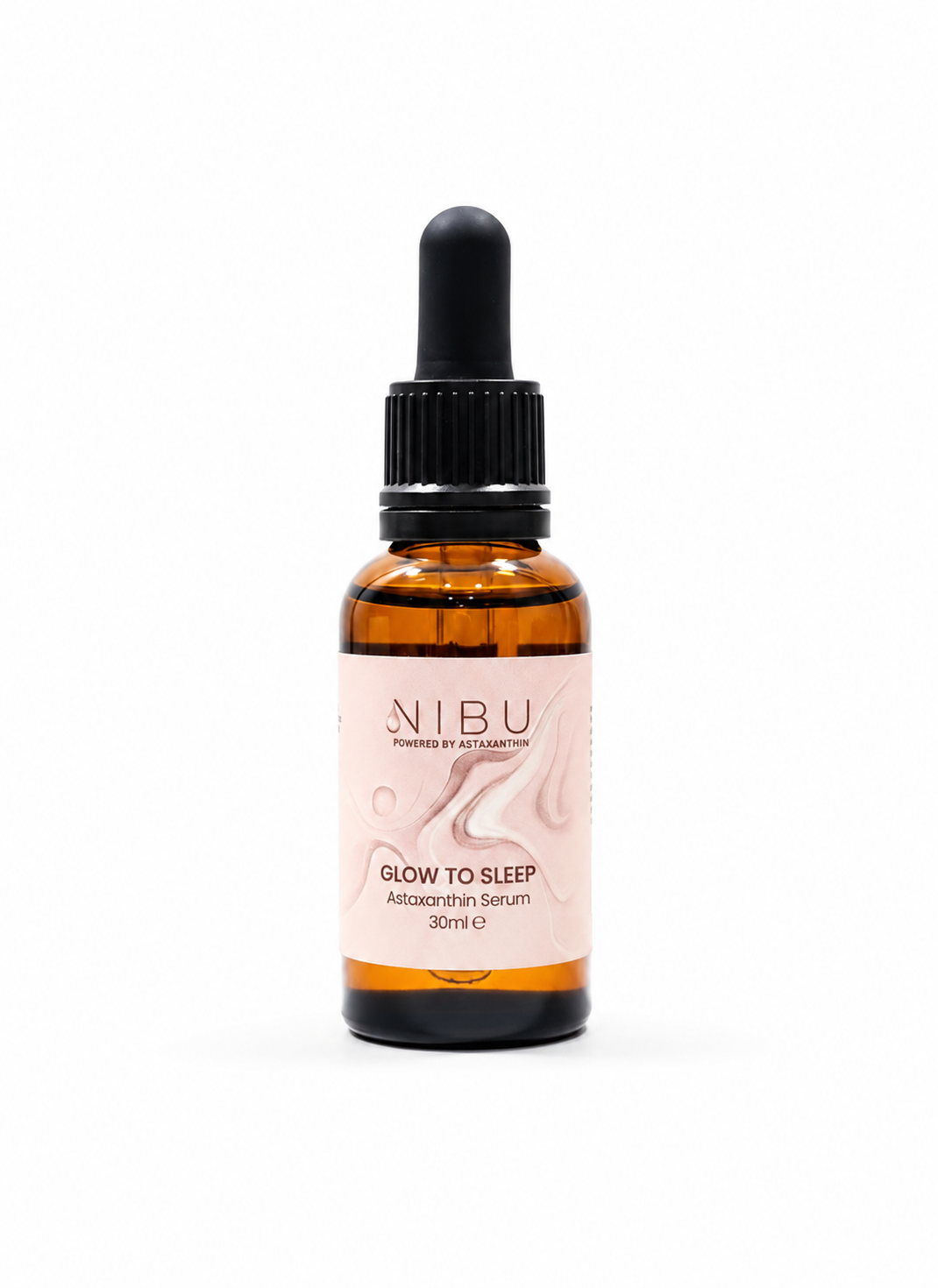
For evenings, Nibu Glow to Sleep is our botanical night-time facial oil, designed to become part of a relaxing skincare ritual.
These products may appeal to women who enjoy an emollient texture and the feeling of facial oils on their skin.
However, they aren't treatments for menopause-related dryness, and they won't suit every skin type.
If your skin has become particularly sensitive, remember that natural botanical ingredients and essential oils can still cause irritation.
Sometimes, a simple fragrance-free moisturiser is a better starting point until your skin feels more comfortable.
Discover Nibu Glow Serums and Glow to Sleep.
5. Be careful with exfoliation
When skin starts looking dull or flaky, it's tempting to reach for an exfoliating scrub.
But dry, uncomfortable skin doesn't always need more exfoliation.
Sometimes, it needs less.
If your skin barrier is already irritated, repeated exfoliation can make things worse.
You might notice stinging, redness or increased sensitivity.
If you use exfoliating acids or retinoids, consider whether you're using them too frequently.
And if your skin is actively irritated, it may be sensible to pause non-essential active products while the skin settles or while you seek advice.
Healthy-looking skin doesn't require aggressive exfoliation.
6. Don't forget sun protection
Sunscreen might not be the first thing you think about when your skin feels dry, but it remains an important part of your routine.
Ultraviolet exposure contributes to changes in collagen, pigmentation and skin texture over time.
Choose broad-spectrum SPF 30 or higher with suitable UVA protection and use it according to the instructions.
If your skin is dry, you may prefer a sunscreen with a moisturising texture.
And remember, Astaxanthin skincare is not a substitute for sunscreen.
7. Look at the little things that might be making dryness worse
Sometimes, it's not one particular product causing discomfort.
It's several small things happening together.
A hot shower. Central heating. Cold weather. A cleanser that's a little too strong. An exfoliating treatment. A moisturiser that's no longer quite rich enough.
Individually, none of these might seem particularly significant.
Together, they can leave your skin feeling uncomfortable.
Before buying an entirely new skincare collection, take a look at the routine you already have.
Often, one or two thoughtful changes are a good place to start.
A Simple Morning and Evening Routine for Dry Menopausal Skin
You don't need ten steps.
Start with the essentials and add other products only if they genuinely help.
Your morning routine
- Cleanse gently. Use a mild cleanser or simply rinse with lukewarm water if that suits your skin.
- Add hydration if needed. A gentle hydrating product can be useful, but toner isn't essential.
- Apply moisturiser. Choose a texture that leaves your skin feeling comfortable.
- Add an optional facial oil serum. If you enjoy the finish of a Nibu Glow Serum, use a small amount according to the product instructions.
- Finish with sunscreen. Apply broad-spectrum SPF 30 or higher separately.
Your evening routine
- Cleanse. Remove make-up, sunscreen and the day's residue.
- Moisturise. Use a suitable moisturiser to support skin comfort.
- Add facial oil if needed. Nibu Glow to Sleep may appeal if you enjoy a richer evening skincare ritual.
- Keep things gentle. Avoid unnecessary exfoliation when your skin feels irritated.
If you're unsure where your products fit, we've created a separate guide explaining the correct skincare layering order.
Read: How to Layer Your Skincare Products: The Correct Order for Cleanser, Toner, Serum and Moisturiser.
Is Your Skin Dry, Dehydrated or Irritated?
These words are often used interchangeably, but they describe slightly different things.
Dry skin generally refers to skin that lacks sufficient natural lipids or has difficulty retaining moisture.
Dehydrated skin is a cosmetic term often used when the skin has reduced water content. It can occur alongside dry or oily skin.
Irritated skin may sting, burn, itch or become red in response to products or environmental factors.
Sometimes, these experiences overlap.
| What you notice | What might be happening | What to try first |
|---|---|---|
| Tightness after washing | Cleansing may be too harsh or skin may be dry | Try a gentler cleanser |
| Dryness returning soon after moisturising | Your skin may need more moisture retention | Review moisturiser ingredients and texture |
| Stinging when applying products | Possible irritation or barrier disruption | Simplify your routine |
| Rough, flaky patches | Dryness, irritation or another skin condition | Moisturise gently and seek advice if persistent |
| Persistent itching | Several possible causes, including eczema or dermatitis | Speak to a pharmacist or GP |
The important thing is not to assume that every new skin symptom is caused by menopause.
Can Menopause Cause Itchy Skin Too?
Yes, dryness and itching can occur together during menopause.
When skin loses moisture more easily, it may become uncomfortable and itchy.
But itching has several possible causes.
Eczema, contact dermatitis, medicines and other medical conditions can also contribute.
If your itching is persistent, widespread, severe or associated with a rash, speak to your GP or pharmacist.
You should also seek advice if your skin becomes cracked, painful, infected or unusually inflamed.
There's no benefit in putting up with symptoms that may need treatment.
Does Drinking More Water Help Dry Menopausal Skin?
Staying adequately hydrated is important for general health.
But drinking extra water isn't a reliable solution for dry skin caused by changes in the skin barrier.
If you're already drinking enough, adding several more glasses of water is unlikely to replace the need for a suitable moisturiser.
Your skin needs water, but it also needs an effective barrier to help retain it.
Both matter.
So enjoy your water, but don't feel you need to drink excessive amounts in the hope of fixing dry skin.
Can Diet and Supplements Help?
Nutrition contributes to normal skin health.
Protein, essential fatty acids and a variety of vitamins and minerals all play roles in maintaining healthy tissues.
A varied diet containing sufficient protein, fruit, vegetables and sources of healthy fats is a sensible foundation.
However, no single food or supplement has been proven to solve menopause-related dry skin.
What about omega-3?
Omega-3 fatty acids are important components of a balanced diet.
Researchers have investigated their relevance to inflammatory processes and certain skin conditions.
However, there isn't enough high-quality evidence to recommend omega-3 supplements specifically as a treatment for dry menopausal skin.
If you choose an omega-3 supplement, consider your dietary intake and the amount of EPA and DHA it provides rather than relying on broad skin-health claims.
What about Astaxanthin?
Astaxanthin is a naturally occurring carotenoid that has attracted scientific interest because of its antioxidant properties.
Small human studies have investigated oral Astaxanthin in relation to selected skin measurements, including moisture and elasticity.
However, the evidence remains limited, and Astaxanthin is not an established treatment for menopause-related skin dryness.
At Nibu, Astaxanthin remains central to our story, from our original skincare collection to our wider interest in healthy ageing.
But we believe it's important to distinguish emerging research from proven benefits.
If you'd like to understand the differences between Astaxanthin skincare and oral supplementation, we've explored the research in a separate guide.
Read: Astaxanthin for Skin: Supplements vs Serums, Which Should You Choose?
What About HRT and Skin Dryness?
Hormone replacement therapy, or HRT, is used to manage menopausal symptoms in suitable individuals.
Research suggests that oestrogen therapy can influence certain measures of skin hydration, collagen and thickness.
However, this doesn't mean HRT should be started solely to improve skin appearance.
Decisions about HRT depend on your symptoms, medical history, preferences and individual risks and benefits.
If you're experiencing several menopausal symptoms, including troublesome skin changes, it's worth discussing the wider picture with your GP or menopause specialist.
Skincare and menopause treatment address different needs, and sometimes both deserve attention.
When Should You Seek Medical Advice?
Most mild dryness can initially be approached with gentle skincare.
However, not every skin change should be attributed to hormonal fluctuations.
Speak to a healthcare professional if:
- Dryness or itching is persistent or getting worse.
- Your skin becomes cracked, painful, inflamed or infected.
- You develop a new or unexplained rash.
- A product repeatedly causes stinging or burning.
- You notice a new or changing mole, a non-healing sore or another concerning skin lesion.
If symptoms are affecting your sleep or everyday life, that's also a good reason to seek advice.
Myth vs Fact: Dry Skin During Menopause
| Myth | Fact |
|---|---|
| Every woman develops dry skin during menopause | Skin changes vary considerably |
| Your old moisturiser has stopped working because it's a poor product | Your skin's needs may have changed |
| Drinking lots of water will cure dry skin | Hydration matters, but skin barrier care is also important |
| Facial oil and moisturiser are exactly the same | They may provide different moisturising functions |
| Natural skincare cannot cause irritation | Botanical ingredients can still irritate sensitive skin |
| Exfoliating more will remove menopausal dry patches | Excessive exfoliation can worsen irritation |
| Supplements can replace moisturiser | No supplement replaces appropriate topical skincare |
| Itching during menopause is always hormonal | Itching has several possible causes and may need assessment |
Frequently Asked Questions
| Question | Answer |
|---|---|
| Why is my skin suddenly so dry during perimenopause? | Fluctuating hormone levels, particularly changes in oestrogen, can affect skin hydration and barrier function. However, weather, skincare products and medical conditions can also contribute. |
| Does menopause make your face dry? | It can. Some women notice increased facial dryness, tightness or sensitivity during perimenopause and after menopause. |
| What is the best moisturiser for menopausal skin? | Look for a moisturiser that suits your skin and contains useful ingredients such as glycerin, ceramides or other barrier-supporting components. If your skin is sensitive, a fragrance-free option may be preferable. |
| Why does my skin still feel dry after moisturising? | Your moisturiser may no longer provide enough moisture retention for your needs. Your cleanser or other skincare products may also be contributing to irritation. Persistent dryness can sometimes have medical causes. |
| Is facial oil good for dry menopausal skin? | A suitable facial oil may provide additional emollience and comfort, particularly alongside moisturiser. It isn't essential and may not suit sensitive or acne-prone skin. |
| Can I use Nibu Glow Serum during menopause? | You can consider it if the formulation suits your skin. Nibu Glow Serums provide an oil-based skincare option and a naturally radiant-looking finish, but they are not treatments for hormonal skin changes. |
| Is Nibu Glow to Sleep suitable for dry skin? | Glow to Sleep is a botanical night-time facial oil that may appeal to women who enjoy an emollient texture. Check the ingredients carefully if you're sensitive to essential oils or fragrance. |
| Does menopause cause itchy skin without a rash? | It can, although itching without a rash has several possible explanations. Seek professional advice if it persists or becomes troublesome. |
| Can HRT improve dry skin? | Some research suggests oestrogen therapy can influence skin hydration and structure. HRT decisions should be based on an individual assessment of menopausal symptoms, benefits and risks. |
| Will my skin return to normal after menopause? | Some skin changes may settle or become easier to manage, while others persist. Experiences vary, and an appropriate skincare routine can help maintain comfort. |
| Does Astaxanthin help menopausal dry skin? | There is some early research on Astaxanthin and skin hydration, but insufficient evidence to establish it as a treatment for menopause-related dryness. |
| Should I change my entire skincare routine? | Usually not. Start by reviewing your cleanser, moisturiser and any products that may be irritating your skin. Small changes can be more useful than replacing everything at once. |
Key Takeaways
- Dry skin is common during perimenopause and menopause, partly because hormonal changes affect skin hydration.
- Your usual moisturiser may feel less effective because your skin's needs have changed.
- Gentle cleansing and a suitable moisturiser are sensible first steps.
- Ingredients such as glycerin and ceramides can help support skin comfort.
- Facial oils may provide additional emollience but don't always replace moisturiser.
- Avoid excessive exfoliation when your skin feels dry or irritated.
- Astaxanthin and omega-3 are not established treatments for menopause-related dryness.
- Persistent itching, inflammation or unusual skin changes deserve professional assessment.
- You don't need an elaborate skincare routine to look after your skin well.
The Nibu Longevity Take
One of the things we believe strongly at Nibu is that healthy ageing should feel empowering, not overwhelming.
Your skin will change throughout your life.
Sometimes those changes are gradual. Sometimes they seem to happen almost overnight.
And sometimes the products you've relied on for years simply don't feel quite right anymore.
That doesn't mean you need to start again with an entirely new routine.
It means paying attention.
Perhaps your skin needs a gentler cleanser. Perhaps a richer moisturiser would make mornings more comfortable. Or perhaps it's time to stop using an exfoliating product that no longer suits you.
There's something reassuring about recognising that skincare doesn't have to be about correcting every sign of age.
It can simply be about comfort, care and feeling good in your own skin.
At Nibu, we began with Astaxanthin skincare because we loved the idea of natural radiance and thoughtful ingredients.
But our wider philosophy has always been about supporting women through healthy habits, good information and realistic expectations.
Your skin doesn't need to behave as it did ten years ago. It deserves to be cared for as it is today.
Conclusion: Your Skin's Needs Are Allowed to Change
If your skin has become drier during perimenopause or menopause, there may be an understandable reason.
Hormonal changes can influence moisture retention, natural skin oils and the protective barrier that helps keep your skin comfortable.
But the answer isn't necessarily a cupboard full of new products.
Start by being gentler with cleansing. Choose a moisturiser that suits your skin now. Consider whether an additional facial oil would provide comfort. And don't overlook sunscreen or persistent symptoms that need medical advice.
Most importantly, remember that your skincare routine is allowed to change as you do.
Healthy ageing isn't about holding on to the skin you had in your twenties.
It's about looking after the skin you're in, at every age.
References
- Kamp E, Ashraf M, Musbahi E, DeGiovanni C. Menopause, skin and common dermatoses. Part 2: Skin disorders. Clinical and Experimental Dermatology. 2022;47(12):2117–2122. Read the review.
- Hall G, Phillips TJ. Estrogen and skin: The effects of estrogen, menopause, and hormone replacement therapy on the skin. Journal of the American Academy of Dermatology. 2005;53(4):555–568. Read the review.
- Managing Menopausal Skin Changes: A Narrative Review of Skin Quality Changes, Their Aesthetic Impact, and the Actual Role of Hormone Replacement Therapy in Improvement. Journal of Cosmetic Dermatology. 2025. Read the review.
- American Academy of Dermatology Association. Caring for your skin in menopause. Read the guidance.
- British Skin Foundation. The impact of the menopause on your skin. Read the guidance.
- Zhou X, Cao Q, Orfila C, Zhao J, Zhang L. Systematic Review and Meta-Analysis on the Effects of Astaxanthin on Human Skin Ageing. Nutrients. 2021;13(9):2917. Read the systematic review.
- National Institute for Health and Care Excellence (NICE). Menopause: Identification and management. NICE guideline NG23. Read the guideline.
Continue Reading
Explore more evidence-led articles from The Nibu Journal:
- Menopause and Skin: Why Your Skin Changes and How to Support It
- How to Layer Your Skincare Products: The Correct Order for Cleanser, Toner, Serum and Moisturiser
- How to Choose the Right Nibu Glow Serum for Your Skin
- Astaxanthin for Skin: Supplements vs Serums, Which Should You Choose?
- Oxidative Stress Explained: Why It Matters for Healthy Ageing
- Healthy Ageing After 50: Protecting Your Strength, Skin and Mind
- Perimenopause Explained: What Is Happening to Your Body in Your 40s?
About The Nibu Journal
The Nibu Journal is the educational home of Nibu Naturals, a female-founded British healthy-ageing brand.
Nibu began with Astaxanthin skincare and has evolved into a wider mission encompassing nutrition, evidence-led supplements, women's health and everyday lifestyle education.
Our philosophy is Healthy Ageing, Inside & Out.
We believe women deserve clear, trustworthy information that helps them make confident decisions about healthy ageing.
Medical Disclaimer
This article is for general educational purposes and does not replace personalised medical or dermatological advice.
Dryness, itching and other skin symptoms can have several causes. Seek advice from a GP, pharmacist or appropriately qualified healthcare professional if symptoms are persistent, worsening or concerning.
Skincare products should be used according to their instructions. Discontinue use if irritation occurs. Food supplements are not substitutes for a varied, balanced diet and healthy lifestyle and are not intended to diagnose, treat, cure or prevent disease.

Read more
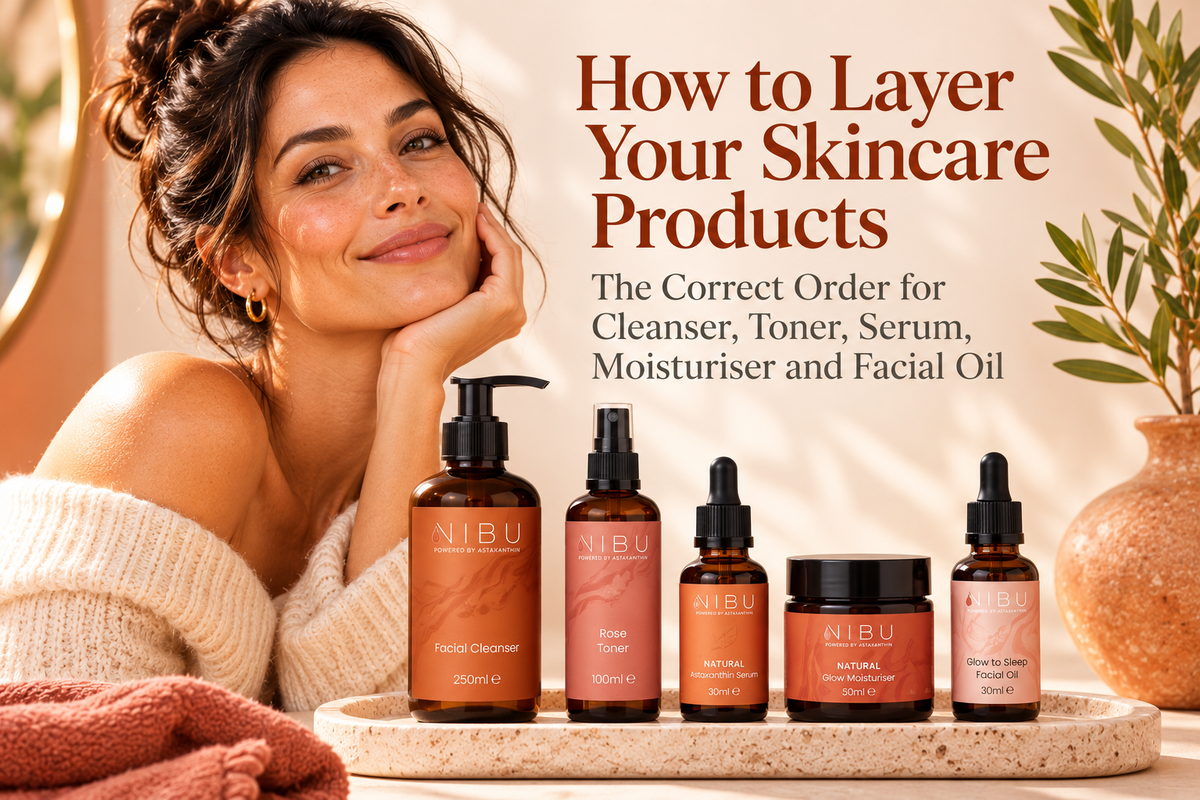
How to Layer Your Skincare Products: The Correct Order for Cleanser, Toner, Serum and Moisturiser
Cleanser, toner, serum or moisturiser: what goes first? Discover how to layer your skincare, build simple Nibu morning and evening routines and understand where sunscreen and red light therapy fit.
Leer másShop
Los más vendidos