Astaxanthin Benefits: The Complete Evidence-Based Guide
Quick Answer
Astaxanthin is a naturally occurring antioxidant found in the microalga Haematococcus pluvialis. It has attracted growing scientific interest because of its ability to help protect cells from oxidative stress.
When applied topically in skincare, astaxanthin helps support healthy-looking skin by protecting against everyday environmental stressors and promoting hydration and radiance.
When taken as a food supplement, astaxanthin is being studied for its potential role in supporting healthy ageing, including skin health, eye health, exercise recovery and overall wellbeing.
At Nibu, we believe these approaches complement one another. Healthy ageing isn't just about looking after your skin or taking a supplement. It's about supporting your body from the inside and the outside through evidence-based choices and healthy daily habits.
Astaxanthin Benefits at a Glance
| Question | Quick Answer |
|---|---|
| What is astaxanthin? | A naturally occurring carotenoid antioxidant produced by the microalga Haematococcus pluvialis. |
| What is it best known for? | Supporting healthy-looking skin and helping protect cells from oxidative stress. |
| Can it be used in skincare? | Yes. Topical astaxanthin helps support skin hydration, the skin barrier and protection from everyday environmental stressors. |
| Can it be taken as a supplement? | Yes. Oral astaxanthin is being studied for its role in skin health, eye health, exercise recovery and healthy ageing. |
| Is the evidence equally strong for every benefit? | No. The strongest evidence currently relates to skin health and antioxidant activity, while research into other areas continues to develop. |
| Why is astaxanthin important to NIBU? | It inspired our first skincare products and remains at the heart of our inside-out healthy ageing philosophy. |
What You'll Learn
- What astaxanthin is and where it comes from.
- Why it has become one of the world's most researched antioxidants.
- How astaxanthin works in skincare.
- How dietary astaxanthin supports the body from within.
- What the research says about its potential benefits.
- The difference between topical and oral astaxanthin.
- Why Nibu was built around this remarkable ingredient.
Introduction
Some ingredients come and go with changing trends. Others quietly earn their place through years of scientific research. Astaxanthin belongs firmly in the second category.
Long before Nibu offered nutritional supplements, we were captivated by the remarkable properties of this naturally occurring antioxidant. Its vibrant red colour, fascinating origin and growing body of research inspired us to create our very first products: astaxanthin skincare.
Because healthy-looking skin isn't simply about covering imperfections. It's about protecting your skin, supporting its natural barrier and helping it cope with the everyday environmental stressors that contribute to visible ageing.
As we continued to explore the science, something became increasingly clear. Healthy ageing doesn't stop at the skin's surface.
The choices we make every day, from the food we eat and the way we move to the quality of our sleep and the nutrients we consume, all influence how we age. That's why Nibu evolved from an astaxanthin skincare brand into a women's healthy ageing brand.
Today, astaxanthin still sits at the heart of everything we do. Not because we believe it's a miracle ingredient, but because the evidence surrounding it continues to grow, and because it perfectly reflects our philosophy of supporting women from the inside and the outside.
What Is Astaxanthin?
Astaxanthin is a naturally occurring red pigment that belongs to a family of compounds called carotenoids. It is produced naturally by the freshwater microalga Haematococcus pluvialis.
When exposed to environmental stress, such as strong sunlight or limited water, the algae produce astaxanthin as a protective defence mechanism. You can think of it as nature's own protective shield.
This natural antioxidant helps the algae survive challenging conditions, and it's this remarkable ability that first attracted scientific interest.
Today, astaxanthin is used in premium skincare formulations and nutritional supplements around the world, with researchers continuing to investigate its role in supporting healthy ageing. Unlike many skincare ingredients that remain on the skin's surface, or nutrients that work solely from within, astaxanthin has found a place in both worlds.
How Does Astaxanthin Work?
Every day, our bodies are exposed to factors that create oxidative stress, including UV radiation from sunlight, air pollution, cigarette smoke, poor sleep, psychological stress, intense physical exercise and the body's own normal metabolic processes.
These factors can lead to the production of free radicals, unstable molecules that may damage cells if they build up faster than the body's natural antioxidant defences can neutralise them. This imbalance is known as oxidative stress.
Oxidative stress is a natural part of life, but over time it is thought to contribute to many of the changes associated with ageing. Antioxidants help defend against this process by neutralising free radicals before they can cause further damage.
Astaxanthin is one of these antioxidants. Its unique molecular structure has attracted significant scientific interest because researchers believe it can interact with cell membranes in a way that helps protect them from oxidative stress.
Two Ways to Benefit from Astaxanthin
Astaxanthin in Skincare
When applied directly to the skin through a serum, moisturiser or facial oil, astaxanthin works on the skin's surface. Its role is to help support healthy-looking skin by protecting against everyday environmental stressors, maintaining hydration and supporting the skin's natural barrier.
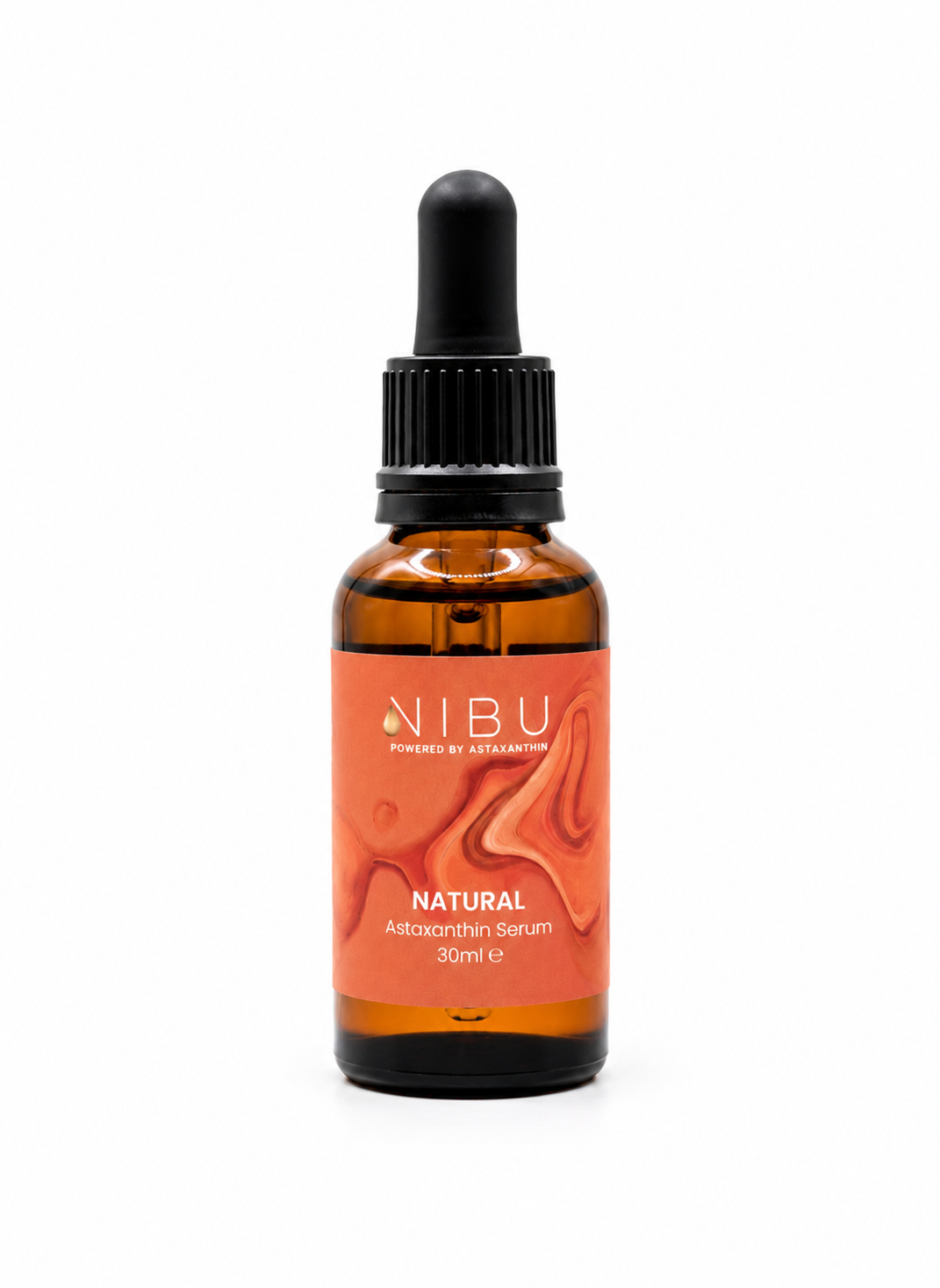
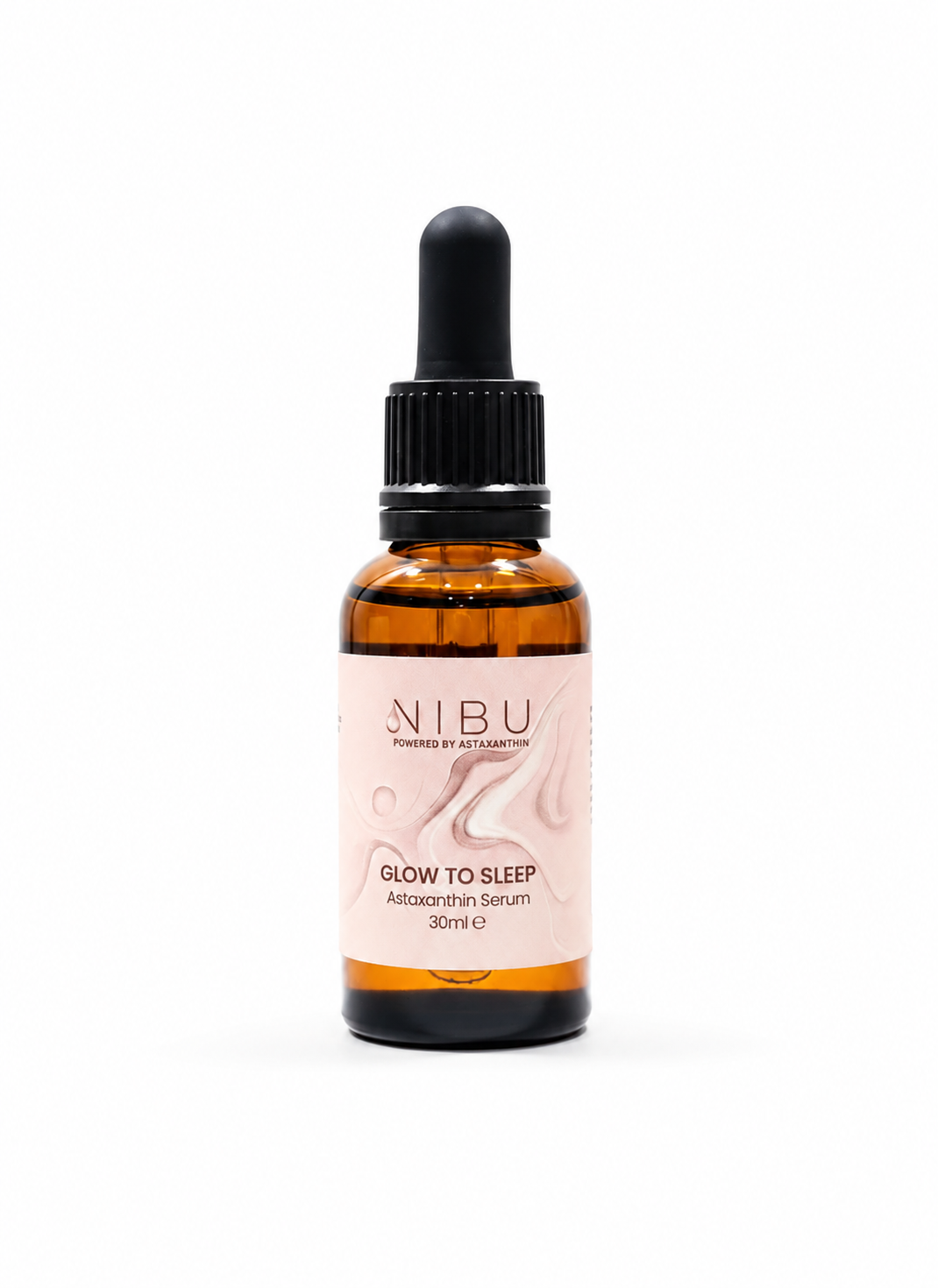
At Nibu, our skincare journey began here. Our Glow collection and Glow to Sleep facial oil were created to bring the benefits of Icelandic astaxanthin into simple, luxurious routines that women could enjoy every day.
Astaxanthin as a Food Supplement
When taken as a supplement, astaxanthin follows a completely different pathway. After digestion and absorption, it becomes available throughout the body via the bloodstream.
Current research has explored its effects on skin health, eye health, exercise recovery, muscle fatigue, cardiovascular health, cognitive function and whole-body antioxidant support.
Skincare or Supplements: Which Is Better?
They support the body in different, complementary ways. Topical skincare delivers astaxanthin directly to the skin. Supplements work from within after digestion and absorption. At Nibu, we believe healthy ageing is built through consistent habits that care for your body from every angle.
Astaxanthin Benefits for Skin
Research suggests that topical astaxanthin may help to support skin hydration, improve the appearance of skin elasticity, reduce the appearance of fine lines, promote smoother-looking skin, enhance skin radiance and help protect against oxidative stress caused by everyday environmental exposure.
Astaxanthin isn't designed to transform your skin overnight. Instead, it becomes part of a long-term routine that supports healthy-looking skin day after day.
Looking After Your Skin From the Inside and the Outside
Beautiful skin isn't created by one cream. Equally, it isn't created by one supplement. Healthy-looking skin reflects everything we do each day. That's why Nibu has always believed in an inside-out approach.
What Does the Research Say?
Astaxanthin has been the subject of hundreds of scientific studies over the past two decades. It's important to recognise that not every proposed benefit has the same level of evidence.
Skin Health
Skin health remains one of the best-studied areas of astaxanthin research. Clinical studies have suggested that astaxanthin may help improve skin hydration, skin elasticity, the appearance of fine lines and wrinkles, smoothness and texture, and a brighter, more radiant complexion.
Eye Health
Researchers have explored whether astaxanthin may help support eye health by protecting delicate tissues from oxidative stress and reducing visual fatigue. Some studies have reported improvements in symptoms such as eye strain and visual accommodation, although findings are not yet consistent across all research.
Exercise Recovery and Muscle Fatigue
Research has explored whether astaxanthin's antioxidant properties may help reduce exercise-induced oxidative stress and support recovery following physical activity. Some studies have suggested improvements in endurance, muscle fatigue and recovery, while others have found little or no additional benefit.
Healthy Ageing
By helping protect cells from oxidative stress, astaxanthin may contribute to healthier ageing when combined with a nutritious diet, regular movement, strength training, quality sleep, stress management, looking after your skin, not smoking and staying socially connected.
Cardiovascular Health
Early research has investigated astaxanthin's potential effects on oxidative stress, inflammation and markers associated with cardiovascular health. Evidence from human clinical trials remains limited. Astaxanthin should not be considered a treatment for cardiovascular disease or a replacement for medical care.
Brain Health and Cognition
Some early studies suggest astaxanthin may have potential in supporting aspects of cognitive function, memory and mental performance, but the evidence remains in its early stages. More high-quality human research is needed.
Where Is the Evidence Strongest?
The strongest evidence currently supports astaxanthin's role in helping protect cells from oxidative stress, supporting healthy-looking skin, improving aspects of skin hydration and elasticity in some studies, and supporting overall antioxidant defence.
There is also promising research into eye health, exercise recovery, healthy ageing, cognitive health and cardiovascular wellbeing. At Nibu, our commitment is to grow alongside that evidence, updating our advice as new high-quality research becomes available.
Why We Continue to Believe in Astaxanthin
When we first launched Nibu, it wasn't because astaxanthin promised miracle results. It was because we saw an ingredient with genuine scientific potential, a strong safety profile and growing evidence supporting its role in healthy skin.
Today, astaxanthin still sits at the heart of everything we do. It represents exactly what we believe in: evidence before hype, consistency over quick fixes, and supporting women through every stage of healthy ageing.
How Much Astaxanthin Should You Take?
Most human studies have investigated daily doses ranging from 4 mg to 12 mg. At Nibu, we formulated our supplement to provide 12 mg of natural astaxanthin, a level that sits within the range commonly used in clinical research.
Consistency is more important than taking occasional larger amounts. As always, follow the recommended daily intake and speak with a healthcare professional if you are pregnant, breastfeeding, taking medication or have an underlying medical condition.
Is Astaxanthin Safe?
Natural astaxanthin has been studied extensively and is generally considered safe when consumed at recommended levels. Clinical trials have reported a good safety profile, with side effects being uncommon and typically mild when they do occur.
Can You Get Astaxanthin From Food?
Yes. Astaxanthin occurs naturally in wild salmon, trout, shrimp, lobster and crab. However, the amount naturally present in food can vary considerably. For people looking to consume a consistent amount each day, a high-quality supplement may be a convenient option.
Food, Skincare or Supplements?
| Food | Skincare | Supplement |
|---|---|---|
| Supports overall nutrition | Applied directly to the skin | Supports the body from within |
| Naturally contains small amounts of astaxanthin in some seafood | Helps support hydration, skin barrier function and protection from oxidative stress | Provides a consistent daily intake of natural astaxanthin |
| Part of a balanced diet | Part of your daily skincare routine | Part of your healthy ageing routine |
Myth vs Fact
Myth: Astaxanthin is only good for your skin.
Fact: Skin health is one of the best-researched areas, but scientists are also exploring astaxanthin's potential role in eye health, exercise recovery and healthy ageing.
Myth: More astaxanthin is always better.
Fact: Not necessarily. Consistency and choosing a quality product are far more important.
Myth: Skincare and supplements do exactly the same thing.
Fact: They work in different ways. Skincare supports the skin directly. Supplements are absorbed through the digestive system and become available throughout the body.
Myth: Astaxanthin can replace sunscreen.
Fact: No. Daily sunscreen remains one of the most important ways to help protect your skin from UV damage. Astaxanthin skincare complements sun protection but should never be considered a substitute for SPF.
Frequently Asked Questions
What is astaxanthin?
Astaxanthin is a naturally occurring carotenoid antioxidant produced by the freshwater microalga Haematococcus pluvialis. It is used in both premium skincare and nutritional supplements because of its antioxidant properties.
Is natural astaxanthin better than synthetic astaxanthin?
Most supplements intended for human consumption use natural astaxanthin derived from Haematococcus pluvialis. Natural astaxanthin is the form investigated in the majority of human clinical studies and is the form used throughout the Nibu range.
Can I use astaxanthin skincare and take a supplement together?
Yes. They support the body in different ways. Skincare delivers astaxanthin directly to the skin, while supplements work from within after digestion and absorption. This reflects Nibu's inside-out approach to healthy ageing.
How long does astaxanthin take to work?
This varies from person to person. Healthy ageing is built through consistency rather than quick fixes. Using skincare daily and taking supplements regularly as part of a balanced lifestyle is the best long-term approach.
Can everyone take astaxanthin?
Most healthy adults can enjoy astaxanthin as part of a balanced lifestyle. If you are pregnant, breastfeeding, have a medical condition or take prescription medication, speak to your healthcare professional before taking a new supplement.
Key Takeaways
- Astaxanthin is one of the most researched natural carotenoid antioxidants.
- It can be used in both skincare and nutritional supplements.
- Topical skincare supports healthy-looking skin and helps protect against oxidative stress.
- Oral supplementation provides whole-body antioxidant support and is being studied for a wide range of healthy ageing applications.
- The strongest evidence currently supports its role in skin health and antioxidant protection.
- Healthy ageing is built on consistent daily habits, not one ingredient alone.
The Nibu Healthy Ageing Take
Everything we do at Nibu starts with one simple belief. Healthy ageing isn't about chasing perfection. It's about making informed choices that help you feel confident, capable and well at every stage of life.
Astaxanthin was the ingredient that inspired our journey. Whether you're applying astaxanthin to your skin each morning, taking it as part of your daily nutrition or simply learning more about the science, remember that no single ingredient creates lasting health.
Eat well. Move regularly. Protect your skin. Prioritise sleep. Manage stress. Stay curious. Support your body from the inside and the outside. Because healthy ageing isn't about trying to look younger. It's about helping you look and feel your best for years to come.
Conclusion
Astaxanthin has earned its reputation as one of nature's most remarkable antioxidants through years of scientific research and growing interest in both skincare and nutrition.
At Nibu, astaxanthin is more than just an ingredient. It's where our story began. We don't believe in miracle ingredients. We believe in trusted science, consistent habits and supporting your health from every angle. That's why astaxanthin remains at the heart of everything we do.
References
- Ambati RR, Phang SM, Ravi S, Aswathanarayana RG. Astaxanthin: Sources, Extraction, Stability, Biological Activities and Commercial Applications. Marine Drugs. 2014.
- Yoshihisa Y, Andoh T. Effects of Astaxanthin on Skin Health. Nutrients. 2014.
- Tominaga K, Hongo N, Karato M, Yamashita E. Cosmetic Benefits of Astaxanthin on Human Subjects. Acta Biochimica Polonica. 2012.
- Guerin M, Huntley ME, Olaizola M. Haematococcus Astaxanthin: Applications for Human Health and Nutrition. Trends in Biotechnology. 2003.
- Fassett RG, Coombes JS. Astaxanthin: A Potential Therapeutic Agent in Cardiovascular Disease. Marine Drugs. 2011.
- Galasso C, Corinaldesi C, Sansone C. Carotenoids from Marine Organisms: Biological Functions and Applications. Marine Drugs. 2017.
- Nishida Y, Yamashita E, Miki W. Quenching Activities of Common Hydrophilic and Lipophilic Antioxidants Against Singlet Oxygen. Journal of Agricultural and Food Chemistry. 2007.
- EFSA Panel on Dietetic Products, Nutrition and Allergies. Scientific Opinion on Astaxanthin as a Novel Food Ingredient.
- British Association of Dermatologists. Sun Protection Guidance.
- NHS. Healthy Ageing.
Continue Reading
- The Complete Guide to Astaxanthin
- Icelandic Astaxanthin for Skin: Why the Source Matters
- What Is Oxidative Stress?
-
Inflammaging: The Hidden Cause of Ageing
About The Nibu Journal
The Nibu Journal is the educational home of Nibu Naturals. Every article is written to help women make informed decisions about healthy ageing through clear, trustworthy and evidence-based information.
Medical Disclaimer: The information in this article is intended for educational purposes only and should not be considered medical advice. Food supplements should not be used as a substitute for a varied, balanced diet and a healthy lifestyle. Always follow the recommended daily intake and seek advice from a qualified healthcare professional if you have any concerns about your health or before starting a new supplement.

Read more
Creatine During Menopause: Benefits, Safety and How to Take It
Menopause changes much more than hormones. Discover how creatine may support muscle, strength and healthy ageing during perimenopause and menopause, and how to use it safely as part of an evidence-...
En savoir plus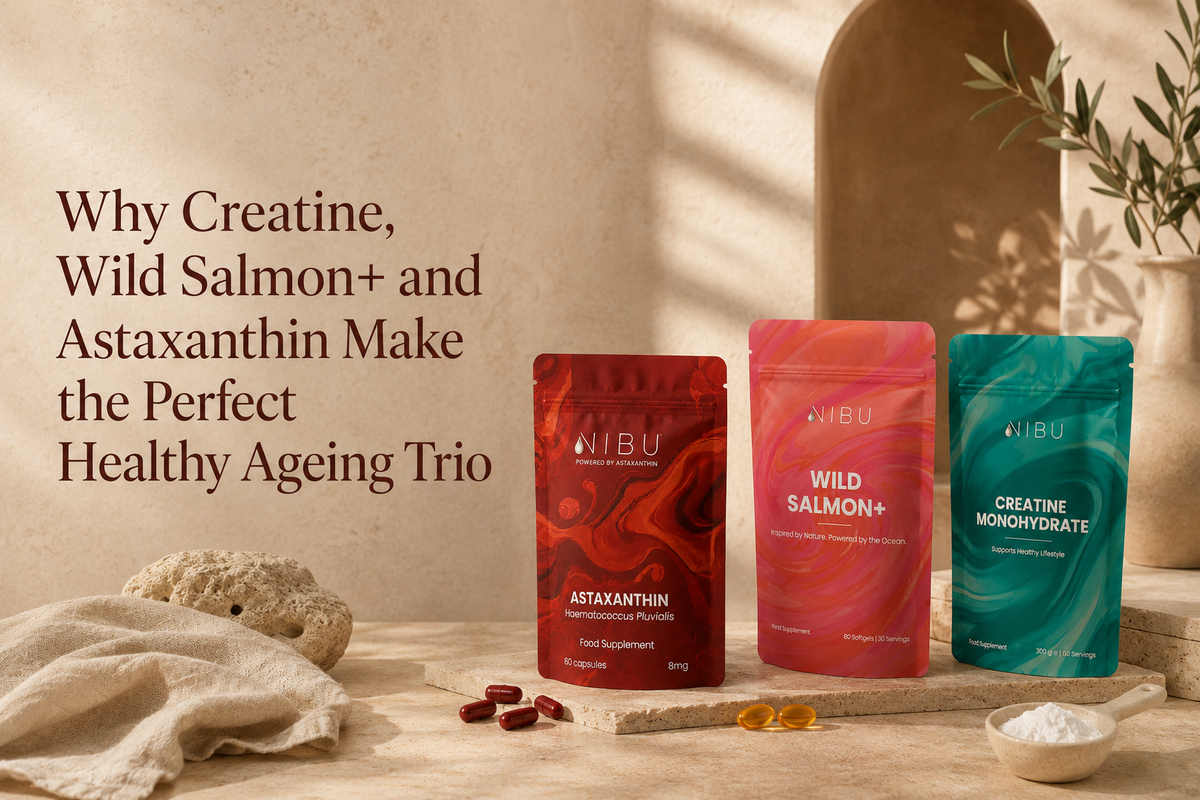
The Healthy Ageing Trio: How Creatine, Wild Salmon+ and Astaxanthin Support Different Needs
Healthy ageing isn't about finding one miracle supplement. Discover how Creatine, Wild Salmon+ and Astaxanthin each support different aspects of your health as part of a balanced lifestyle.
En savoir plusShop
Meilleures ventes