Article: Damaged Skin Barrier: Signs, Causes and How to Repair It
Damaged Skin Barrier: Signs, Causes and How to Repair It
Has your skin suddenly become dry, tight or sensitive to products you've used for years? Here's what might be happening, what could be making it worse and how to help your skin feel comfortable again.
Quick Answer
A damaged or disrupted skin barrier means the outermost layer of your skin isn't protecting you as effectively as it normally would.
You might notice dryness, tightness, flaking, redness or an uncomfortable stinging sensation when applying products that previously felt perfectly fine.
Common triggers include over-exfoliation, harsh cleansing, hot water, cold weather, irritating ingredients and certain skin conditions.
The good news is that many cases of mild skin barrier irritation improve with a simpler, gentler skincare routine.
Start with a mild cleanser, a suitable moisturiser and daily sun protection. Avoid unnecessary exfoliation and products that sting or burn.
Ingredients such as glycerin, ceramides and petrolatum can be useful, depending on your skin's needs.
And remember, your skin doesn't always need another active ingredient. Sometimes, it needs a little less interference.
What You'll Learn
- What your skin barrier is and why it matters
- How to recognise the signs of a disrupted skin barrier
- Why skincare products can suddenly start stinging
- Which everyday habits might be making irritation worse
- How to build a simple routine while your skin recovers
- Which moisturising ingredients are worth looking for
- Whether facial oils and Astaxanthin can help
- How long skin barrier recovery may take
- When it's time to seek professional advice
When Your Favourite Skincare Suddenly Starts Stinging
You know that moisturiser you've been using for months?
The one your skin normally loves?
Then one evening you apply it, and instead of that familiar comfortable feeling, your cheeks begin to sting.
You check the bottle. Nothing has changed.
Perhaps your skin has been feeling unusually tight after washing. Maybe you've noticed a few dry patches, or your face seems to react to almost everything you put on it.
So you do what many of us would do.
You start looking for another product.
Something more hydrating. Something calming. Perhaps a new serum promising to repair your skin overnight.
But what if the answer isn't adding something?
What if your skin actually needs a simpler routine?
This is where understanding your skin barrier can make a real difference.
At Nibu, we believe good skincare begins with recognising what your skin needs, rather than following every new trend.
And sometimes, the kindest thing you can do is give it a chance to settle.
What Is Your Skin Barrier?
Your skin is much more than the surface you see in the mirror.
It's your body's largest organ, and one of its most important jobs is protecting you from the outside world.
The outermost part of the epidermis is called the stratum corneum.
This is the layer most people are referring to when they talk about the skin barrier.
Although it's remarkably thin, it performs an essential role.
It helps prevent excessive water loss while limiting the entry of irritants and other unwanted substances.
Think of your skin barrier like a brick wall
Imagine a well-built brick wall.
The bricks represent the flattened skin cells that make up the outermost layer.
Between those cells is a mixture of natural lipids, including ceramides, cholesterol and fatty acids.
These lipids act a little like mortar, helping the structure remain organised and effective.
When everything is working well, your skin can retain moisture and protect itself from everyday environmental challenges.
But when that protective structure is disrupted, water can escape more easily and irritating substances may penetrate more readily.
Your skin may begin to feel dry, rough, tight or uncomfortable.
This is why a healthy skin barrier matters.
It's not simply about having smooth-looking skin.
It's about maintaining one of your body's most important protective systems.
Seven Signs Your Skin Barrier Might Be Struggling
The phrase damaged skin barrier is widely used in skincare, although it isn't a specific medical diagnosis.
It generally describes a situation in which the skin's protective function may be impaired.
Here are some of the signs worth paying attention to.
1. Your skin feels unusually tight
A little tightness after washing might seem harmless, but it can be a sign that your skin is becoming dry or irritated.
If your face regularly feels uncomfortable after cleansing, it's worth looking at your cleanser and washing habits.
2. Products suddenly start stinging
This is often what makes people realise something has changed.
A moisturiser or serum that previously felt comfortable may begin to sting or burn.
However, stinging doesn't prove your skin barrier is damaged. It can also be a sign of irritation or an allergic reaction.
3. Your skin becomes dry or flaky
You may notice rough patches, peeling or areas that don't seem to stay moisturised.
Sometimes, applying more and more product doesn't solve the problem.
The underlying cause of the dryness matters.
4. Your skin looks red or inflamed
Some people develop visible redness, while others notice a change in skin tone, warmth or discomfort.
Inflammation can look different across skin tones, so it isn't always bright red.
5. Your skin feels itchy
Itching can occur when skin becomes dry or irritated.
However, persistent itching may also indicate eczema, contact dermatitis or another condition that needs attention.
6. Your skin seems more reactive than usual
Perhaps products you've used for years suddenly feel uncomfortable.
Or your face becomes irritated after exposure to cold weather, hot water or certain skincare ingredients.
7. Your skin doesn't seem to settle
Occasional dryness is common.
But if your skin remains uncomfortable despite simplifying your routine, it may be time to look beyond everyday skincare.
Important: These symptoms can also occur with eczema, rosacea, contact dermatitis, infections and other skin conditions. If they persist, worsen or keep returning, seek professional advice rather than repeatedly trying new products.
What Causes Skin Barrier Damage?
There isn't one single cause.
Often, several things are happening at once.
Over-exfoliating
Exfoliation can be useful when it's appropriate for your skin.
Ingredients such as alpha hydroxy acids and beta hydroxy acids are commonly used to remove surface skin cells or address particular concerns.
But using them too frequently, combining several exfoliating products or choosing concentrations your skin doesn't tolerate can lead to irritation.
You might notice that your skin initially looks smoother.
Then, after a few days or weeks, it begins feeling tight, red or unusually sensitive.
If this sounds familiar, it may be worth temporarily putting aside non-essential exfoliating products.
More exfoliation doesn't necessarily mean healthier skin.
Cleansing too aggressively
Cleansing is important, particularly in the evening when we want to remove sunscreen, make-up and everyday residue.
But your face shouldn't feel painfully tight or stripped afterwards.
Harsh cleansers, repeated washing and very hot water can affect the natural lipids at the skin's surface.
If your skin feels uncomfortable immediately after washing, consider whether your cleansing routine is contributing.
You don't need to scrub your face to get it clean.
Using too many active ingredients together
Retinoids, exfoliating acids, vitamin C and other active skincare ingredients can all have a place in a routine.
But not every ingredient suits every person, and some combinations increase the likelihood of irritation.
Introducing several new products at once also makes it difficult to work out which one might be causing a reaction.
A slower approach is usually more sensible.
Introduce one new product at a time and pay attention to how your skin responds.
Cold weather and central heating
Have you noticed your skin becoming drier during winter?
Cold outdoor air, indoor heating and low humidity can all contribute to moisture loss and discomfort.
Sometimes, your usual lightweight moisturiser simply isn't enough during colder months.
A richer formulation may feel more comfortable.
Fragrance and essential oils
Fragrance isn't automatically harmful to everyone.
Many people use fragranced skincare without difficulty.
However, fragrance ingredients, essential oils and certain preservatives can cause irritation or allergic contact dermatitis in susceptible individuals.
And it's possible to develop a sensitivity to something you've used successfully for years.
If your skin is currently irritated, a simple fragrance-free moisturiser may be a better starting point.
Natural ingredients aren't automatically non-irritating.
What matters is the formulation and how your skin responds.
Existing skin conditions
Eczema is associated with impaired skin barrier function.
Rosacea, contact dermatitis and other skin conditions can also cause burning, stinging, dryness or inflammation.
These conditions may need specific treatment.
A moisturiser can support skin comfort, but it cannot replace appropriate medical care.
That's why it's important not to assume every episode of redness or irritation is simply a damaged barrier.
Why Does Your Skin Lose Moisture When the Barrier Is Disrupted?
One of the main consequences of impaired barrier function is increased water loss.
Researchers call this transepidermal water loss, often shortened to TEWL.
It describes water moving through the skin and evaporating from the surface.
Some water loss is perfectly normal.
But when the barrier isn't functioning as effectively, that loss may increase.
Your skin can become drier and less comfortable.
Irritants may also interact more readily with the skin, contributing to further irritation.
This can create a frustrating cycle.
Your skin feels dry, so you apply more products. Some of those products cause additional irritation, and your skin becomes even less comfortable.
The aim of a gentler routine is to help interrupt that cycle.
How to Repair and Support Your Skin Barrier
If your skin is mildly irritated, you may not need a complicated treatment plan.
In fact, the simplest approach is often the most useful.
Step 1: Give your routine a temporary reset
Start by putting aside the products you don't really need.
That might mean taking a break from exfoliating acids, cosmetic retinoids, strong treatments or products that cause stinging.
Focus on three essentials:
- Gentle cleansing when needed
- A suitable moisturiser
- Sun protection during the day
If you're using prescribed skincare treatments, speak to your prescriber before stopping or changing them.
You don't have to abandon every product forever.
The idea is to give your skin a chance to settle before deciding what to reintroduce.
Step 2: Be gentler when cleansing
Choose a mild cleanser that removes everyday residue without leaving your face feeling stripped.
Use lukewarm water rather than hot water.
Avoid scrubbing or rubbing your skin with a rough flannel.
And remember, you may not need to use a cleansing product twice a day.
Some people with dry or sensitive skin find that a gentle rinse in the morning is sufficient.
The most important thing is how your skin feels afterwards.
Step 3: Find a moisturiser your skin genuinely likes
Moisturiser is one of the most useful parts of a barrier-supporting routine.
A good formulation can help attract water, soften the skin and reduce moisture loss.
Look for ingredients such as glycerin, ceramides or petrolatum, depending on your skin's needs.
You don't need the most expensive cream or the longest ingredient list.
A simple product that feels comfortable and doesn't cause irritation is often a better choice than something elaborate.
Step 4: Avoid anything that makes irritation worse
While your skin feels uncomfortable, consider avoiding non-essential products that cause stinging or burning.
This may include exfoliating scrubs, acid treatments, fragranced products and poorly tolerated active ingredients.
Also pay attention to everyday habits such as washing with hot water or repeatedly trying new products.
The aim isn't to avoid all active skincare forever.
It's to reduce unnecessary irritation while your skin recovers.
Step 5: Keep using sun protection
Sun protection remains important, even when your skin is sensitive.
Choose a broad-spectrum sunscreen with SPF 30 or higher and suitable UVA protection.
If your usual sunscreen stings, look for a formulation designed for sensitive skin.
And remember, sunscreen should be applied separately according to its instructions.
Don't mix it with facial oils or moisturisers, as this may interfere with the protection provided by the tested formulation.
Step 6: Give your skin time
It's tempting to expect a dramatic improvement overnight.
But recovery depends on what caused the irritation and how severe it is.
Mild irritation may begin to settle within days once the trigger is removed.
More significant disruption can take weeks, while conditions such as eczema or allergic contact dermatitis may require specific treatment.
Consistency is usually more helpful than constantly switching products.
Which Ingredients Are Best for Skin Barrier Support?
You don't need to become a cosmetic chemist to understand your moisturiser.
But knowing what a few common ingredients do can make choosing products easier.
| Ingredient | What it does | Why it may help |
|---|---|---|
| Ceramides | Form part of the skin's natural lipid barrier | Can support barrier function in suitable formulations |
| Glycerin | Attracts and retains water | Helps improve hydration |
| Hyaluronic acid | Binds water | Supports skin hydration |
| Petrolatum | Forms an occlusive protective layer | Helps reduce moisture loss |
| Dimethicone | Provides an emollient and protective effect | Can help reduce moisture loss |
| Squalane | Acts as an emollient | Helps skin feel softer and smoother |
| Colloidal oatmeal | Has soothing and skin-protective properties | May help some types of dry, irritated skin |
Not every moisturiser needs to contain all these ingredients.
The complete formulation matters.
And if a product repeatedly stings or causes discomfort, it may not be suitable for you, regardless of how impressive the ingredients sound.
Can Facial Oils Help a Damaged Skin Barrier?
Facial oils can be lovely additions to a skincare routine.
Many contain fatty acids and other compounds that help soften the skin and provide an emollient feel.
Depending on the formulation, they may also help reduce moisture loss.
But not all facial oils are the same.
Some are well tolerated, while others may cause irritation, particularly if they contain fragrance or essential oils.
And an oil-based product doesn't necessarily provide the same hydrating functions as a moisturiser containing water-binding ingredients.
Should you use moisturiser or facial oil first?
If your skin is dry or uncomfortable, I would generally begin with a suitable moisturiser.
Once your skin feels comfortable, you can decide whether adding a facial oil would be beneficial.
You don't need both simply because they're available.
Where Nibu's Astaxanthin skincare fits
Astaxanthin skincare is where Nibu began.
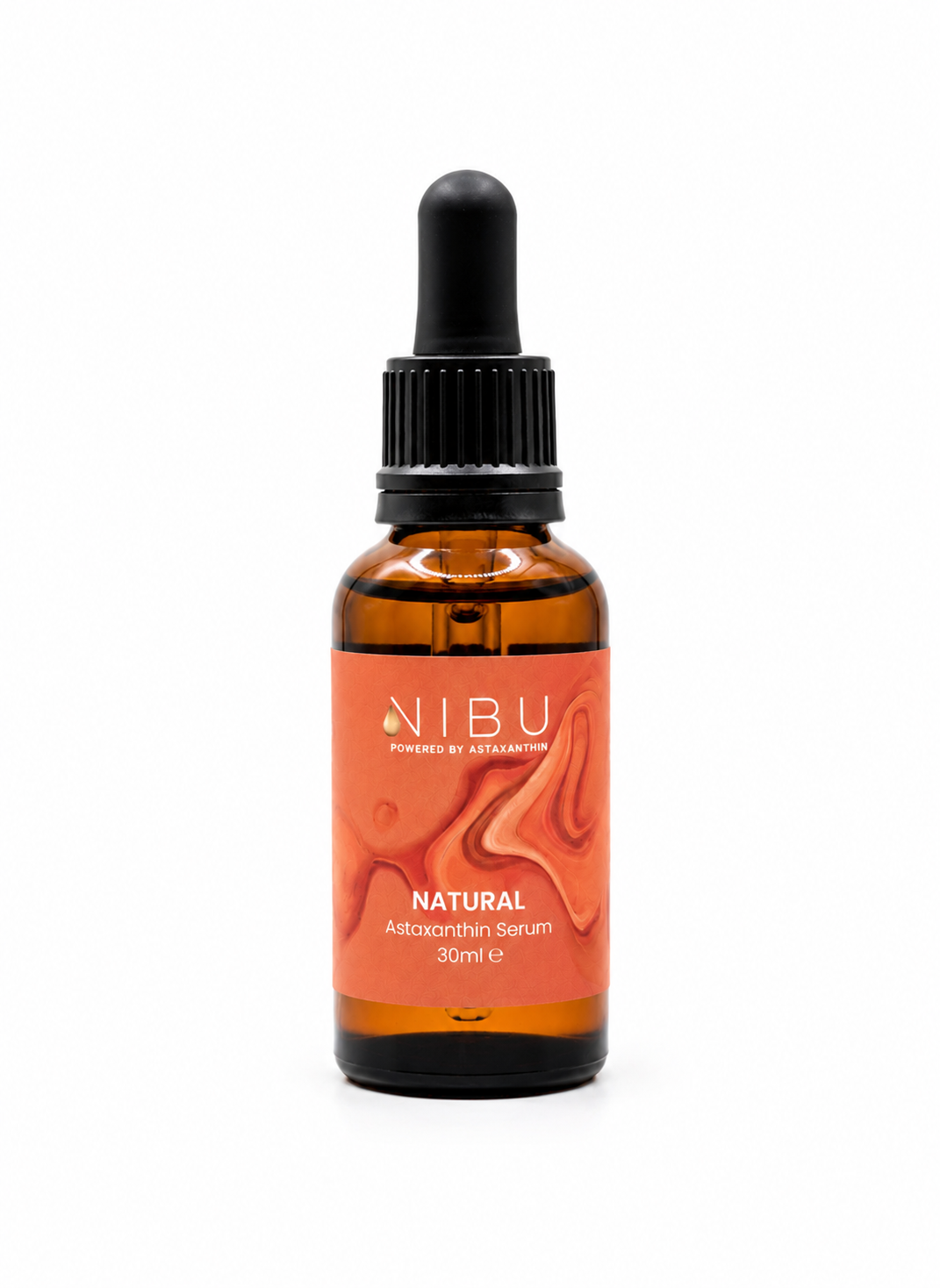
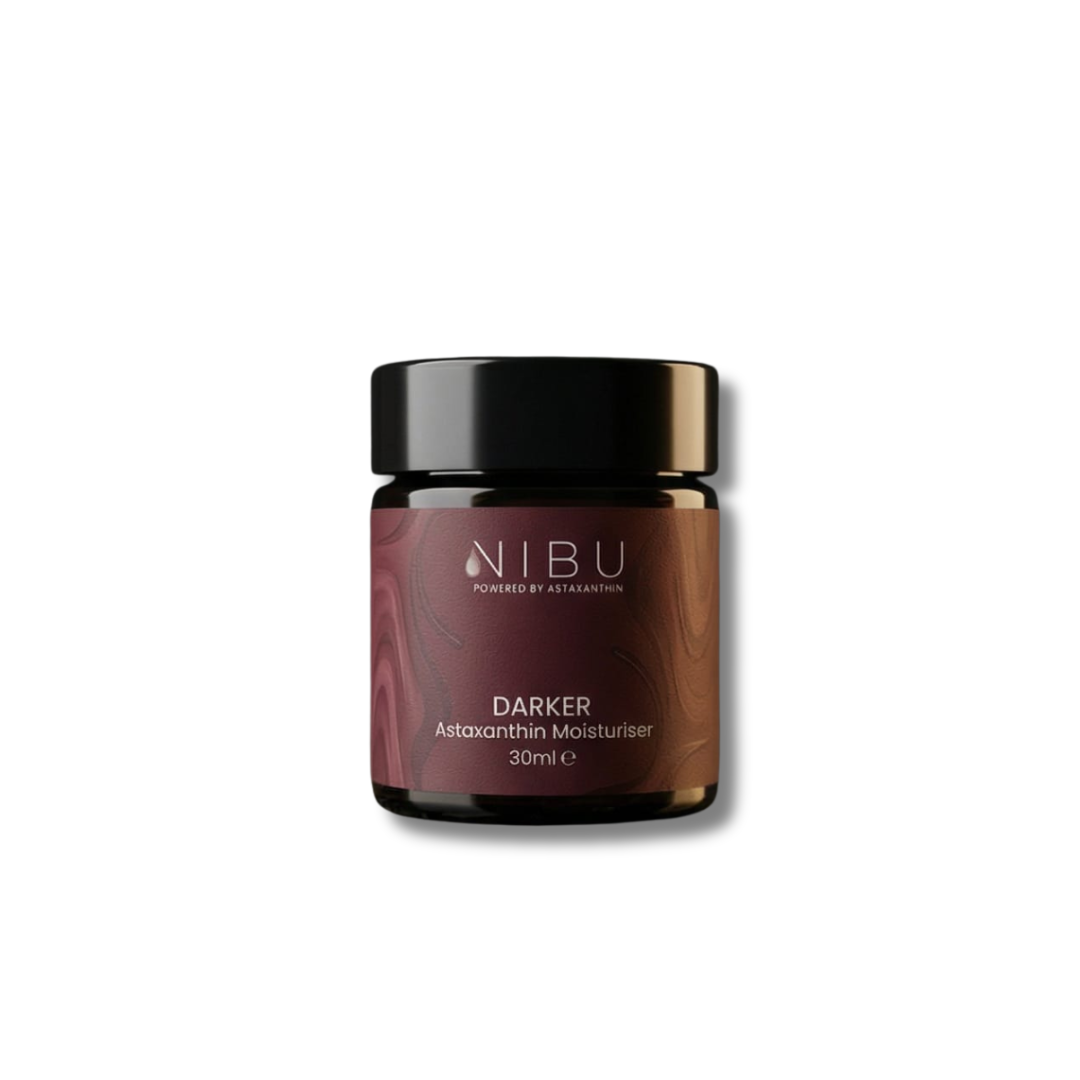
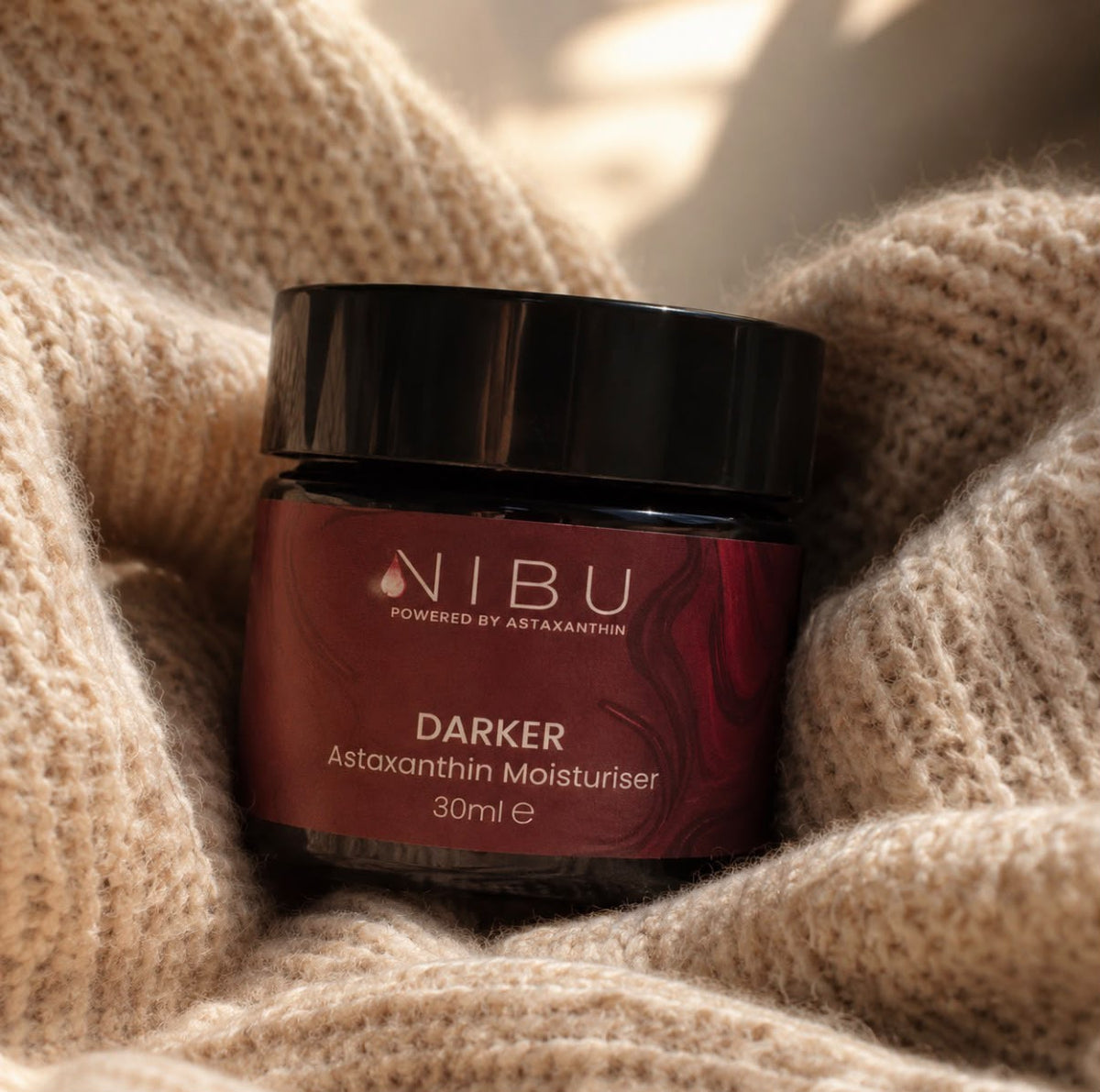
Our Glow Day Serums, available in Natural, Darker and Deeper, are oil-based formulations designed to provide an emollient skincare experience and a naturally radiant-looking finish.
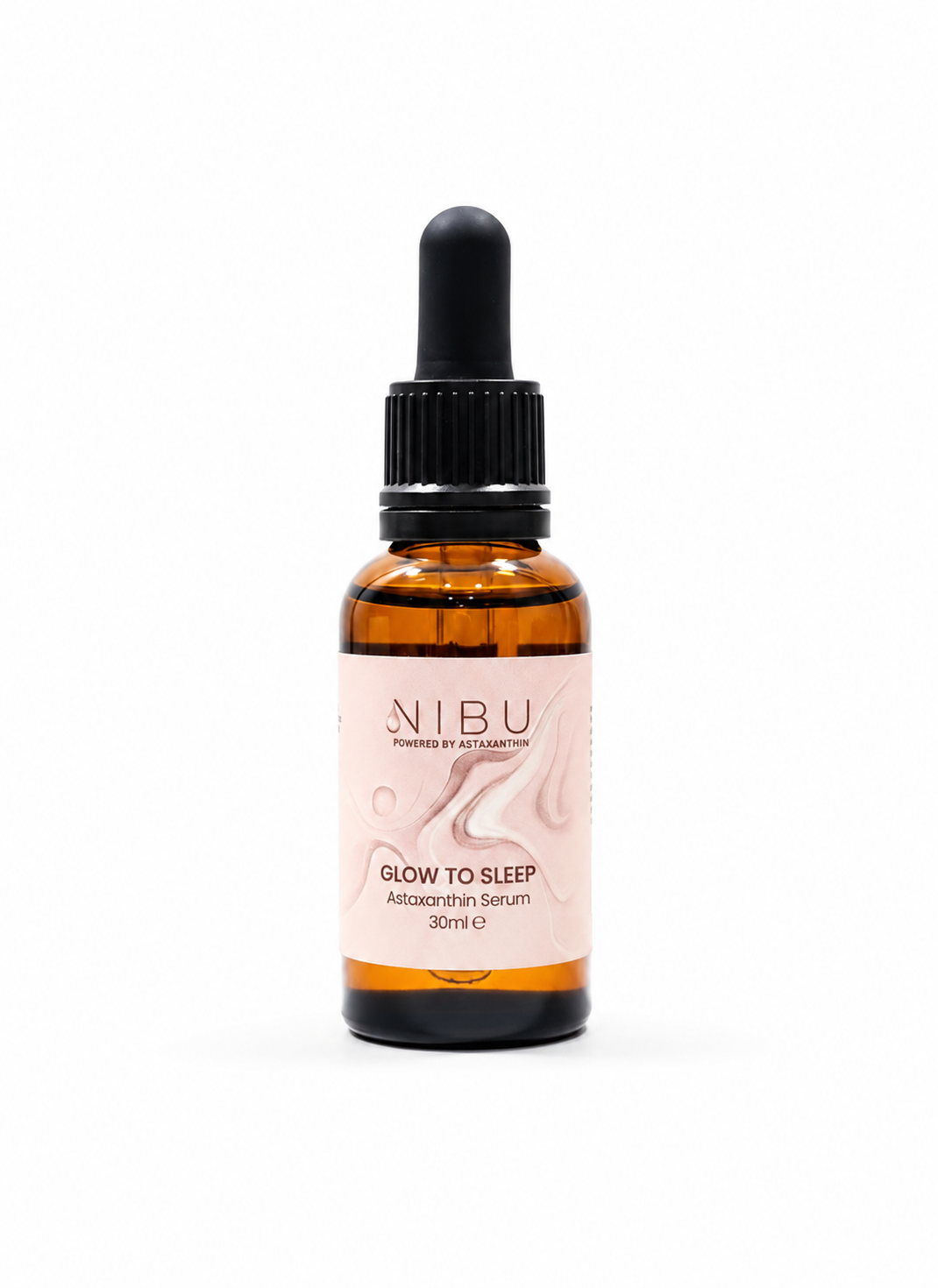
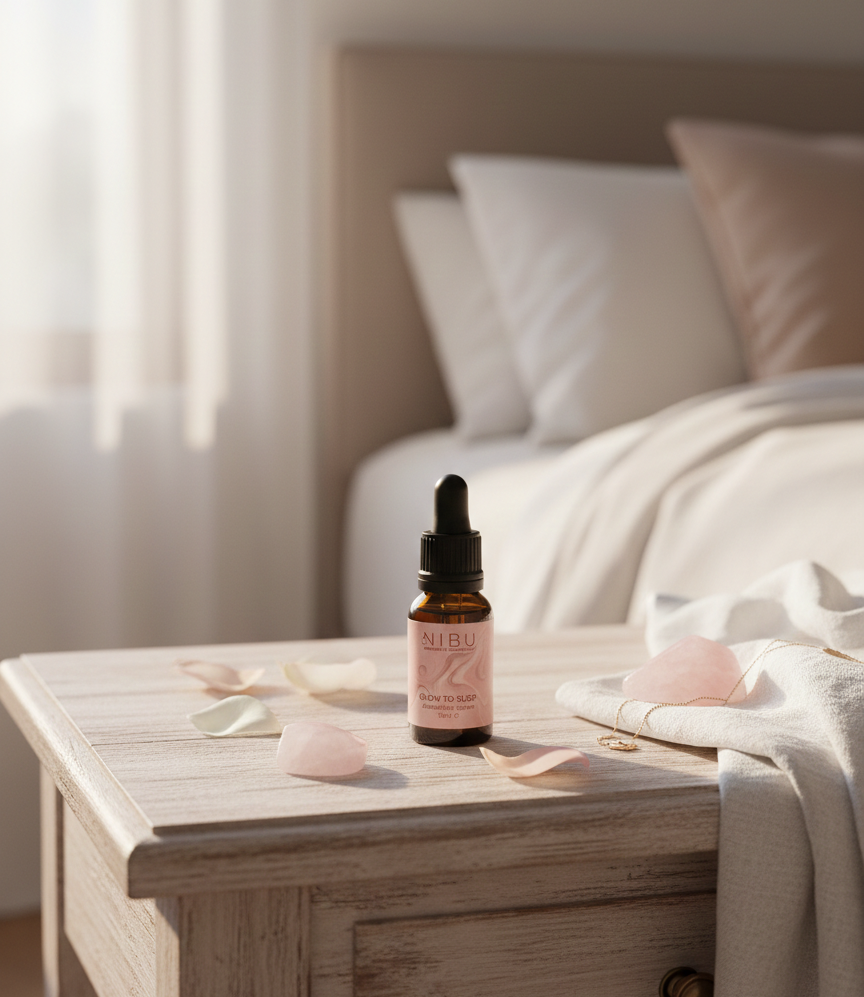
Our Glow to Sleep night-time facial oil offers another option for women who enjoy botanical facial oils as part of their evening routine.
These products can be enjoyable additions when your skin tolerates them.
However, we wouldn't recommend introducing an essential-oil-containing facial product to actively irritated skin simply to repair its barrier.
If your skin is stinging, inflamed or reacting to products, begin with a simple fragrance-free moisturiser and seek advice if symptoms persist.
Once your skin has settled, you can consider whether your usual Nibu products still suit your needs.
Good skincare is about choosing what's appropriate for your skin, not using every product available.
Does Astaxanthin Help Repair the Skin Barrier?
Astaxanthin is a naturally occurring carotenoid that has attracted scientific interest because of its antioxidant properties.
Some small human studies have investigated oral Astaxanthin in relation to skin hydration, elasticity and other measures of skin appearance.
A 2021 systematic review and meta-analysis reported encouraging findings for certain outcomes, while also highlighting limitations in the available evidence.
But there's an important distinction between general skin research and treating a disrupted skin barrier.
There isn't currently sufficient clinical evidence to claim that topical or oral Astaxanthin repairs a damaged skin barrier.
Astaxanthin skincare may have a place in a well-tolerated routine, but it shouldn't be presented as a treatment for eczema, contact dermatitis or persistent skin inflammation.
At Nibu, we believe good science includes understanding what an ingredient hasn't yet been shown to do.
How Long Does It Take to Repair a Damaged Skin Barrier?
This is one of the questions people ask most often.
And the answer depends on the cause.
If your skin has become mildly irritated after using too many active products, it may begin feeling more comfortable within days of simplifying your routine.
More substantial disruption may take several weeks to improve.
And if eczema, allergic contact dermatitis or another medical condition is involved, your skin may need specific treatment.
There isn't a scientifically established recovery time that applies to everyone.
Be cautious of products promising to repair your skin barrier completely in 24 hours.
Moisturisers can improve hydration and comfort relatively quickly, but that doesn't necessarily mean every aspect of barrier function has returned to normal.
Can You Have a Damaged Skin Barrier and Oily Skin?
Absolutely.
Oily skin can still become dehydrated or irritated.
Sebum production and skin barrier function are related, but they're not the same thing.
You might notice that your forehead looks shiny while your cheeks feel tight.
Or your skin may produce plenty of oil but sting when you apply certain products.
In this situation, using a stronger cleanser to remove the oil may make irritation worse.
A lightweight, non-comedogenic moisturiser may feel more comfortable than a very rich cream.
The best routine depends on your individual skin.
Does Menopause Affect Your Skin Barrier?
It can.
Hormonal changes during perimenopause and menopause may influence skin hydration, lipid production and other aspects of skin function.
Some women notice that their skin becomes drier or more sensitive during this time.
However, not every woman experiences the same changes.
And not every new skin symptom is caused by menopause.
If your skin has become unexpectedly reactive, consider your skincare products, environment and possible underlying skin conditions as well as hormonal changes.
For a fuller explanation, read our Nibu Journal guide:
Why Does Your Skin Feel So Dry During Menopause? What Actually Helps
A Simple Morning and Evening Routine for Sensitive Skin
When your skin feels irritated, simplicity can be a real advantage.
| Morning | Evening |
|---|---|
| Rinse gently or use a mild cleanser if needed | Cleanse gently to remove sunscreen and make-up |
| Apply a suitable fragrance-free moisturiser | Apply a suitable fragrance-free moisturiser |
| Finish with broad-spectrum SPF 30+ | Avoid non-essential active products while irritation settles |
That's enough for many people.
Once your skin feels comfortable again, you can consider gradually reintroducing other products.
Try one at a time.
That way, it's easier to recognise what suits your skin and what doesn't.
Five Skincare Habits That Could Be Making Things Worse
Sometimes, the problem isn't what you're missing.
It's what you're doing too often.
1. Washing your face with very hot water
Hot water can contribute to dryness and discomfort.
Choose lukewarm water instead.
2. Exfoliating too frequently
Some exfoliating products are designed for regular use, but not every skin type tolerates frequent exfoliation.
Follow the instructions and pay attention to irritation.
3. Constantly switching products
Trying several new products at once makes it difficult to identify what might be causing a reaction.
Introduce changes gradually.
4. Assuming natural means gentle
Botanical extracts and essential oils can still irritate or sensitise the skin.
The word natural isn't a guarantee of suitability.
5. Ignoring persistent symptoms
If your skin remains red, painful, itchy or inflamed, don't keep buying products in the hope that one will eventually fix it.
Seek appropriate professional advice.
When Should You See a GP or Dermatologist?
A simple skincare routine may help mild irritation.
But some symptoms need proper assessment.
Speak to a GP, pharmacist or dermatologist if:
- Your skin remains red, itchy or inflamed
- You experience repeated burning or stinging
- Your skin becomes cracked, weeping or painful
- You develop a rash after using a new product
- Symptoms keep returning
- You suspect eczema, rosacea or contact dermatitis
If your skin becomes rapidly swollen, severely painful or shows signs of infection, seek prompt medical advice.
A damaged skin barrier isn't a diagnosis that explains every skin problem.
Finding the underlying cause is often the most useful step.
Myth vs Fact: Skin Barrier Repair
| Myth | Fact |
|---|---|
| A damaged skin barrier always looks red | Some people mainly experience tightness, dryness or stinging |
| More skincare products mean faster recovery | Simplifying your routine may reduce irritation |
| Natural ingredients can't damage your barrier | Botanical ingredients and essential oils can cause reactions |
| Facial oil is always enough to repair dry skin | A suitable moisturiser may provide additional hydrating and protective functions |
| Ceramides are the only ingredients that matter | Barrier support depends on the overall formulation |
| Astaxanthin has been proven to repair damaged skin barriers | Current evidence doesn't establish it as a treatment |
| Oily skin can't have a disrupted barrier | Oily skin can also become irritated or dehydrated |
| Everyone's skin barrier repairs in seven days | Recovery depends on the cause and severity |
Frequently Asked Questions
| Question | Answer |
|---|---|
| How do I know if my skin barrier is damaged? | Common signs include dryness, tightness, flaking, stinging and increased sensitivity. However, these symptoms can also indicate skin conditions that need medical assessment. |
| What is the fastest way to repair a damaged skin barrier? | There's no guaranteed overnight solution. For mild irritation, removing triggers, using a gentle cleanser and applying a suitable moisturiser can help support recovery. |
| Can a damaged skin barrier repair itself? | Your skin naturally renews and repairs itself. Gentle skincare can support this process, but underlying conditions may require treatment. |
| How long does skin barrier repair take? | It varies. Mild irritation may improve within days, while more significant problems can take longer. Persistent symptoms should be assessed professionally. |
| Should I stop using vitamin C if my skin barrier is damaged? | If a cosmetic vitamin C product is causing stinging or irritation, temporarily stopping it may be sensible. Reintroduce it cautiously once your skin feels comfortable, if appropriate. |
| Can I use retinol with a damaged skin barrier? | Retinoids can cause dryness and irritation. If your skin is actively inflamed, seek advice about adjusting your routine. Don't stop prescribed treatments without consulting your prescriber. |
| Is hyaluronic acid good for skin barrier repair? | Hyaluronic acid helps bind water and can support hydration. It isn't, by itself, a complete treatment for impaired barrier function. |
| Are ceramides good for sensitive skin? | Ceramides are important components of the skin's natural barrier. Well-formulated moisturisers containing ceramides may help support barrier function. |
| Can I use facial oil on a damaged skin barrier? | Some facial oils may provide emollience, but fragranced or essential-oil-containing products can irritate sensitive skin. A simple fragrance-free moisturiser is often a more cautious starting point. |
| Does Astaxanthin repair a damaged skin barrier? | There is insufficient clinical evidence to establish Astaxanthin as a treatment for skin barrier damage. Research into its broader skin-related properties is still developing. |
| Can over-exfoliation damage the skin barrier? | Yes. Excessive exfoliation can irritate the skin and interfere with normal barrier function. |
| Should I exfoliate flaky skin? | Not necessarily. Flaking may indicate dryness or irritation rather than a need for exfoliation. If your skin is uncomfortable, focus on gentle moisturising first. |
Key Takeaways
- Your skin barrier helps retain moisture and protect against external irritants.
- Tightness, dryness, flaking and stinging may indicate barrier disruption.
- Over-exfoliation, harsh cleansing and irritating products are common contributors.
- A simpler routine can be helpful when skin becomes sensitive.
- Moisturisers containing humectants, emollients and occlusive ingredients can support skin comfort.
- Ceramides are important components of the skin's natural lipid barrier.
- Facial oils may provide emollience but don't automatically replace moisturiser.
- Natural ingredients and essential oils can still cause irritation.
- Astaxanthin isn't an established treatment for damaged skin barriers.
- Persistent inflammation, pain or recurring symptoms deserve medical assessment.
The Nibu Longevity Take
There's something rather wonderful about the way our skin works.
Every day, without us giving it much thought, it helps protect us from the outside world.
It responds to changes in temperature, moisture and our environment.
And it quietly carries out an extraordinary amount of work.
Yet skincare has become an industry that often encourages us to do more.
More exfoliation.
More active ingredients.
More products.
More steps.
At Nibu, we believe healthy ageing should feel a little different.
It should begin with understanding.
Sometimes your skin will benefit from a carefully chosen serum or a nourishing facial oil.
At other times, it may need nothing more than a gentle cleanser, a good moisturiser and some patience.
Learning to recognise the difference is one of the most useful things you can do.
Because caring for your skin isn't about constantly trying to change it.
It's about supporting the remarkable organ you already have.
Sometimes, the most thoughtful skincare routine is the simplest one.
Conclusion
Your skin barrier performs an essential role in keeping your skin comfortable and protected.
When that barrier becomes disrupted, you may notice dryness, tightness, stinging or increased sensitivity.
The solution isn't always another serum or a stronger treatment.
Often, the most sensible first step is to simplify your routine.
Cleanse gently.
Moisturise regularly.
Avoid products that cause irritation.
Protect your skin from UV exposure.
And give your skin time to recover.
If symptoms persist or become more severe, seek professional advice rather than continuing to experiment.
At Nibu, we believe good skincare should help you understand and care for your skin at every stage of life.
Not overwhelm it.
References
- Proksch E, Brandner JM, Jensen JM. The skin: an indispensable barrier. Experimental Dermatology. 2008;17(12):1063–1072. Read the review.
- Elias PM. Stratum corneum defensive functions: an integrated view. Journal of Investigative Dermatology. 2005;125(2):183–200. Read the review.
- Lodén M. Role of topical emollients and moisturizers in the treatment of dry skin barrier disorders. American Journal of Clinical Dermatology. 2003;4(11):771–788. Read the review.
- Cork MJ, Danby SG, Vasilopoulos Y, et al. Epidermal barrier dysfunction in atopic dermatitis. Journal of Investigative Dermatology. 2009;129(8):1892–1908. Read the review.
- Draelos ZD. The science behind skin care: Moisturizers. Journal of Cosmetic Dermatology. 2018;17(2):138–144. Read the article.
- Zhou X, Cao Q, Orfila C, Zhao J, Zhang L. Systematic Review and Meta-Analysis on the Effects of Astaxanthin on Human Skin Ageing. Nutrients. 2021;13(9):2917. Read the systematic review.
- American Academy of Dermatology Association. Dermatologists' top tips for relieving dry skin. Read the guidance.
- National Health Service. Contact dermatitis. Read the guidance.
Continue Reading
Explore more evidence-led articles from The Nibu Journal:
- How to Layer Your Skincare Products: The Correct Order for Cleanser, Toner, Serum and Moisturiser
- Why Does Your Skin Feel So Dry During Menopause? What Actually Helps
- Menopause and Skin: Why Your Skin Changes and How to Support It
- How to Choose the Right Nibu Glow Serum for Your Skin
- Astaxanthin Benefits for Skin: What Does the Science Actually Say?
- Skin Ageing in Your 20s and 30s: What Actually Matters?
- How to Read a Skincare Label: Red Flags vs Green Flags
About The Nibu Journal
The Nibu Journal is the educational home of Nibu Naturals, a female-founded British healthy-ageing brand.
Nibu began with Astaxanthin skincare and has evolved into a wider mission encompassing nutrition, evidence-led supplements, women's health and everyday lifestyle education.
Our philosophy is Healthy Ageing, Inside & Out.
We believe women deserve clear, trustworthy information that helps them make confident decisions about healthy ageing.
Medical Disclaimer
This article provides general educational information and does not replace personalised medical or dermatological advice.
Dryness, redness, itching and other skin symptoms can have several causes. Seek advice from a GP, pharmacist or dermatologist if symptoms are persistent, worsening or concerning.
Use skincare products according to their instructions. If you experience irritation, discontinue the suspected cosmetic product and seek professional advice where appropriate. Do not stop prescribed treatments without consulting your healthcare professional.

Read more

The Gut Microbiome and Healthy Ageing: What Every Woman Should Know
Explore the relationship between your gut microbiome, healthy ageing and women's wellbeing, with practical guidance on fibre, fermented foods, probiotics and everyday habits.
En savoir plusShop
Meilleures ventes