Oral vs Topical Astaxanthin: What's the Difference and Can You Use Both?
Quick Answer
Oral and topical Astaxanthin use the same extraordinary red-orange carotenoid, but deliver it in very different ways.
Oral Astaxanthin is swallowed, absorbed through the digestive system and distributed through the circulation. Topical Astaxanthin is incorporated into a skincare formulation and applied directly to the skin.
Both routes are scientifically interesting, but the research is at different stages.
Oral Astaxanthin currently has the stronger human clinical evidence. A systematic review and meta-analysis found significant improvements in skin moisture and elasticity compared with placebo, although wrinkle depth did not improve significantly.
Topical Astaxanthin has a smaller human evidence base, but there is growing formulation research investigating how this lipid-soluble carotenoid can be stabilised, delivered and retained within the skin.
Laboratory research has demonstrated that appropriately designed delivery systems can increase Astaxanthin penetration into skin compartments, reinforcing an important point: with topical Astaxanthin, the formulation matters just as much as seeing the ingredient name on a label.
Using oral and topical Astaxanthin together has also been investigated. Early human findings are interesting, but existing studies cannot prove that combining the two produces a superior or synergistic effect.
So rather than thinking oral versus topical, we think the more interesting question is: how can the same fascinating carotenoid be explored through two completely different routes? For Nibu, that question sits at the heart of our Healthy Ageing, Inside & Out philosophy.
What You’ll Learn
- what oral Astaxanthin actually does
- what topical Astaxanthin means
- how the two routes differ
- which has the stronger human evidence
- whether topical Astaxanthin reaches the skin
- why formulation matters
- what studies show about oral Astaxanthin and skin moisture
- whether using oral and topical Astaxanthin together has been proven
- where Nibu skincare and supplementation fit
- whether one route is “better”
- how to think about Astaxanthin as part of healthy skin ageing
Introduction: One Ingredient, Two Very Different Routes
Astaxanthin is unusual because it sits comfortably in two very different worlds: nutrition and skincare. You can swallow it. You can apply it to your skin. And because the molecule is the same, it is tempting to assume the two approaches simply do the same job from different directions.
That is not quite accurate. A capsule and a serum are different delivery systems. They expose Astaxanthin to different environments. They reach the body through different routes. And the scientific evidence behind them is not equally mature.
For Nibu, this distinction is particularly important. Because Astaxanthin skincare came first. It was the ingredient our founder became fascinated by long before Nibu became a broader healthy-ageing brand. The supplement came later. So rather than simply telling women to “use both”, we think it is much more useful to understand what each route actually does and what the evidence genuinely supports.
First, What Is Astaxanthin?
Astaxanthin is a naturally occurring red-orange carotenoid belonging to a subgroup known as xanthophylls. One of the richest natural commercial sources is the microalga Haematococcus pluvialis. Astaxanthin is also responsible for some of the characteristic pink-red colouring seen in salmon, trout, krill and other marine animals that obtain it through the food chain.
Its molecular structure allows Astaxanthin to interact with lipid-rich environments, which helps explain why researchers have been interested in its relationship with cell membranes, oxidative stress, skin biology and lipid oxidation. But the way Astaxanthin reaches those tissues depends heavily on how it is delivered.
What Happens When You Take Astaxanthin Orally?
Astaxanthin is fat-soluble. When you consume it, absorption occurs through the digestive system and is influenced by the presence of dietary fat. After intestinal absorption, Astaxanthin is incorporated into lipoproteins and transported through the circulation, allowing it to reach tissues throughout the body.
This is why oral Astaxanthin research does not focus only on skin. Researchers have also studied it in relation to oxidative stress, cardiovascular markers, exercise, eye health, metabolic health and inflammatory pathways. Evidence varies considerably between these areas. For skin specifically, however, oral supplementation currently has the stronger clinical evidence.
What Does Oral Astaxanthin Research Show for Skin?
A 2021 systematic review and meta-analysis evaluated human studies examining Astaxanthin and skin ageing. Nine randomised controlled studies investigated oral Astaxanthin. The pooled analysis found statistically significant improvements in skin moisture and skin elasticity compared with placebo. However, oral supplementation did not significantly reduce wrinkle depth compared with placebo.
That distinction is important. It tells us the evidence is encouraging without giving us permission to claim that Astaxanthin erases wrinkles.
A separate systematic review identified six randomised double-blind placebo-controlled trials among the available clinical literature. The authors described encouraging findings around skin texture, appearance and moisture while also highlighting important limitations, including generally small studies, a concentration of research in healthy Japanese women and commercial funding in many trials.
So: promising evidence does not mean perfect evidence.
What Does Topical Astaxanthin Mean?
Topical Astaxanthin means Astaxanthin has been incorporated into a formulation designed to be applied directly to the skin — serums, creams, emulsions, oils or specialist delivery systems. This sounds straightforward, but formulating with Astaxanthin is technically challenging. Astaxanthin has poor water solubility, sensitivity to light and oxidation, and chemical instability under certain conditions. These properties mean that simply adding Astaxanthin to a cosmetic product does not guarantee it will remain stable or be delivered effectively.
Why Formulation Matters More Than the Ingredient List
Seeing the word “Astaxanthin” on an ingredient list tells you what is present. It does not tell you how much is present, how stable it remains, how it is dispersed, where it sits within the formulation, or how well it reaches different layers of the skin.
Researchers have therefore investigated delivery technologies including liposomes, emulsions, nanoparticles, nanoemulsions, lipid carriers and inclusion complexes all aimed at improving stability, skin retention or delivery. This is why comparing skincare products purely by individual ingredients can be misleading. A good formulation is more than the sum of its INCI list.
Can Topical Astaxanthin Actually Penetrate the Skin?
Laboratory research suggests it can, depending on the formulation. A 2021 study tested a nano-emulsifying Astaxanthin delivery system and found significantly greater Astaxanthin penetration into the stratum corneum and deeper skin-associated compartments compared with Astaxanthin dissolved in oil and a commercial facial serum used as comparators. Another study using nanostructured lipid carriers reported measurable skin penetration and retention of Astaxanthin.
This tells us something useful: Astaxanthin can be formulated for topical delivery. But these are primarily formulation and laboratory studies. They do not automatically tell us how much visible benefit a specific consumer skincare product will produce. That requires controlled human trials and those remain comparatively limited.
What Does Human Research Show for Topical Astaxanthin?
This is where the evidence becomes much thinner. The 2021 meta-analysis found only two open-label prospective studies investigating topical or combined topical/oral Astaxanthin, compared with nine randomised controlled oral trials.
An open-label study means participants and researchers know which intervention is being used. Without a placebo control, it becomes much harder to determine how much change occurred naturally, whether expectations influenced results, whether other components of the skincare routine contributed, or whether the observed effect genuinely came from Astaxanthin.
So topical Astaxanthin is scientifically promising but the clinical evidence is not yet as strong as many cosmetic claims imply. That does not mean topical Astaxanthin lacks scientific interest. It means the research journey is at an earlier stage. Formulation studies are already helping researchers understand how Astaxanthin can be stabilised and delivered into the skin, while early human research gives us reasons to continue investigating what that may mean in practice. For Nibu, that distinction matters. We don’t need to present emerging science as settled science to be excited by where the research is going.
What About Using Astaxanthin Inside and Out?
This is probably the question Nibu customers are most likely to ask. And it deserves a careful answer.
A 2012 study involved 30 healthy women who used both 6 mg oral Astaxanthin daily and 2 ml of a topical Astaxanthin solution daily for eight weeks. Researchers reported improvements in several measured skin characteristics, including crow’s-feet appearance, elasticity, skin texture and moisture in a subgroup with dry skin.
The findings were encouraging. But there is an important limitation: there was no control group. Everyone received both interventions. That means the study cannot tell us whether oral Astaxanthin was responsible, whether topical Astaxanthin was responsible, whether both contributed, or whether the combination was better than either treatment alone. So this study does not prove synergy. That word matters.
Can We Say Oral and Topical Astaxanthin Work Synergistically?
Not based on current evidence. “Synergy” means the combined effect is greater than you would expect from simply adding the separate effects together. To demonstrate that properly, you would ideally need a controlled study comparing groups receiving oral Astaxanthin only, topical Astaxanthin only, oral + topical Astaxanthin, and a placebo/control.
The commonly cited human study did not have this design. So at Nibu we would rather say: oral and topical Astaxanthin can form part of an inside-and-out skincare approach, but current evidence does not prove that combining them produces a synergistic effect. That is a much more defensible statement.
Oral vs Topical Astaxanthin at a Glance
| Oral Astaxanthin | Topical Astaxanthin | |
|---|---|---|
| How used | Swallowed | Applied to skin |
| Route | Digestive absorption → circulation | Direct skin application |
| Evidence base | Stronger human clinical evidence | Much smaller human evidence base |
| Skin moisture | Encouraging human evidence | Early evidence |
| Skin elasticity | Encouraging human evidence | Early evidence |
| Wrinkles | Mixed evidence | Limited evidence |
| Formulation matters? | Yes | Very much |
| Can reach other tissues? | Systemic distribution | Primarily local application |
| Does one replace the other? | No | No |
| Is combining them proven superior? | No | No |
Which Is Better for Skin?
We cannot responsibly say that one is universally “better”. If you’re asking which has stronger clinical research, oral Astaxanthin currently does. If you’re asking which is applied directly where you want it, topical Astaxanthin. If you’re asking which is proven to produce greater visible skin improvement, we don’t have sufficiently strong comparative trials to answer that. And if you’re asking whether you should use both that depends on your preferences, diet, skincare routine and whether you choose to supplement. There is no scientific requirement that you need both.
Where Does Nibu Skincare Fit?
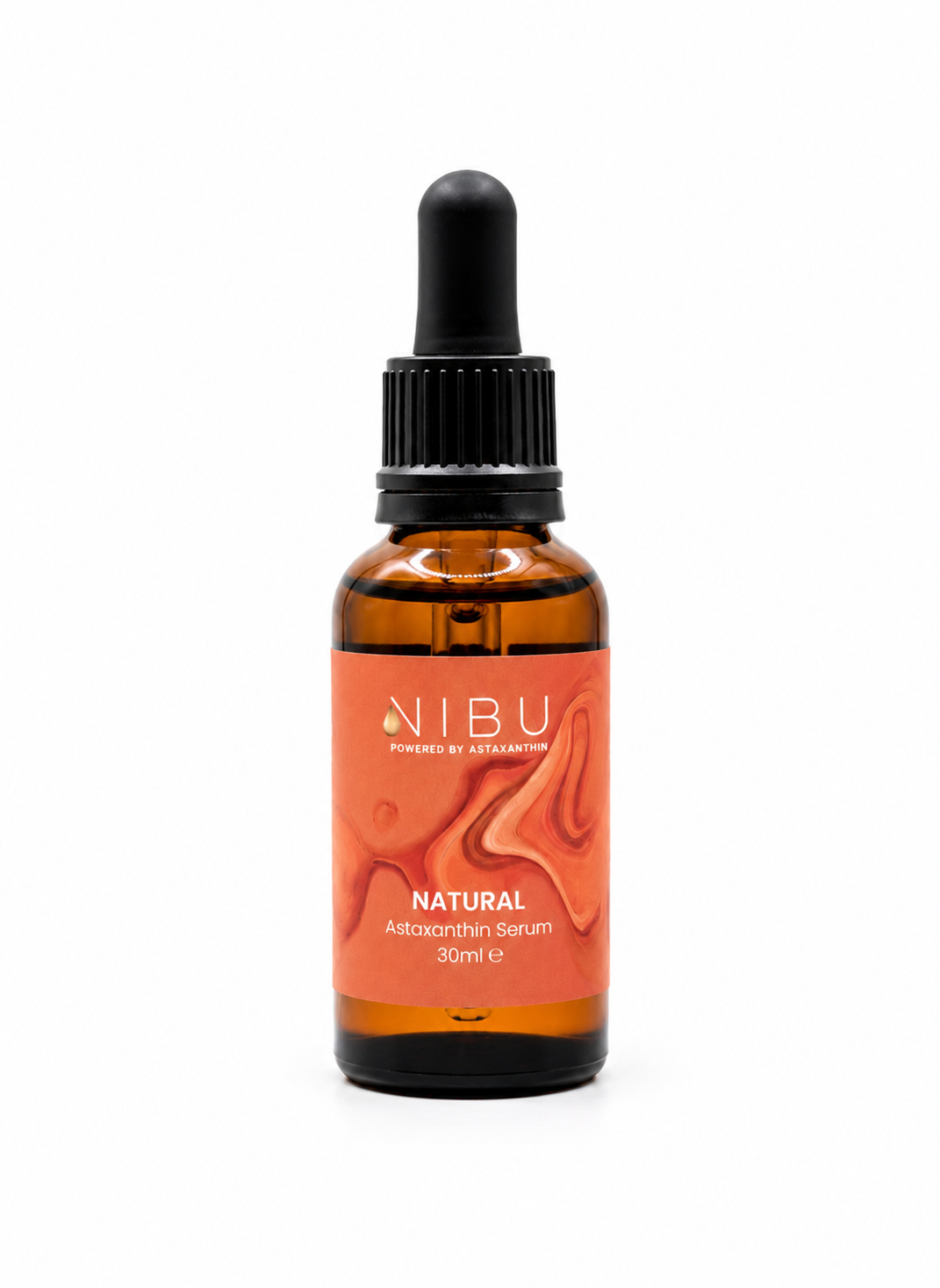
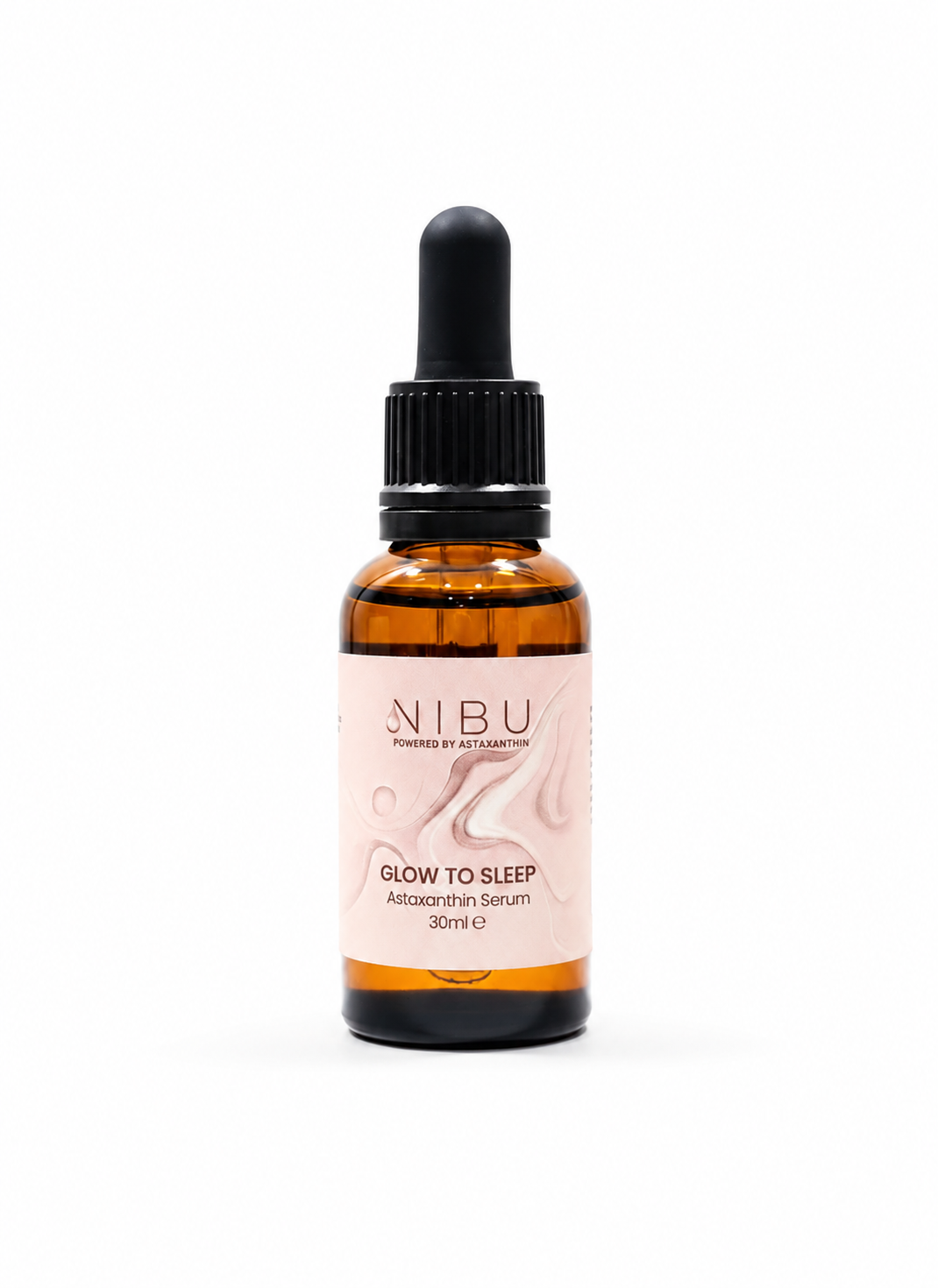
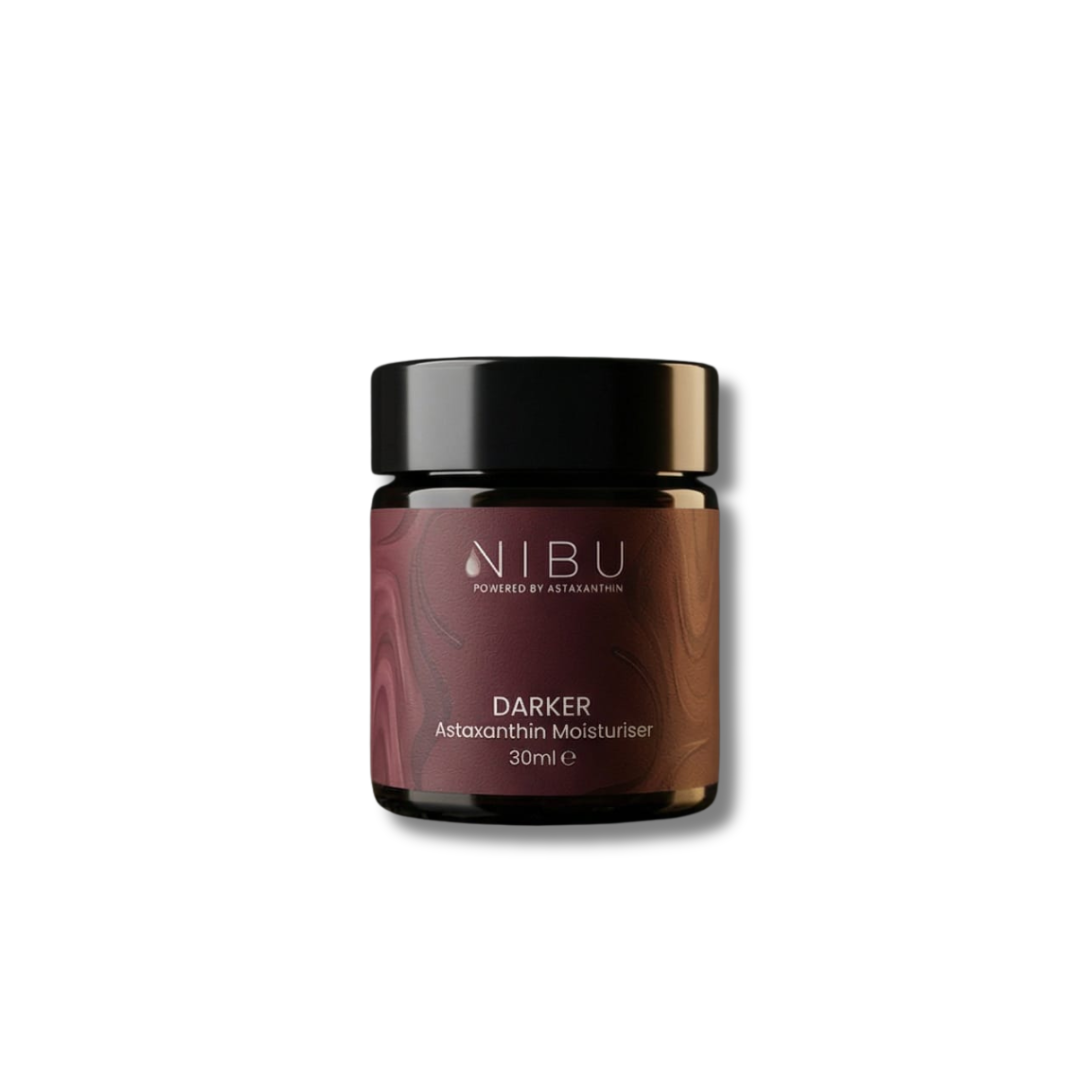
Astaxanthin skincare is where Nibu began. Long before we became a wider healthy-ageing brand, our founder became fascinated by this remarkable red carotenoid and the developing science surrounding oxidative stress, skin and healthy ageing. That fascination became Nibu Astaxanthin skincare.
Today, Astaxanthin remains at the heart of our skincare philosophy, incorporated into products designed to become part of a consistent everyday ritual for healthy-looking skin. Topical Astaxanthin isn’t simply about whether an ingredient appears on a label formulation matters. Astaxanthin is lipid-soluble and sensitive to environmental degradation, which means the surrounding formulation influences how it behaves within a skincare product. Modern research into topical Astaxanthin continues to explore stability, delivery and skin retention.
We won’t call it a miracle treatment. We won’t tell women it erases wrinkles. And we certainly won’t tell them it replaces sunscreen. We don’t need to. Astaxanthin is interesting enough without those claims. For Nibu, it remains the ingredient that started everything.
Where Does the Nibu Astaxanthin Supplement Fit?
Nibu’s Astaxanthin supplement came later. We did not start as a supplement company looking for a fashionable ingredient to sell. We started with Astaxanthin skincare. As Nibu evolved into a wider healthy-ageing brand, oral Astaxanthin became another way of exploring the ingredient from the inside. The ingredient that had begun Nibu’s skincare journey also had a growing body of human supplementation research, allowing us to explore the same carotenoid from an entirely different direction.
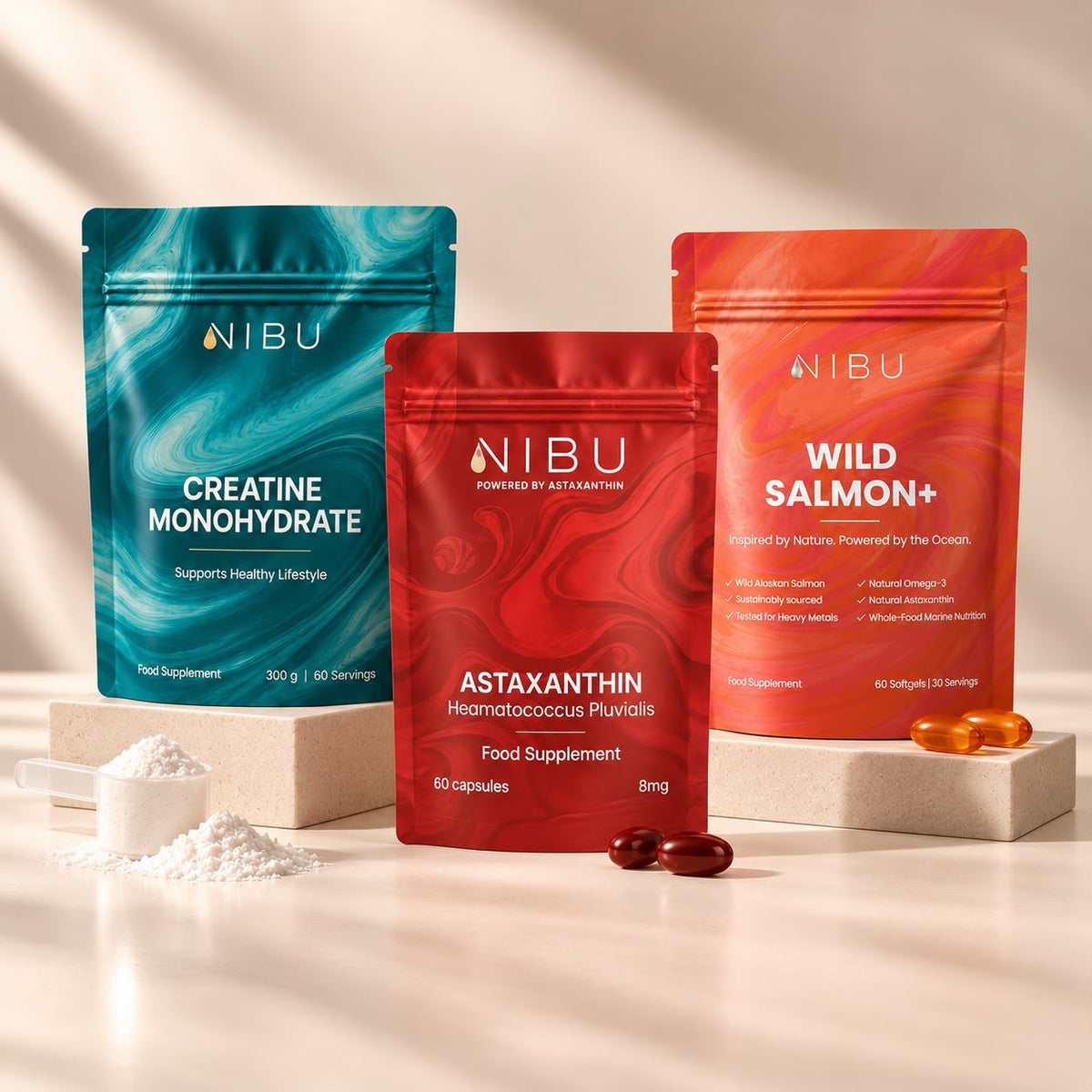
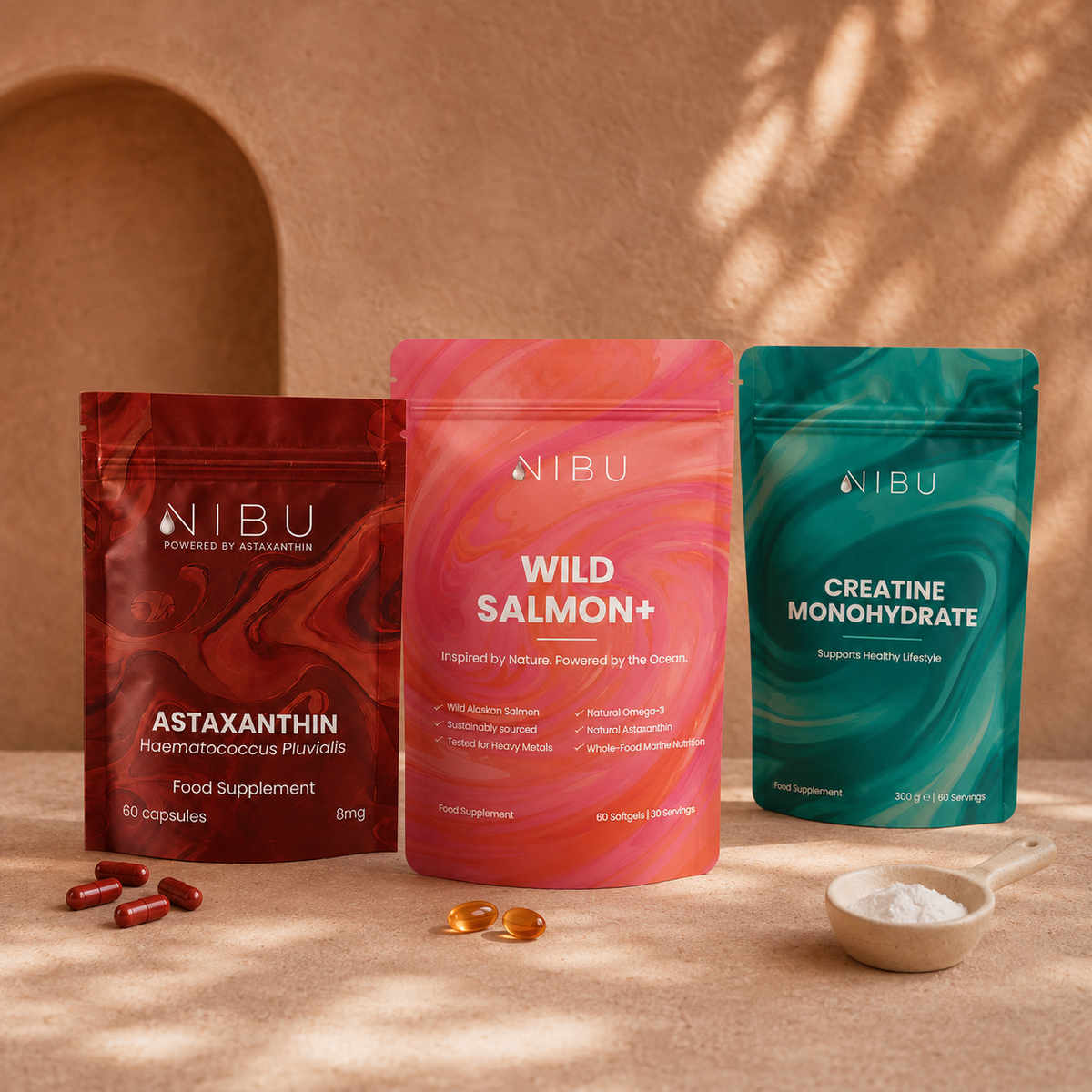
Nibu Astaxanthin provides 8 mg of Astaxanthin from Haematococcus pluvialis per daily capsule. Because Astaxanthin is fat-soluble, taking it with a meal containing dietary fat is a sensible approach to support absorption. But the supplement does not replace skincare. And skincare does not replace nutrition. They are different tools.
Does 8 mg Have Better Skin Evidence Than 4 or 6 mg?
We should not present one dose as universally optimal. Human skin studies have used different Astaxanthin doses, commonly within the low-milligram range. For example, the 2012 combined oral/topical study used 6 mg daily. While Nibu’s 8 mg daily serving sits within the range of amounts studied in human supplementation research more broadly, there is not enough evidence to establish one universally optimal dose specifically for skin.
How Long Does Oral Astaxanthin Take to Work?
Skin studies commonly investigate supplementation over several weeks rather than days clinical trials included in reviews often lasted approximately 6–16 weeks. That does not mean everybody sees visible results after a particular number of weeks. Individual responses vary. The better expectation is: if Astaxanthin influences skin parameters, it is likely to be something studied over consistent use rather than an immediate effect.
How Quickly Does Topical Astaxanthin Work?
We have even less certainty here. Because high-quality controlled human topical studies are limited, there is no robust universal timeframe for visible effects. A topical product also contains more than one ingredient its moisturising oils, humectants, emollients and other components may affect how your skin feels immediately, even though that doesn’t mean Astaxanthin itself has created a rapid biological change. Again: formulation matters.
Can You Use Astaxanthin Skincare Every Day?
If the individual cosmetic product has been formulated and assessed for regular use and your skin tolerates it, follow the directions provided with that product. Your routine should be guided by the full formulation, your skin type, product directions and tolerability not by the presence of one hero ingredient alone.
Can You Take Astaxanthin Every Day?
Daily dosing is the approach used in most supplementation trials. However, individual suitability depends on health, medication use, pregnancy, breastfeeding and other factors.
Can You Use Astaxanthin With Other Skincare Ingredients?
Women frequently ask about combining Astaxanthin with vitamin C, retinoids, niacinamide, hyaluronic acid and other antioxidants. The answer depends on formulation and tolerability rather than assuming Astaxanthin has a universal incompatibility with other ingredients.
Is Topical Astaxanthin Sunscreen?
No. This needs to remain very clear. Astaxanthin’s antioxidant properties and research around UV-associated oxidative stress do not make an Astaxanthin serum equivalent to sunscreen. Likewise, taking oral Astaxanthin does not create an “internal SPF”. Neither oral nor topical Astaxanthin should be considered a replacement for appropriate sun protection.
Does “Inside and Out” Mean More Products?
No. Inside-and-out healthy ageing does not mean: buy a supplement + buy skincare = problem solved. “Inside” includes nutrition, sleep, movement, cardiovascular health, hydration, not smoking and overall wellbeing. “Outside” includes appropriate cleansing, moisturising, skincare, environmental protection and treating the skin gently. Astaxanthin simply happens to be an ingredient that can appear on both sides of that conversation. That’s what makes it so interesting to us.
Why We Don’t Say “Astaxanthin Reaches Every Layer of the Skin”
You may see claims that oral Astaxanthin reaches “every layer” of your skin while topical products only work at the surface. That is too simplistic. Orally consumed Astaxanthin can be absorbed and distributed systemically. Topical formulations can also deliver compounds beyond the very outermost surface depending on their properties and formulation. Skin itself is also biologically complex. So instead of creating a neat marketing story of inside = deep and outside = surface, we prefer: different delivery routes create different patterns of exposure. That is scientifically more accurate.
What About New Topical Astaxanthin Research?
The formulation science continues to develop. Researchers are investigating sophisticated systems designed to improve solubility, stability, photostability, skin retention and controlled release. A 2026 study, for example, explored a novel Astaxanthin delivery system designed to respond to UVA exposure and improve Astaxanthin stability and delivery. The work included laboratory and animal experiments rather than establishing a routine human skincare benefit, but it demonstrates how active this research area remains. That’s exciting scientifically but new formulation research is not the same thing as clinical proof for an ordinary cosmetic product.
Myth vs Fact
Myth: Oral Astaxanthin is automatically better than topical Astaxanthin.
Fact: Oral Astaxanthin currently has a stronger human evidence base, but the routes are different and have not been adequately compared head-to-head.
Myth: Topical Astaxanthin only sits on the skin surface.
Fact: Formulation studies show that Astaxanthin can penetrate into skin compartments depending on the delivery system.
Myth: Using Astaxanthin inside and out has been proven to work synergistically.
Fact: Combined use has been investigated, but existing human evidence does not establish a proven synergistic effect.
Myth: Oral Astaxanthin replaces skincare.
Fact: No supplement replaces cleansing, moisturising and other appropriate skincare.
Myth: Astaxanthin skincare replaces good nutrition.
Fact: Topical skincare cannot replace the nutrients your body needs.
Myth: Astaxanthin acts as sunscreen from either direction.
Fact: Neither oral nor topical Astaxanthin should replace appropriate sun protection.
Frequently Asked Questions
| Question | Answer |
|---|---|
| Is oral or topical Astaxanthin better for skin? | Oral Astaxanthin currently has stronger human clinical evidence, particularly for moisture and elasticity. Topical research is promising but less developed. |
| Can Astaxanthin be absorbed through the skin? | Laboratory formulation studies show Astaxanthin can penetrate and be retained within skin compartments, although delivery depends heavily on formulation. |
| Can I take Astaxanthin and use an Astaxanthin serum? | For many healthy adults, there is no inherent contradiction in doing both. But current evidence does not prove that using both creates a synergistic benefit. |
| Does taking Astaxanthin make skincare work better? | This has not been established. |
| Does Astaxanthin supplementation improve skin moisture? | A meta-analysis found significant improvement in skin moisture compared with placebo. |
| Does oral Astaxanthin reduce wrinkles? | Pooled randomised evidence did not show a statistically significant reduction in wrinkle depth versus placebo. |
| Is topical Astaxanthin evidence-based? | There is mechanistic, formulation and early clinical evidence, but human clinical research remains limited compared with oral supplementation. |
| Is Astaxanthin serum good for mature skin? | Astaxanthin is an interesting antioxidant skincare ingredient, but whether a particular serum suits mature skin depends on the full formulation and individual skin needs. |
| Does Astaxanthin work immediately? | No robust evidence supports an immediate biological skin effect. Human research generally examines changes over weeks. |
| Can Astaxanthin replace SPF? | No. |
Key Takeaways
- Oral and topical Astaxanthin use the same carotenoid through different delivery routes.
- Oral Astaxanthin is absorbed through the digestive system and distributed systemically.
- Topical Astaxanthin is applied directly to the skin.
- Human evidence is currently stronger for oral supplementation.
- Meta-analysis suggests oral Astaxanthin may improve skin moisture and elasticity, while evidence for wrinkle reduction is less convincing.
- Topical Astaxanthin research is promising, but controlled human trials remain limited.
- Formulation matters enormously for topical use because Astaxanthin is poorly water-soluble and sensitive to environmental degradation.
- Combined oral and topical use has been studied, but it has not been proven to provide a synergistic benefit.
- There is no requirement to use both.
The Nibu Longevity Take
This article gets very close to the heart of what Nibu is. Because our Astaxanthin story did not begin with a capsule. It began with skin. With curiosity about a remarkable red carotenoid and what its antioxidant chemistry might mean when incorporated into skincare. Only later did the story move inside nutrition, supplements, whole-body healthy ageing.
That journey is why the phrase inside and out genuinely means something to us. But it does not mean more is automatically better. Using Astaxanthin inside and out is a choice, not a requirement for healthy skin. And we won’t pretend that science has already proven oral plus topical is the perfect combination.
What we can say is that the two routes are fascinating for different reasons. One allows Astaxanthin to enter the body through nutrition. The other allows formulators to place Astaxanthin directly into a skincare product. The evidence is developing. And Nibu intends to follow that evidence carefully. Because Astaxanthin isn’t just another ingredient in our range. It is the ingredient that began the conversation. And our job now is to understand that conversation as deeply as we can.
Conclusion
So, should Astaxanthin be taken, applied or both? There is no universal answer. Oral Astaxanthin currently has the stronger body of human skin research. Topical Astaxanthin has interesting formulation science and emerging clinical evidence. Using both is biologically plausible as part of an inside-and-out approach, but we do not yet have sufficiently strong comparative trials to claim the combination is superior.
And that’s okay. Good science does not always give us a dramatic answer. Sometimes it gives us: this is promising, this is what we know, this is what we don’t know yet. For Nibu, that is enough. Because our goal is not to make Astaxanthin sound magical. It is to make Astaxanthin understandable.
References
- Zhou X, Cao Q, Orfila C, Zhao J, Zhang L. Systematic Review and Meta-Analysis on the Effects of Astaxanthin on Human Skin Ageing. Nutrients. 2021;13(9):2917. Nine randomised studies assessed oral Astaxanthin while topical/combined evidence came from two open-label studies.
- Ng QX, De Deyn MLZQ, Loke W, et al. Effects of Astaxanthin Supplementation on Skin Health: A Systematic Review of Clinical Studies. Journal of Dietary Supplements. 2021;18(2):169–182.
- Tominaga K, Hongo N, Karato M, Yamashita E. Cosmetic Benefits of Astaxanthin on Human Subjects. Acta Biochimica Polonica. 2012;59(1):43–47. The female combined oral/topical study was open-label and uncontrolled.
- Lima SGM, Freire MCLC, Oliveira DS, et al. Astaxanthin Delivery Systems for Skin Application: A Review. Marine Drugs. 2021;19(9):511.
- Ponto T, Latter G, Luna G, et al. Novel Self-Nano-Emulsifying Drug Delivery Systems Containing Astaxanthin for Topical Skin Delivery. Pharmaceutics. 2021;13(5):649.
- Development and Evaluation of Astaxanthin as Nanostructure Lipid Carriers in Topical Delivery. 2020.
- Delivery Systems for Astaxanthin: A Review on Approaches for In Situ Dosage in the Treatment of Inflammation-Associated Diseases. 2024.
- Unveiling Astaxanthin: Biotechnological Advances, Delivery Systems and Versatile Applications in Nutraceuticals and Cosmetics. 2025.
Continue Reading
- The Complete Guide to Astaxanthin: Benefits, Dosage, Safety and How It Works
- Astaxanthin Benefits: The Complete Evidence-Based Guide
- Astaxanthin Benefits for Skin: What Does the Science Actually Say?
- Icelandic Astaxanthin for Skin: Why the Source Matters
- Astaxanthin vs Other Antioxidants: Vitamin C, Vitamin E, CoQ10 and More
- Oxidative Stress Explained: Why It Matters for Healthy Ageing
About The Nibu Journal
The Nibu Journal is the educational home of Nibu Naturals. Nibu began with Astaxanthin skincare before growing into a wider women’s healthy-ageing brand encompassing nutrition, supplements, skin health, women’s health and lifestyle. Astaxanthin remains our hero ingredient. Our aim is to build one of the clearest and most trustworthy educational resources available on the subject, without exaggerating what the science can tell us. Educate first. Support second. Sell naturally.
Medical Disclaimer: This article is provided for general educational purposes only and is not intended to diagnose, treat, cure or prevent any medical condition. Cosmetic products support the appearance and condition of healthy skin and are not intended to treat medical skin conditions. If you are pregnant, breastfeeding, taking prescription medication, have a medical condition or are unsure whether Astaxanthin supplementation is appropriate for you, speak to your GP, pharmacist or another appropriately qualified healthcare professional. Food supplements should not be used as a substitute for a varied, balanced diet and healthy lifestyle. Astaxanthin supplements and skincare products are not sunscreens and should not be considered substitutes for appropriate sun protection.

Read more
How Much Exercise Do Women Really Need for Healthy Ageing?
Healthy ageing does not require hours in the gym every day. Discover how much aerobic activity, strength training and everyday movement women really need, and why the best routine includes more tha...
Weiterlesen
Skin Ageing in Your 20s and 30s: What Actually Matters?
You do not need to start fighting ageing at 25. Your 20s and 30s are simply a good time to build healthy skin habits that can serve you for decades. We explain what really changes, what matters mos...
WeiterlesenShop
Bestseller