Creatine for Women Over 40: Benefits, Safety and What the Science Actually Says
Quick Answer
For healthy women over 40, creatine monohydrate is one of the best-researched nutritional supplements available. Its strongest evidence relates to improving high-intensity exercise performance and supporting gains in strength and lean tissue, particularly when combined with resistance training.
This may become increasingly relevant through midlife because maintaining muscle and physical function is an important part of healthy ageing. Research is also exploring creatine's potential effects on cognition, mood and bone health, but these areas are less established than its effects on muscle and physical performance.
Creatine is not a menopause treatment, a fat burner or a substitute for exercise and adequate protein. For most people, a simple daily dose of around 3 to 5 g of creatine monohydrate is commonly used. A loading phase is optional rather than necessary. For healthy adults, research supports a good safety profile. However, anyone with kidney disease, significant medical conditions, pregnancy, breastfeeding or concerns about medication should discuss supplementation with an appropriate healthcare professional.
What You Will Learn
- What creatine actually is.
- Why women over 40 are increasingly interested in it.
- How creatine helps your muscles make energy.
- What the evidence says about muscle and strength.
- How perimenopause and menopause fit into the conversation.
- Whether creatine can support bone health.
- What we know about creatine and the brain.
- Whether creatine causes weight gain or bloating.
- How much women generally take.
- Whether a loading phase is necessary.
- When to take creatine.
- Why creatine monohydrate remains the form with the strongest evidence.
- What we know about kidney safety.
- Who should seek medical advice before taking it.
Introduction: Creatine Has a Reputation Problem
Say the word creatine, and many women still picture a large tub of powder sitting beside a bodybuilder's protein shaker. That image has probably done creatine a disservice. For decades, creatine has been associated almost exclusively with young men, gyms and sports performance.
Yet creatine is not a male hormone. It is not a steroid. And it is not something invented by the fitness industry. Creatine is a naturally occurring compound found within the human body and in foods including meat and fish. Your muscles use it every day. Your brain contains it too.
And researchers are increasingly asking a more interesting question: could creatine have particular relevance for women as they move through midlife and into older age?
That question matters because our priorities often change after 40. Exercise becomes less about burning calories and more about maintaining muscle. Strength becomes less about what we can lift in the gym and more about what we want our bodies to still be capable of decades from now. And for many women, perimenopause introduces changes in sleep, body composition, energy and physical performance that make healthy ageing feel much more immediate.
Creatine is not the answer to all of those changes. But it may be one useful tool. Let's separate what science genuinely supports from what social media promises.
What Is Creatine?
Creatine is a naturally occurring nitrogen-containing compound made from the amino acids glycine, arginine and methionine. Your body can produce creatine itself, primarily through processes involving the liver and kidneys. You also obtain small amounts from food, particularly red meat, fish and seafood.
Most of the body's creatine is stored in skeletal muscle, although smaller amounts are found in tissues including the brain. Inside muscle, much of it exists as phosphocreatine. That is important because phosphocreatine helps rapidly regenerate a molecule called adenosine triphosphate, or ATP the usable energy currency of the cell.
Creatine is part of an important energy system that helps replenish ATP quickly when demand suddenly increases: lifting a weight, getting up quickly, climbing stairs, sprint-type exercise or performing another repetition during resistance training. Creatine helps make energy available rapidly when your muscles need it.
Why Might Creatine Matter More After 40?
There is nothing magical about your 40th birthday. Your body does not suddenly become deficient in creatine the morning you turn 40. What changes is the context. From midlife onwards, maintaining muscle mass, strength and physical function becomes increasingly important. Age-related loss of muscle and strength can eventually contribute to reduced mobility and independence.
For women, this period can also overlap with perimenopause and menopause. Meanwhile, many women become less active because of work demands, caring responsibilities, poor sleep, injury, stress, changes in exercise habits or lack of confidence around strength training. Creatine becomes interesting because its strongest evidence sits precisely where healthy-ageing priorities increasingly lie: muscle, strength and physical performance.
Women Have Been Underrepresented in Creatine Research
This is worth acknowledging. Creatine has been studied for decades, but historically much of sports nutrition research involved men. Female-specific research is growing, but there are still significant gaps. A major review by Smith-Ryan, Cabre, Eckerson and creatine researcher Dr Darren Candow highlighted differences in creatine metabolism across the female lifespan and argued that hormonal transitions including menopause deserve greater research attention.
That does not mean every woman needs creatine. It means the old assumption that creatine is mainly relevant to young male athletes is increasingly difficult to justify.
The Strongest Evidence: Muscle and Strength
If you take one message from this article, make it this: creatine works best as a partner to resistance training, not as a replacement for it. Creatine helps increase phosphocreatine availability within muscle. That can improve the ability to perform repeated bouts of demanding exercise. Over time, performing slightly more work during training may contribute to greater training adaptations.
Meta-analyses in older adults suggest that adding creatine to resistance training can produce greater improvements in lean tissue and some measures of muscular strength compared with resistance training alone. For women over 40, that is much more meaningful than the stereotype of getting bigger. The real question is: can this help me preserve the physical capacity I want later in life? Muscle is one of the most important tissues for healthy ageing. Creatine is one possible tool for supporting it.
Resistance Training Still Comes First
You cannot supplement your way out of not using your muscles. Resistance training gives your body the signal: keep this tissue, strengthen it, adapt. Creatine may help support the training response. Protein provides amino acids needed for muscle maintenance and repair. Sleep supports recovery. But exercise provides the stimulus.
A useful way to think about it: resistance training is the instruction, nutrition supplies the materials, and creatine may help support the energy system doing the work. The foundation remains movement.
Creatine and Perimenopause
Perimenopause can begin years before the final menstrual period. During this transition, ovarian hormones fluctuate and women may experience changes involving sleep, body composition, mood, energy, exercise recovery, menstrual patterns and temperature regulation. Researchers are exploring how hormonal changes interact with creatine metabolism, skeletal muscle and brain energy.
The female-lifespan review by Smith-Ryan and colleagues suggests that creatine metabolism may be influenced by reproductive hormones and identifies peri- and post-menopause as particularly interesting areas for future research. But we need to be precise. Creatine has not been established as a treatment for menopause itself. Its relevance is much more grounded: during a stage when protecting muscle, strength and physical capacity becomes increasingly important, creatine may support the exercise programme designed to do exactly that.
What About Post-Menopausal Women?
A systematic review and meta-analysis examining older women found that creatine supplementation alongside resistance training could improve some measures of muscle strength and lean tissue compared with training alone, although results across studies were not identical. That combination matters. Not creatine instead of exercise, but creatine alongside resistance training. Supplements support the foundations. They do not replace them.
Creatine and Bone Health: Promising, but Not Proven
Bone health becomes an increasingly important consideration around and after menopause. An earlier 12-month trial in post-menopausal women reported some favourable effects on femoral neck bone loss and bone geometry when creatine was combined with resistance training. However, a much larger two-year randomised controlled trial involving 237 post-menopausal women found that creatine plus exercise did not improve bone mineral density at the femoral neck, hip or lumbar spine compared with placebo plus exercise, although it did improve some measures of bone geometry associated with bone strength.
A more balanced conclusion is: creatine and bone health remain an interesting research area, particularly alongside resistance exercise, but current evidence does not support treating creatine as an alternative to established bone-health strategies. Those strategies include resistance and weight-bearing activity, adequate nutrition, vitamin D where appropriate and medical assessment when osteoporosis risk is a concern.
What About the Brain?
The brain has substantial energy requirements and contains its own creatine-phosphocreatine system. A 2024 systematic review and meta-analysis of 16 randomised controlled trials involving 492 adults found possible improvements in memory, attention time and processing speed, but no significant improvements in overall cognition or executive function. The certainty of evidence varied from moderate for memory to low for several other outcomes.
Another 2024 systematic review suggested that benefits may be more apparent under conditions of metabolic stress such as sleep deprivation, ageing or low dietary creatine intake rather than universally improving cognition in healthy, well-rested people. The better conclusion is: creatine and brain energy are scientifically plausible and increasingly researched, but cognitive benefits are not yet as firmly established as the muscle and exercise evidence.
Creatine and Sleep Deprivation
Research is exploring whether higher doses of creatine may help maintain aspects of cognitive performance when the brain is under acute metabolic stress, including sleep deprivation. This is an interesting emerging area. However, high-dose protocols used in experimental research should not automatically become everyday consumer recommendations. For most women considering creatine for muscle and healthy ageing, simple daily supplementation remains the more appropriate starting point. And no amount of creatine replaces sleep.
Does Creatine Give You Energy?
Yes and no. Creatine participates in cellular energy metabolism, but it is not a stimulant. You should not expect to drink creatine and suddenly feel the way you might after a strong coffee. Instead, consistent supplementation gradually increases muscle creatine stores, helping support rapid ATP regeneration during demanding activity. When we talk about creatine and energy, we are talking about cellular energy availability during high-demand muscular work, not feeling artificially wired.
Does Creatine Cause Weight Gain?
This is probably the question that stops more women taking creatine than any other. Creatine can cause an increase in body weight in some people, particularly during an initial loading phase. But context matters. Creatine draws water into tissues including muscle cells. That is not the same as gaining body fat.
A detailed review addressing common creatine misconceptions found that short-term water changes can occur, but evidence does not support the idea that creatine inevitably causes problematic long-term water retention. Research specifically reviewing women has also noted that fears around dramatic weight gain are largely unsupported. If you gain half a kilogram while becoming stronger, retaining more muscle and training better, that does not mean your health or body composition has worsened.
Does Creatine Make Women Look Bulky?
No supplement can magically create a bodybuilding physique. Building large amounts of muscle requires progressive resistance training, significant training volume, adequate nutrition, genetics, recovery and time. Creatine may help support training performance and muscle development, but taking 3 to 5 g of creatine each day will not suddenly make you bulky. The irony is that many women fear the very tissue that becomes increasingly valuable with age. Muscle is not something we need to avoid. It is something worth protecting.
Does Creatine Cause Hair Loss?
This myth has become remarkably persistent. Concern originated largely from a small study that found an increase in a hormone called dihydrotestosterone, or DHT, following creatine supplementation in male rugby players. The study did not measure hair loss. Subsequent evidence has not established that creatine supplementation causes hair loss. At present, there is insufficient evidence to tell women they will lose hair because they take creatine.
Does Creatine Damage Your Kidneys?
Creatine can increase blood levels of creatinine, a breakdown product commonly measured when assessing kidney function. But an increase in creatinine following creatine supplementation does not automatically mean the kidneys have been damaged. Two recent systematic reviews and meta-analyses found that creatine supplementation may produce a modest increase in serum creatinine without corresponding significant deterioration in glomerular filtration rate. For healthy adults taking conventional doses, current evidence therefore remains reassuring.
However, if you have diagnosed kidney disease, abnormal kidney tests, take medication affecting renal function or are being investigated for kidney problems, speak with your doctor before supplementing. And tell clinicians that you take creatine when having blood tests so they can interpret creatinine results appropriately.
Which Type of Creatine Is Best?
Creatine monohydrate. It is the form used in the overwhelming majority of research. You may see creatine hydrochloride, buffered creatine, creatine nitrate, creatine ethyl ester and various advanced blends, but more complicated does not necessarily mean better. Creatine monohydrate has decades of research behind it, is inexpensive and has repeatedly demonstrated effectiveness. There is little reason for most people to pay extra for fashionable alternatives.
Micronised creatine is still creatine monohydrate the particles have simply been made smaller, which can make the powder easier to dissolve and may improve the drinking experience. It does not transform creatine into a fundamentally different supplement.
How Much Creatine Should Women Over 40 Take?
For most adults taking creatine for exercise and muscle support, a straightforward daily intake of around 3 to 5 g of creatine monohydrate per day is commonly used. Some research protocols use larger doses, particularly in older populations or when investigating brain creatine. That does not mean higher doses are automatically better for everyone. Supplement dosage should match the goal and the evidence.
Do You Need a Loading Phase?
No. A loading phase usually involves taking around 20 g daily, often divided into four smaller servings, for approximately five to seven days. This saturates muscle creatine stores more rapidly. But you can also simply take a smaller daily amount and muscle stores will increase more gradually. For somebody interested in long-term healthy ageing rather than achieving maximal saturation before a sporting event, there is rarely any urgency. Consistency matters more than speed.
Do Women Need to Cycle Creatine?
There is no established requirement to routinely stop and restart creatine. Cycling is largely inherited from bodybuilding culture. Creatine does not need to be treated like a drug cycle. If you choose to take it, consistent use is the approach most commonly discussed in the research.
When Is the Best Time to Take Creatine?
Research has not established a single mandatory time of day. The practical answer is: take creatine at the time you are most likely to remember it consistently. For some women that is with breakfast, in a smoothie, after strength training or with lunch. The best time is often the time that becomes a habit.
Should You Take Creatine on Rest Days?
Yes, if you are supplementing regularly. Creatine works by increasing and maintaining tissue creatine stores. It is not simply a pre-workout ingredient. So taking it consistently on training and non-training days makes sense.
What Should You Mix Creatine With?
Creatine monohydrate can be mixed into water, juice, a smoothie, yoghurt or a protein shake. It does not need a complex delivery system. One of the advantages of unflavoured creatine is that it can disappear quietly into a routine you already have.
Creatine Is Not a Replacement for Protein
Protein and creatine do very different jobs. Protein provides amino acids that help build and repair body tissues. Creatine supports the phosphocreatine energy system. They are not alternatives. If you are trying to maintain muscle after 40, think about the whole picture: resistance training, adequate protein, sufficient overall nutrition and recovery. Creatine can then sit alongside those foundations.
Who Might Consider Creatine?
Creatine may be worth discussing or considering if you are an adult woman who performs resistance training, wants to maintain muscle and strength through midlife, eats little or no meat or fish, is entering perimenopause or post-menopause and prioritising physical function, wants evidence-based support for high-intensity exercise performance, or is interested in healthy ageing rather than bodybuilding.
That does not mean everybody needs it. Food supplements should always be chosen according to individual needs rather than collected because they are fashionable.
Who Should Speak to a Healthcare Professional First?
Seek personalised advice if you have kidney disease or abnormal renal investigations, have a significant medical condition, take prescription medication and are unsure about interactions, are pregnant or breastfeeding, are under specialist medical care, or have unexplained changes in body weight, muscle strength or fatigue. Pregnancy deserves particular caution. Although researchers are investigating creatine in pregnancy, that is very different from having sufficient evidence to recommend routine supplementation during pregnancy without medical guidance.
Creatine for Women Over 40 at a Glance
| Question | Evidence-led answer |
|---|---|
| Does creatine help muscle? | Strong evidence, particularly alongside resistance training |
| Does it improve strength? | Evidence supports benefits, especially with training |
| Does it treat menopause? | No |
| Could it be relevant during menopause? | Yes, particularly because muscle and strength become important healthy-ageing priorities |
| Does it strengthen bones? | Evidence is mixed and developing |
| Does it improve cognition? | Promising but less established than muscle benefits |
| Does it make women fat? | No evidence that creatine causes fat gain |
| Can it increase scale weight? | Sometimes, particularly through changes in water and lean tissue |
| Does it damage healthy kidneys? | Current evidence is reassuring at standard doses |
| Best-studied form? | Creatine monohydrate |
| Typical daily dose? | Around 3 to 5 g for general supplementation |
| Loading necessary? | No |
| Timing important? | Consistency appears more important |
| Does it replace strength training? | Absolutely not |
Myth vs Fact
Myth: Creatine is a bodybuilding supplement.
Fact: Creatine became famous through sports nutrition, but its basic role is cellular energy metabolism. Research now spans exercise, healthy ageing and brain health.
Myth: Creatine makes women gain fat.
Fact: Creatine does not directly increase body fat. Some users experience an increase in body mass associated with water stored in muscle or later increases in lean tissue.
Myth: Women should take a different kind of creatine.
Fact: Creatine monohydrate remains the best-studied form for both men and women.
Myth: Creatine will make you bulky.
Fact: Significant muscle growth requires progressive training, nutrition, genetics and time. Creatine alone does not produce a bodybuilding physique.
Myth: You have to load creatine.
Fact: Loading speeds saturation but is optional. A smaller daily dose will increase tissue stores gradually.
Myth: Creatine replaces protein.
Fact: Protein and creatine serve different physiological roles.
Myth: Everyone over 40 needs creatine.
Fact: No supplement is compulsory. Creatine is one potential tool within a broader healthy-ageing lifestyle.
Frequently Asked Questions
Is creatine good for women over 40?
It can be useful, particularly for women performing resistance training and wanting to support muscle strength, physical performance and healthy ageing. The strongest evidence remains in exercise and muscle-related outcomes.
Should I take creatine during perimenopause?
Creatine may fit into a healthy ageing routine during perimenopause, particularly alongside resistance exercise. However, it is not a treatment for menopause symptoms or hormonal changes.
Can women over 50 take creatine?
Healthy women over 50 can use creatine, and older adults are increasingly represented in creatine research. Individual medical circumstances should still be considered.
What is the best creatine for women?
Creatine monohydrate is the form with the most substantial evidence.
How much creatine should a woman take?
Around 3 to 5 g daily is a commonly used maintenance amount for general muscle and exercise purposes. Research protocols vary according to the outcome being studied.
How long does creatine take to work?
Without loading, tissue creatine stores increase gradually over several weeks. You may not feel creatine working in the way you feel caffeine.
Will creatine make me retain water?
Short-term changes in water storage can occur, particularly with loading. This is largely associated with muscle hydration and should not be confused with gaining body fat.
Does creatine cause bloating?
Some people experience gastrointestinal discomfort, especially with large single doses. Smaller daily doses may be easier to tolerate.
Is creatine bad for your kidneys?
In healthy individuals, current controlled research and recent meta-analyses do not show significant deterioration in kidney filtration from conventional creatine supplementation, although serum creatinine can rise modestly. People with kidney disease should seek medical advice.
Can I take creatine if I do not exercise?
You can, but the best-established muscle benefits are seen when supplementation accompanies an appropriate resistance-training stimulus.
Can I take creatine with Wild Salmon+ and astaxanthin?
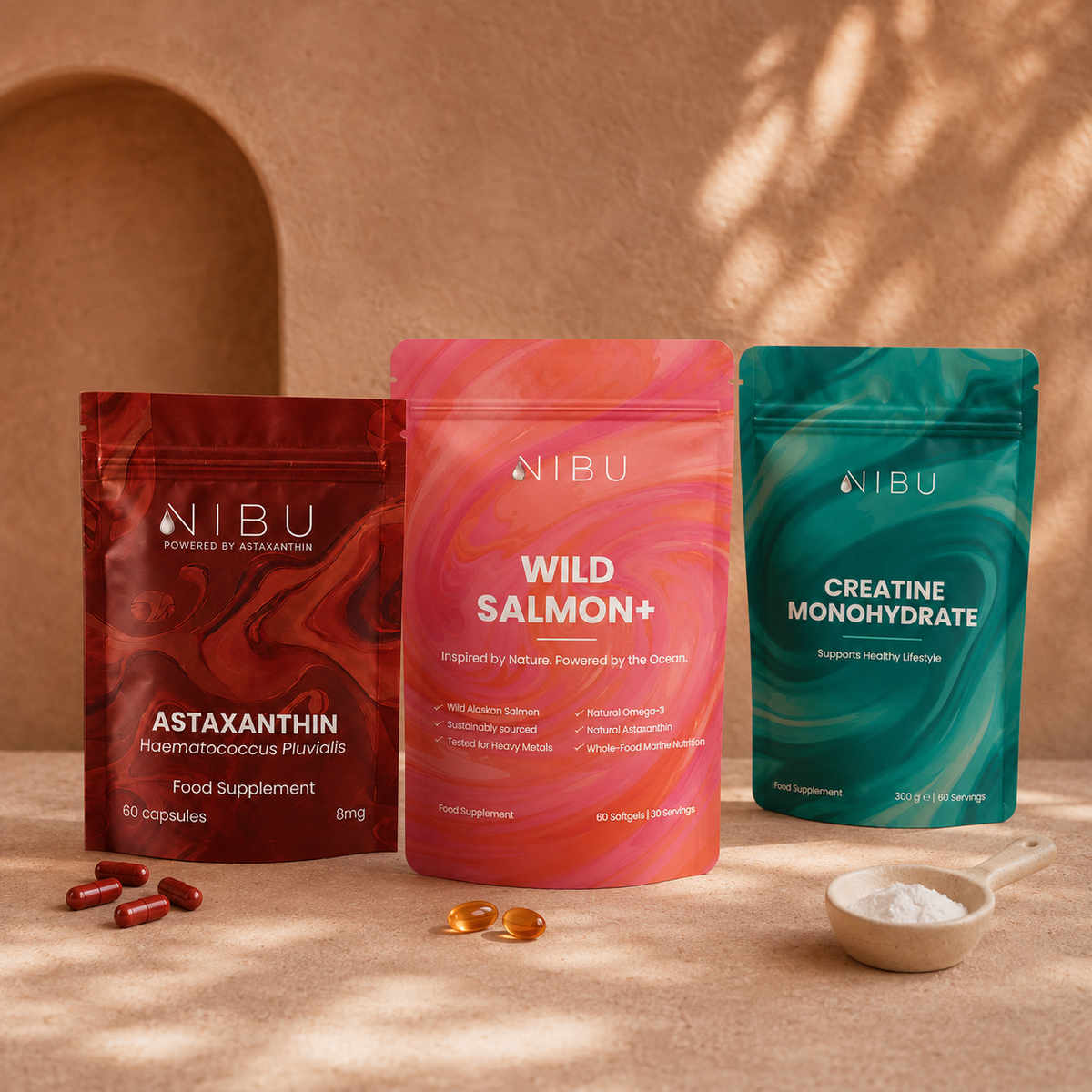
These supplements have different nutritional roles and can generally form part of the same routine for healthy adults when used according to their instructions. More supplements are not automatically better, however. Choose products according to your needs.
Key Takeaways
- Creatine is not just for male athletes. It is a naturally occurring compound involved in rapid cellular energy availability.
- For women over 40, its most convincing role is supporting muscle and physical performance, particularly when combined with resistance training.
- Female-specific research is increasing, but women remain less studied than men.
- Creatine's possible effects on cognition and bone health are interesting, but less established than its muscle benefits.
- Creatine does not treat menopause and does not directly cause fat gain.
- Creatine monohydrate remains the best-researched form.
- For most people, a simple daily dose of around 3 to 5 g is easier than complicated loading or cycling protocols.
- Research in healthy adults is reassuring regarding kidney safety, although supplementation can modestly increase serum creatinine.
- No supplement is more important than the foundations: strength training, adequate nutrition, protein, movement, sleep and consistency.
The Nibu Longevity Take
Creatine interests us for a very different reason than it interested the fitness industry 30 years ago. We are not interested in helping women chase bigger muscles for appearance. We are interested in helping women protect capability. The ability to lift something. Carry something. Climb. Walk. Travel. Exercise. Recover. Remain independent.
Women have spent decades being told that health means becoming lighter and smaller. Healthy ageing asks us to consider another possibility. What if becoming stronger deserves just as much attention? At Nibu, we believe that Creatine can support that goal. But the powder is not the most important part. The important part is what you do with your body. Lift something challenging. Eat enough protein. Move often.
Medical Disclaimer: This article is provided for educational purposes only and is not intended to diagnose, treat, cure or prevent any medical condition. It should not replace personalised advice from a doctor, pharmacist, dietitian or other appropriately qualified healthcare professional. If you have kidney disease, a significant medical condition, are pregnant or breastfeeding, or take prescription medication, speak with your healthcare professional before beginning supplementation. Food supplements should not be used as a substitute for a varied, balanced diet and healthy lifestyle.

Read more

Muscle Is an Organ of Longevity: Why Women Need to Protect It as They Age
Muscle does far more than help us lift weights. It supports movement, metabolism, bones, balance and independence, and even communicates with other parts of the body. Discover why protecting muscle...
Leer más
Protein for Women Over 40: How Much Do You Really Need for Healthy Ageing?
Protein becomes increasingly important as we age, particularly for maintaining muscle, strength and independence. Learn how much women over 40 may need, where to get it from and why resistance trai...
Leer másShop
Los más vendidos