Article: Bone Health in Your 20s and 30s: Why Building Strong Bones Starts Earlier Than You Think
Bone Health in Your 20s and 30s: Why Building Strong Bones Starts Earlier Than You Think
Quick Answer
Your 20s and 30s are important decades for bone health because peak bone mass is generally reached by early adulthood, although the exact timing varies between individuals and different bones.
After peak bone mass is achieved, the focus gradually shifts towards maintaining bone strength and limiting unnecessary bone loss.
The most useful habits include regular weight-bearing activity, progressive resistance training, adequate calcium and vitamin D, sufficient overall nutrition, avoiding smoking and addressing medical factors that affect bone health.
You don't need an elaborate routine. You need a few good habits that support your skeleton throughout life.
What You'll Learn
In this guide, we'll explore what happens to your bones in your 20s and 30s, why peak bone mass matters, how strength training and impact exercise support bone health, which nutrients are most important, what can affect bone density in younger women and how to create a practical routine for the future.
Introduction: Your Bones Are Doing More Than Holding You Up
When women think about healthy ageing, certain things tend to come to mind first. Looking after their skin. Maintaining muscle. Eating well. Staying active. Protecting their heart.
But there is another part of the body that deserves a little more attention. Your skeleton.
Your bones are not simply a rigid frame that stays the same throughout adulthood. They are living tissue, constantly being broken down and rebuilt. They support movement, protect your organs, store minerals and provide the structure your muscles work against.
And while osteoporosis is often associated with later life, the foundations of good bone health begin much earlier. That makes your 20s and 30s an excellent time to understand what your bones need.
Not because ageing is something to fear. Because building a strong foundation is one of the most positive things you can do for your future self.
What Happens to Your Bones as You Age?
Bone is continually renewed through a process known as bone remodelling. Two specialised types of cells play central roles.
- Osteoclasts break down older bone tissue.
- Osteoblasts help build new bone tissue.
Think of it as an ongoing maintenance programme. Old material is removed and new material is laid down.
During childhood and adolescence, bone formation generally exceeds bone breakdown as the skeleton grows and strengthens. By early adulthood, most people have reached or are approaching their maximum bone mass.
After that, the balance changes over time. The goal becomes maintaining the quality and strength of the skeleton. This is why good bone health is a lifelong project rather than something to consider only when we become older.
What Is Peak Bone Mass?
Peak bone mass describes the maximum amount of bone tissue accumulated during skeletal development. It is influenced by several factors, including genetics, nutrition, physical activity, hormonal health and general health.
Most skeletal bone mass is accumulated during childhood and adolescence, with peak values typically reached during early adulthood. Timing varies by skeletal site and individual.
Why does that matter? Imagine building up a savings account. The stronger your starting position, the greater the reserve you may have when circumstances change later. Bone health works in a somewhat similar way.
A higher peak bone mass is generally associated with a lower risk of osteoporosis later in life. But the analogy has limits. Bone strength depends on more than the amount of bone alone, including its structure and quality.
And it is important to remember that your skeleton remains responsive to healthy habits throughout adulthood. You haven't missed your opportunity if you're already in your 30s, 40s or beyond.
Looking after your bones is just one part of building a strong foundation for the future. In Healthy Ageing in Your 20s and 30s: 10 Habits Your Future Self Will Thank You For, we explore the everyday habits that can make a difference long before midlife.
Why Bone Health Matters for Women
Women face some particular considerations when it comes to bone health. Oestrogen plays an important role in maintaining bone tissue. When oestrogen levels decline around menopause, bone loss can accelerate.
Women also generally have smaller skeletons than men, and osteoporosis becomes more common with age. But bone health isn't only a menopause conversation.
Your menstrual health, nutritional intake, physical activity and medical history can all influence your bones much earlier in life. For example, prolonged periods of inadequate energy intake can affect reproductive hormones and bone health.
This can occur in women who exercise intensely without eating enough, but also in women who restrict food for other reasons. It's an important reminder that being healthy isn't simply about being lighter, leaner or exercising more. Your body needs sufficient nourishment to maintain itself.
Does Strength Training Help Build Stronger Bones?
Yes. Strength training is one of the most useful forms of exercise for supporting bone health. When muscles contract against resistance, they apply forces to the skeleton. Bones respond to mechanical loading through a process of adaptation.
Over time, appropriately challenging exercise can help maintain or improve bone strength. Research involving premenopausal women suggests that exercise combining resistance and impact loading can produce improvements in bone mineral density at certain skeletal sites, although results vary between studies.
This is particularly interesting because strength training supports two important aspects of healthy ageing simultaneously: muscles help you produce force. Bones help you withstand it. And together, they support your ability to remain active and independent.
This is one reason strength training deserves a place in a woman's healthy-ageing routine. In How Much Exercise Do Women Really Need for Healthy Ageing?, we explore how to combine resistance training, cardiovascular activity and everyday movement.
You do not need to become a weightlifter. You can start with exercises appropriate to your experience, including squats, step-ups, lunges and resistance-band or weight-based movements. As you become stronger, the challenge can gradually increase.
What Is Weight-Bearing Exercise?
Weight-bearing exercise involves supporting your body weight through your skeleton. Examples include walking, dancing, hiking, climbing stairs and jogging.
Higher-impact activities, such as jumping and certain sports, can provide additional loading that may be particularly relevant to bone adaptation. However, not every activity produces the same effect.
Swimming and cycling are excellent forms of cardiovascular exercise, but they provide less direct weight-bearing loading than activities performed on land. This doesn't make them less valuable. It simply means that a combination of activities can support different aspects of health.
Is Walking Enough for Bone Health?
Walking is an excellent everyday habit. It supports cardiovascular health, mobility and general wellbeing.
However, walking alone may not provide sufficient loading to substantially increase bone density in otherwise healthy younger adults. That is why including some progressive resistance training, and suitable impact activity where appropriate, can be helpful.
If you have a history of fractures, osteoporosis, joint problems or other medical concerns, seek individual advice before introducing higher-impact exercise.
What About Pilates and Yoga?
Both can contribute to a healthy movement routine. Pilates may help improve strength, balance, control and body awareness. Yoga can support mobility, balance and aspects of muscular endurance.
However, neither should automatically be considered a complete substitute for progressive resistance and impact training when the specific goal is improving bone density.
The best routine is one that combines activities you enjoy with the types of loading your body benefits from.
Calcium: The Mineral Your Bones Need
Calcium is essential for maintaining normal bones. Around 99% of the body's calcium is stored in bones and teeth.
It contributes to skeletal structure, while calcium also has important roles in muscle contraction, nerve signalling and other physiological processes.
For most UK adults, the recommended daily intake is 700 mg of calcium. That is generally achievable through a varied diet.
Good food sources of calcium
| Food | Why it can help |
|---|---|
| Milk and yoghurt | Naturally provide calcium and protein |
| Cheese | Concentrated source of calcium |
| Calcium-fortified plant drinks | Useful alternative to dairy when fortified |
| Calcium-set tofu | Can be a good source, depending on preparation |
| Sardines with edible bones | Provide calcium alongside protein |
| Kale and broccoli | Contribute calcium and other nutrients |
| Fortified cereals | May contribute calcium, depending on the product |
One detail worth knowing: spinach contains calcium, but its high oxalate content reduces how much is absorbed. It is therefore not as useful a calcium source as its total calcium content might suggest.
The NHS recommends a balanced diet containing appropriate calcium sources as a foundation for lifelong bone health.
Do You Need a Calcium Supplement?
Not automatically. If you regularly consume enough calcium through food, a supplement may offer little additional benefit.
However, supplementation may be appropriate when dietary intake is insufficient or a healthcare professional identifies a particular need. The aim is adequate intake, not the highest possible dose.
Vitamin D: Helping Your Body Use Calcium
Vitamin D plays an essential role in calcium absorption and normal bone mineralisation. Without sufficient vitamin D, the body cannot use calcium as effectively.
In the UK, this deserves particular attention because sunlight is an important source of vitamin D, and sunlight exposure varies considerably throughout the year.
Current NHS guidance recommends that adults consider taking 10 micrograms (400 IU) of vitamin D daily during autumn and winter. Some people at higher risk of deficiency are advised to take vitamin D throughout the year.
Food sources include oily fish, egg yolks and fortified foods, although obtaining sufficient vitamin D from food alone can be difficult.
As this article is being published in October, it is a particularly useful time for UK readers to review their vitamin D intake.
Can You Get Vitamin D From Salmon?
Yes. Oily fish such as salmon can provide vitamin D alongside protein and omega-3 fatty acids. However, vitamin D content varies.
A salmon oil supplement should not automatically be treated as a replacement for a vitamin D supplement unless its vitamin D content is sufficient and clearly stated.
Is Protein Important for Bone Health?
Absolutely. We often associate protein with muscles, but bone also contains a substantial protein matrix, primarily made from collagen. Minerals provide hardness, while the protein framework contributes to bone structure.
Adequate protein supports tissue maintenance and works alongside calcium, vitamin D and physical activity. This is another reason why healthy ageing should never become a conversation about individual nutrients in isolation.
Your muscles and bones are closely connected. Protein is an important part of that relationship. Our guide Protein for Women Over 40: How Much Do You Really Need for Healthy Ageing? explores why adequate protein becomes particularly relevant as women move through midlife.
Building strength, eating enough protein and maintaining adequate overall nutrition are complementary habits.
Can Dieting Affect Bone Health in Your 20s and 30s?
Yes, particularly when dieting becomes prolonged under-fuelling. Your body needs energy not only for exercise and everyday movement but also for maintaining tissues, supporting hormone production and regulating normal physiological processes.
When energy availability becomes too low, reproductive function can be disrupted. Some women experience irregular or absent periods.
Low energy availability, particularly when prolonged, can also compromise bone health. This is seen in conditions such as relative energy deficiency in sport, but it is not limited to elite athletes. Women who exercise recreationally or follow restrictive diets can also be affected.
If your periods become irregular or stop unexpectedly, particularly alongside weight loss, heavy exercise or restricted eating, speak to your GP.
A missing period is not something to celebrate as evidence that a fitness routine is working.
Does Your Menstrual Cycle Affect Bone Health?
Normal reproductive hormones help regulate bone metabolism. Oestrogen is particularly important.
Conditions associated with persistently low oestrogen can influence bone density. These may include prolonged hypothalamic amenorrhoea, premature ovarian insufficiency and certain medical treatments.
This does not mean every menstrual irregularity indicates poor bone health. But persistent changes deserve attention, especially when combined with other risk factors. Your menstrual cycle can provide useful information about your wider health.
What Is Osteoporosis?
Osteoporosis is a condition in which bones become less strong and more susceptible to fractures. It is often associated with later life, particularly after menopause.
However, some younger women may develop low bone density or osteoporosis because of underlying medical conditions, medications, hormonal problems or other risk factors.
Examples include prolonged use of oral corticosteroids, certain gastrointestinal conditions affecting nutrient absorption, and some endocrine disorders.
For most healthy women in their 20s and 30s, the focus should be on supporting bone development and maintenance rather than worrying about osteoporosis.
Do Women in Their 20s and 30s Need a Bone Density Scan?
Usually not if they are otherwise healthy and have no significant risk factors. Bone density is commonly measured using a DXA scan.
These scans are generally recommended when there is a clinical reason to assess bone health, rather than as routine screening for every young adult.
A GP may consider assessment if you have experienced a low-trauma fracture, have a condition affecting bone metabolism or have other important risk factors.
For premenopausal women, interpreting bone density also requires age-appropriate clinical judgement.
What About Bone Health After Menopause?
Although this article focuses on younger women, it's worth understanding the bigger picture. Oestrogen helps regulate the balance between bone formation and breakdown.
Following menopause, declining oestrogen can increase bone resorption and accelerate bone loss. That is one reason osteoporosis prevention becomes particularly important in midlife and later life.
But the good news is that exercise remains valuable. A systematic review and meta-analysis of resistance-training trials in postmenopausal women found beneficial effects on bone mineral density at the lumbar spine, femoral neck and total hip, although the size of the effect varied.
The message is encouraging at every age. You can support your bones throughout life, even though the priorities may change.
Seven Everyday Habits That Support Strong Bones
- Include resistance training. Challenge your muscles regularly and build strength progressively.
- Stay active on your feet. Walk, climb stairs, dance or enjoy other suitable weight-bearing activities.
- Eat calcium-rich foods. Include a variety of suitable dietary calcium sources.
- Pay attention to vitamin D. Follow UK seasonal guidance and consider your individual risk of deficiency.
- Eat enough. Avoid prolonged restrictive dieting and ensure adequate protein and energy intake.
- Look after your wider health. Avoid smoking, keep alcohol intake within recommended limits and seek advice about persistent menstrual changes.
- Think long term. Consistent habits over years matter more than an intense fitness programme that lasts two weeks.
A Simple Weekly Routine for Bone Health
You don't need a specialist bone-health programme to get started. A balanced week could look something like this:
| Day | Activity |
|---|---|
| Monday | Full-body resistance training |
| Tuesday | Brisk walk or dancing |
| Wednesday | Walking and mobility |
| Thursday | Full-body resistance training |
| Friday | Brisk walking or stair climbing |
| Saturday | Hiking, dancing or suitable impact activity |
| Sunday | Gentle movement and recovery |
This is an example, not a prescription. The amount and intensity of exercise should suit your fitness, health and experience.
For healthy adults, UK physical activity guidance recommends at least 150 minutes of moderate-intensity activity per week, or 75 minutes of vigorous activity, alongside muscle-strengthening activities on at least two days.
For bone health, the type of loading also matters. Gradually introducing resistance and suitable impact activity can complement your regular walking. The most useful routine is one you can maintain.
Where Do Supplements Fit Into Bone Health?
At Nibu, we believe supplementation should support a healthy lifestyle rather than replace it. For bone health, the most established nutritional priorities are adequate calcium, vitamin D and overall nutrition.
A vitamin D supplement is particularly relevant during the UK autumn and winter, in line with NHS guidance. Other supplements may have specific uses, but they should not automatically be marketed as bone-building products.
For example, creatine has been studied in relation to muscle strength and bone outcomes, particularly in older women. Its evidence for muscle-related benefits is considerably stronger than evidence that it directly improves bone density.
That distinction matters. Maintaining muscle strength can support mobility, physical function and the ability to undertake bone-loading exercise. But a supplement that supports muscle function is not automatically a treatment for low bone density.
Our approach remains simple: understand what each nutrient does, choose supplements for a clear reason and build them around healthy daily habits.
Myth vs Fact: Bone Health in Your 20s and 30s
| Myth | Fact |
|---|---|
| Osteoporosis is only something older women need to think about. | Bone health is relevant throughout life, even though osteoporosis becomes more common with age. |
| Once you reach 30, it's too late to improve your bones. | Bones remain responsive to physical activity and nutrition throughout adulthood. |
| Walking is all you need for strong bones. | Walking is valuable, but progressive resistance and suitable impact activities provide different mechanical challenges. |
| Calcium supplements are essential for everyone. | Most healthy adults can meet their calcium needs through a balanced diet. |
| Only dairy products contain calcium. | Fortified plant drinks, calcium-set tofu and certain vegetables can also contribute. |
| Being very slim means you must be healthy. | Prolonged under-fuelling and low body weight can negatively affect bone health. |
| Strength training is only about muscles. | Resistance training can support both muscular and skeletal health. |
Frequently Asked Questions
| Question | Answer |
|---|---|
| At what age do women reach peak bone mass? | Most bone mass is accumulated during childhood and adolescence, with peak values generally reached by early adulthood. The precise age varies between individuals and different skeletal sites. |
| Can you improve bone density in your 30s? | Yes, bones remain responsive to mechanical loading. Exercise and adequate nutrition can help maintain bone strength, and some appropriately designed exercise programmes can improve bone mineral density. The degree of change depends on individual circumstances. |
| What is the best exercise for bone health? | A combination of progressive resistance training and appropriate weight-bearing or impact exercise is particularly useful. Research in premenopausal women supports the potential benefits of combined loading programmes. |
| Is walking good for your bones? | Yes. Walking is a valuable weight-bearing activity, although it may not provide sufficient loading by itself to substantially increase bone density in healthy young adults. |
| How much calcium do women need? | Most UK adults need approximately 700 mg of calcium daily, according to NHS guidance. |
| Should women in their 20s take vitamin D? | UK guidance recommends that adults consider taking 10 micrograms of vitamin D daily during autumn and winter. Some people need supplementation throughout the year depending on their circumstances. |
| Does protein help build strong bones? | Protein contributes to the structural matrix of bone and supports muscle health. Adequate protein intake is part of good overall nutrition for skeletal health. |
| Can irregular periods affect bone health? | Persistent menstrual irregularities associated with low oestrogen, particularly when linked to inadequate energy intake, can affect bone health. Unexplained or prolonged absence of periods should be medically assessed. |
| Is osteoporosis possible before menopause? | Yes, although it is less common. Certain medical conditions, medications, hormonal disturbances and other risk factors can contribute to low bone density in younger women. |
| Do I need a bone density scan at 30? | Most healthy women in their 30s do not require routine bone density screening. Assessment may be appropriate if there are important clinical risk factors. |
Key Takeaways
- Bone health begins long before menopause.
- Peak bone mass is generally achieved by early adulthood.
- Bones remain living, adaptable tissue throughout life.
- Strength training and appropriate weight-bearing activity help support bone health.
- Calcium, vitamin D, protein and adequate overall nutrition all matter.
- UK adults generally need 700 mg of calcium daily.
- UK guidance recommends considering 10 micrograms of vitamin D daily during autumn and winter.
- Prolonged under-fuelling and certain hormonal disturbances can affect bone health.
- Healthy ageing is about building and maintaining strength, not chasing a particular body shape.
- It's never too early to establish healthy habits, and never too late to benefit from looking after your bones.
The Nibu Longevity Take
When we talk about healthy ageing, it's easy to focus on the things we can see. Our skin. Our hair. Our changing body shape.
But some of the most important foundations of healthy ageing are hidden beneath the surface. Your bones are one of them.
They support you when you walk along the beach, climb a mountain, carry your shopping or dance at a wedding. They help make possible the everyday experiences that give life its richness.
And although you may not think about them very often in your 20s or 30s, the choices you make now can help support them for years to come.
At Nibu, we believe healthy ageing should be about protecting your ability to enjoy life, not worrying about how old you look.
Strong muscles, healthy bones, good nutrition, restful sleep and daily movement all contribute to that bigger picture. You don't need to do everything perfectly. You simply need to give your future self something to build on.
Strong bones aren't about preparing for old age. They're about supporting a full, active life at every age.
Conclusion
Your 20s and 30s are a valuable time to build habits that support long-term bone health. But the message isn't that you need to rush before some invisible deadline. Your skeleton continues adapting throughout life.
The most useful things you can do are straightforward. Move regularly. Build strength. Eat enough. Include calcium-rich foods. Pay attention to vitamin D. Look after your hormonal and general health.
And remember that caring for your bones is part of caring for your whole body. Healthy ageing isn't something that suddenly begins at 40 or 50. It is something we can support at every stage of life.
References
- NHS. Osteoporosis: Prevention. UK guidance on calcium, vitamin D, physical activity, smoking and alcohol.
- NHS. Food for Healthy Bones. Guidance on calcium, vitamin D and dietary sources that support skeletal health.
- NHS. Osteoporosis: Treatment. Includes dietary guidance and the role of hormone replacement therapy in bone health.
- Martyn-St James M, Carroll S. Effects of different impact exercise modalities on bone mineral density in premenopausal women: a meta-analysis. Journal of Bone and Mineral Metabolism. 2010;28:251–267. doi:10.1007/s00774-009-0139-6. PubMed.
- Shojaa M, von Stengel S, Kohl M, Schoene D, Kemmler W. Effects of dynamic resistance exercise on bone mineral density in postmenopausal women: a systematic review and meta-analysis with special emphasis on exercise parameters. Osteoporosis International. 2020;31:1427–1444. PubMed.
- Kemmler W, Shojaa M, Kohl M, von Stengel S. Effects of Different Types of Exercise on Bone Mineral Density in Postmenopausal Women: A Systematic Review and Meta-analysis. Calcified Tissue International. 2020. doi:10.1007/s00223-020-00744-w. PubMed.
- Kelley GA, Kelley KS, Kohrt WM. Exercise and Bone Mineral Density in Premenopausal Women: A Meta-Analysis of Randomized Controlled Trials. International Journal of Endocrinology. 2013;2013:741639. doi:10.1155/2013/741639. Read the study.
Continue Reading
These existing Nibu Journal articles are particularly relevant:
- Healthy Ageing in Your 20s and 30s: 10 Habits Your Future Self Will Thank You For
- How Much Exercise Do Women Really Need for Healthy Ageing?
- Why Muscle Is One of the Most Important Organs for Healthy Ageing
- Protein for Women Over 40: How Much Do You Really Need for Healthy Ageing?
- Why Strength Matters More Than Weight as You Age
- Perimenopause Explained: What Is Happening to Your Body in Your 40s?
- Healthy Ageing After 50: Protecting Your Strength, Skin and Mind
About The Nibu Journal
The Nibu Journal is the educational home of Nibu Naturals, a female-founded UK healthy-ageing brand.
Our philosophy is Healthy Ageing, Inside & Out.
Nibu began with Astaxanthin skincare, inspired by a fascination with the relationship between antioxidants, skin health and healthy ageing.
Today, our mission extends beyond skincare to explore nutrition, supplements, strength, women's health and the everyday habits that help us age well.
We believe women deserve clear, trustworthy information that helps them feel informed, confident and optimistic about the years ahead.
Educate first. Build trust. Create desire through understanding. Sell naturally.
Medical Disclaimer
This article is for general educational purposes and does not replace personalised medical advice.
If you have osteoporosis, a history of fragility fractures, persistent menstrual irregularities, an eating disorder, a medical condition affecting bone health or take medicines that influence bone metabolism, consult an appropriately qualified healthcare professional.
Exercise recommendations should be adapted to individual ability, health and circumstances. Do not begin high-impact exercise without appropriate guidance if you have an elevated fracture risk.

Read more
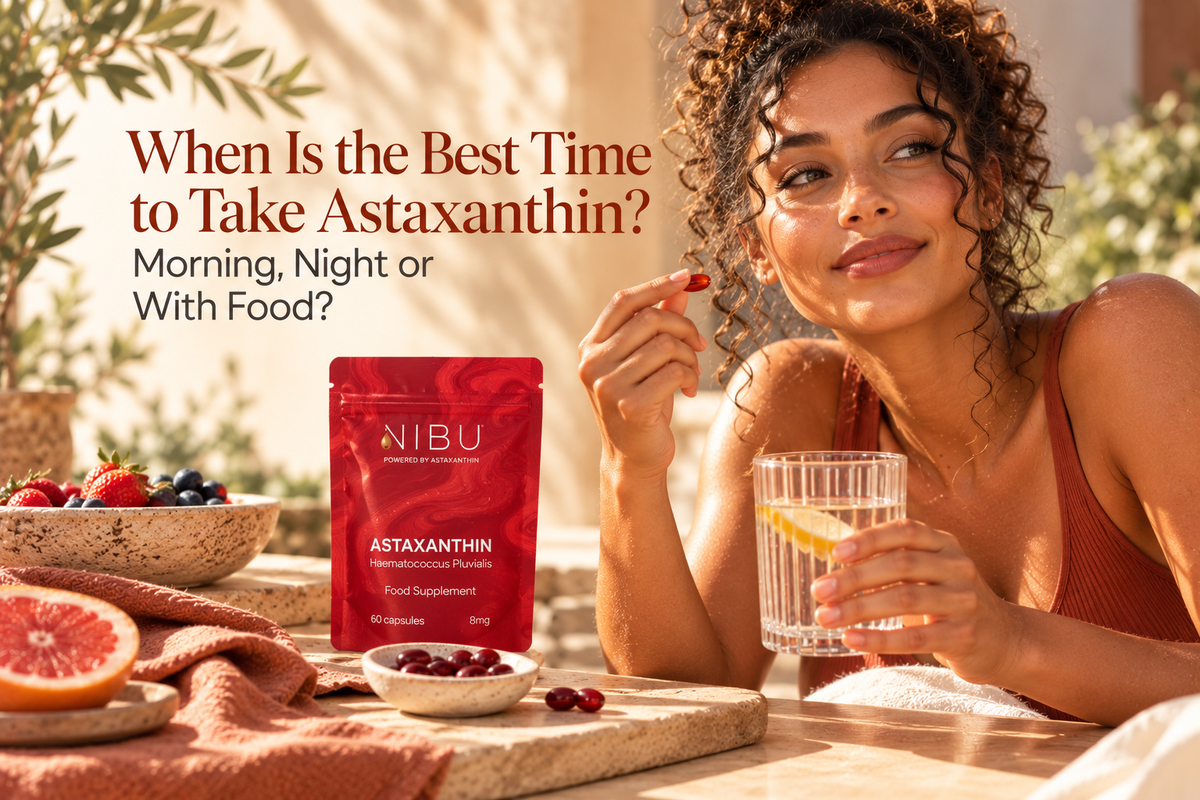
When Is the Best Time to Take Astaxanthin? Morning, Night or With Food?
Morning or evening? With breakfast or before bed? The most important thing about taking Astaxanthin is not the time on the clock. Astaxanthin is fat-soluble, so how you take it may matter more than...
En savoir plusShop
Meilleures ventes